

Choosing the right sandwich panel size and thickness determines the outcome of a factory, warehouse, or cold storage project. Panels that are too thin leave insulation inadequate and cooling costs climb, while excess thickness wastes material budget without a matching benefit. This guide summarizes the standard wall sandwich panel dimensions used in the Indonesian market in 2026, including a 50-150mm thickness table and how to choose based on span and building function, so purchasing decisions rest on technical data rather than guesswork.
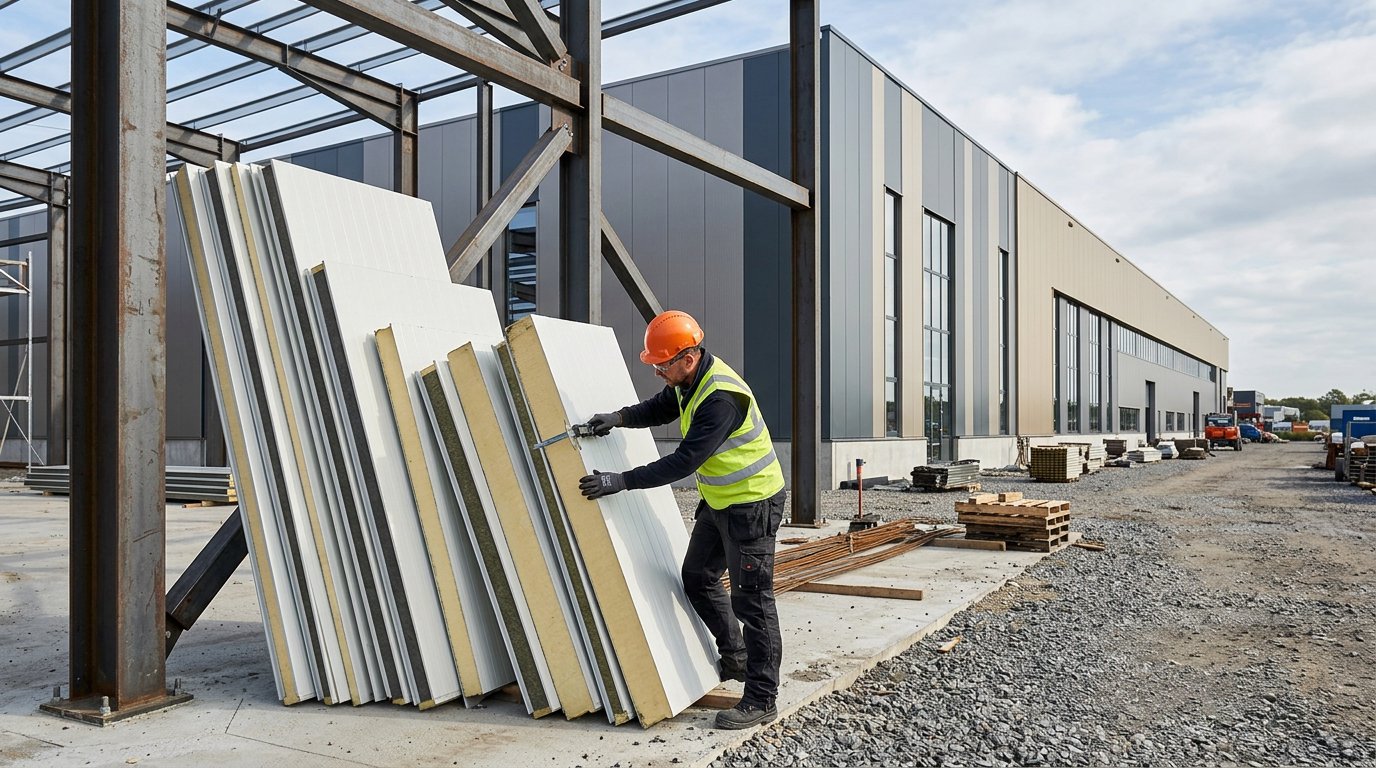
Why Panel Size and Thickness Matter Before Construction
Core thickness relates directly to thermal conductivity (lambda, W/mK), which determines how much heat passes through the wall. PU/PIR core panels typically fall around 0.018-0.028 W/mK, while EPS sits at a higher range. A thicker core lowers heat transfer, but panel weight also increases, so the supporting steel frame must be recalculated by the contractor or structural consultant to match the added load capacity.
Panel width and length also affect how many joints appear across a wall. Fewer joints mean lower risk of air or water leakage at connection points, which matters most for cold storage and cleanroom facilities that require tight sealing. Choosing the right dimensions early in the design phase reduces field rework and speeds up installation, since custom cuts around door and window openings can be minimized.
Standard Wall Sandwich Panel Size Table
Based on common manufacturing practice in Indonesia and the EN 14509 reference widely adopted by local producers, here is the typical size range available for wall panels:
- Effective width: 1000mm - 1200mm (1150mm is most common for flat/curved wall panels, 1000mm for hidden-screw type)
- Length: 2 meters - 12 meters, adjusted to wall height or produced custom per project shop drawings
- Core thickness: 50mm, 75mm, 100mm, 125mm, and 150mm for general walls; up to 200mm for extreme insulation needs such as frozen warehouses
- Steel skin thickness: typically 0.35mm - 0.50mm, with steel sheet referencing SNI 4096 (minimum BMT 0.40mm) to ensure corrosion resistance and long-term structural integrity
The table below gives a practical view of thickness selection based on the building functions most commonly found in Indonesian factory and warehouse projects:
| Thickness | Primary Function | Estimated Insulation Level |
|---|---|---|
| 50mm | Interior partitions, site offices, non-production rooms | Basic insulation |
| 75mm | General warehouse walls, light industry | Moderate insulation |
| 100mm | Centrally air-conditioned factories, temperature-controlled logistics warehouses | High insulation |
| 125-150mm | Chiller cold storage (0-8°C), pharmaceutical cleanrooms | Very high insulation |
| 150-200mm | Freezer cold storage (-18°C and below) | Maximum insulation |
How to Choose Thickness Based on Span and Building Function
The first step is defining the room's function: a basic partition wall, an ambient-temperature warehouse, or a strictly climate-controlled space such as cold storage or a cleanroom. This function sets the required U-value target. For cold storage, the lower the target temperature, the thicker the core needed so the refrigeration unit's workload and electricity bill stay efficient.
The second step is calculating the span between supporting girts or purlins. Panels installed across a wider span need greater thickness and stiffness to avoid deflection beyond tolerance limits (commonly L/200 under EN 14509 practice). Consult the manufacturer's load-deflection table for the specific thickness-span combination, since each core type (PU, PIR, EPS, rock wool) behaves differently in stiffness at the same thickness.
The third step is accounting for the project's local climate. Coastal buildings with high humidity should pair adequate core thickness with a better-protected steel skin, such as PVDF coating. Finally, always compare total life-cycle cost: thicker panels cost more upfront but can cut cooling energy expenses over time, especially for facilities that run 24 hours a day, such as cold storage and pharmaceutical plants.
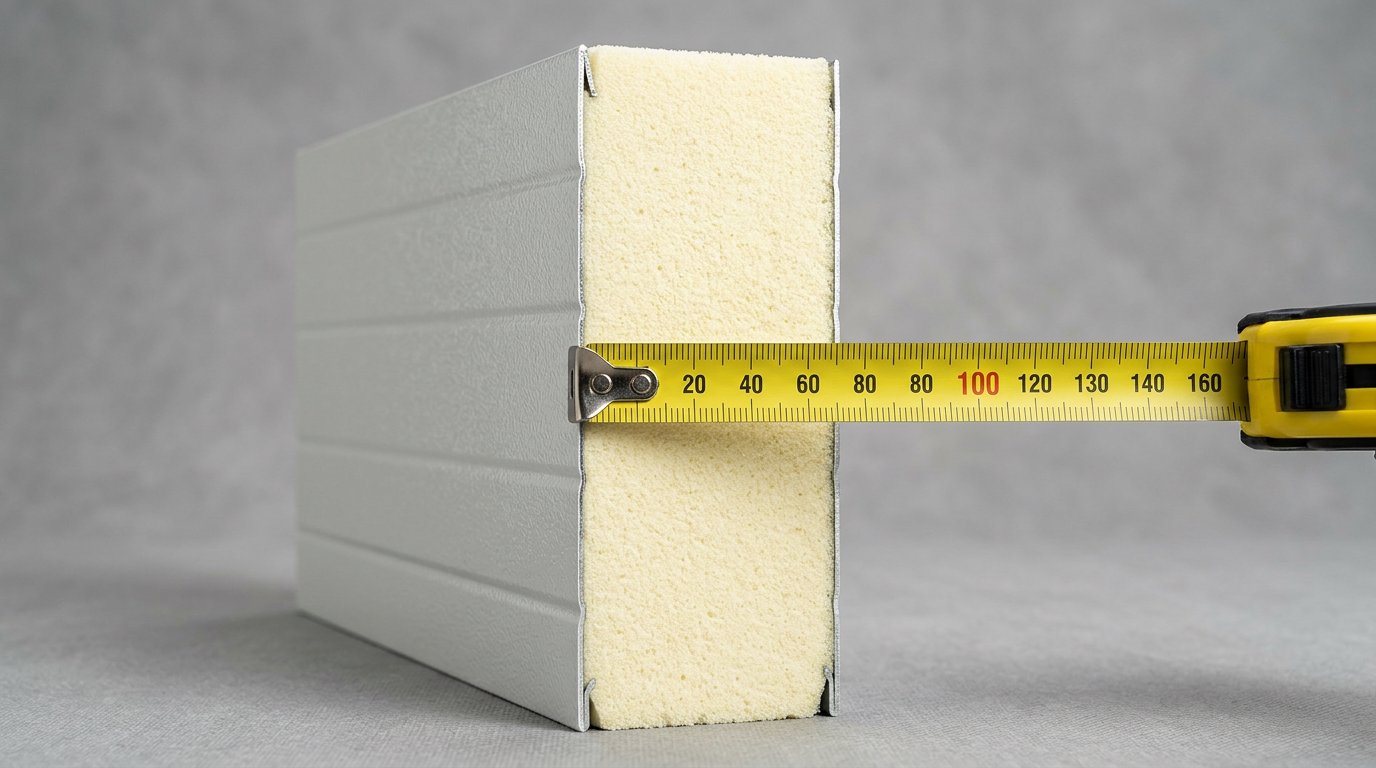
Dimensional Tolerance and the Role of Joint Accessories
EN 14509 requires tight dimensional tolerances during production: length deviation is generally capped at ±5mm and core thickness deviation at around ±2mm, so panel joints stay precise on site. Loose tolerances risk gaps at the joints that lead to cold air leakage, condensation, or even mold growth on cold storage and cleanroom walls if left unaddressed by the installer.
The right panel size and thickness must also be matched with proper joint accessories, such as sealant, EPDM gasket, flashing, and self-drilling screws installed at the correct spacing. Without the right accessories, insulation performance from even the thickest panel can drop significantly due to air leaks at the joints. Full details on choosing these accessories are covered in the sandwich panel accessories guide on SandwichPanels.id.
Custom Thickness at SandwichPanels.id
Beyond the standard sizes above, SandwichPanels.id also produces custom thickness and length per project shop drawings, including PU, PIR, EPS, rock wool, and magnesium oxide (MgO) core combinations for fire-resistance needs. The technical team can help calculate the required thickness based on target U-value, frame span, and local climate before production starts, so the panels ordered match actual project needs without wasting material.
For projects with special requirements such as earthquake-resistant walls or export-grade frozen warehouses, thickness selection should also account for applicable structural safety standards and certifications. Read the guide to earthquake-resistant sandwich panels and the cold storage panel thickness specifications for further technical detail matched to project needs. A summary of core material types is also available in the complete guide to sandwich panel types.
FAQ
What is the most common wall sandwich panel thickness used for warehouses?
For ambient-temperature warehouses without dedicated cooling, 75mm to 100mm thickness already provides adequate insulation at an efficient cost. Centrally air-conditioned logistics warehouses typically move up to 100mm so cooling load stays manageable.
Can sandwich panel width be ordered differently from the standard 1000-1200mm?
Yes, depending on the manufacturer's production capacity. SandwichPanels.id can produce custom width and length per project shop drawings, including special cuts for door openings, windows, or non-standard building corners.
Is a thicker panel always better for every type of building?
Not always. Excess thickness for a function that doesn't need it only adds material cost and load on the supporting frame without meaningful additional insulation benefit. The optimal thickness is determined by target room temperature, frame span, and the project's local climate. Consulting the manufacturer's technical team before finalizing thickness is strongly recommended so the panel spec truly matches operational needs, not just the most common size used on other projects.