

Cold storage and frozen warehouses have construction demands that are far removed from ordinary industrial buildings. A temperature gap between an interior that can reach -25°C and tropical outdoor air above 32°C creates enormous thermal stress on walls and roofs. This is where cold storage sandwich panels come in: a single product combining wall structure, insulation, and hygienic surface finish. This article covers specifications, core thickness, and how to choose the right cold storage panel for your 2026 project.
What Are Cold Storage Sandwich Panels?
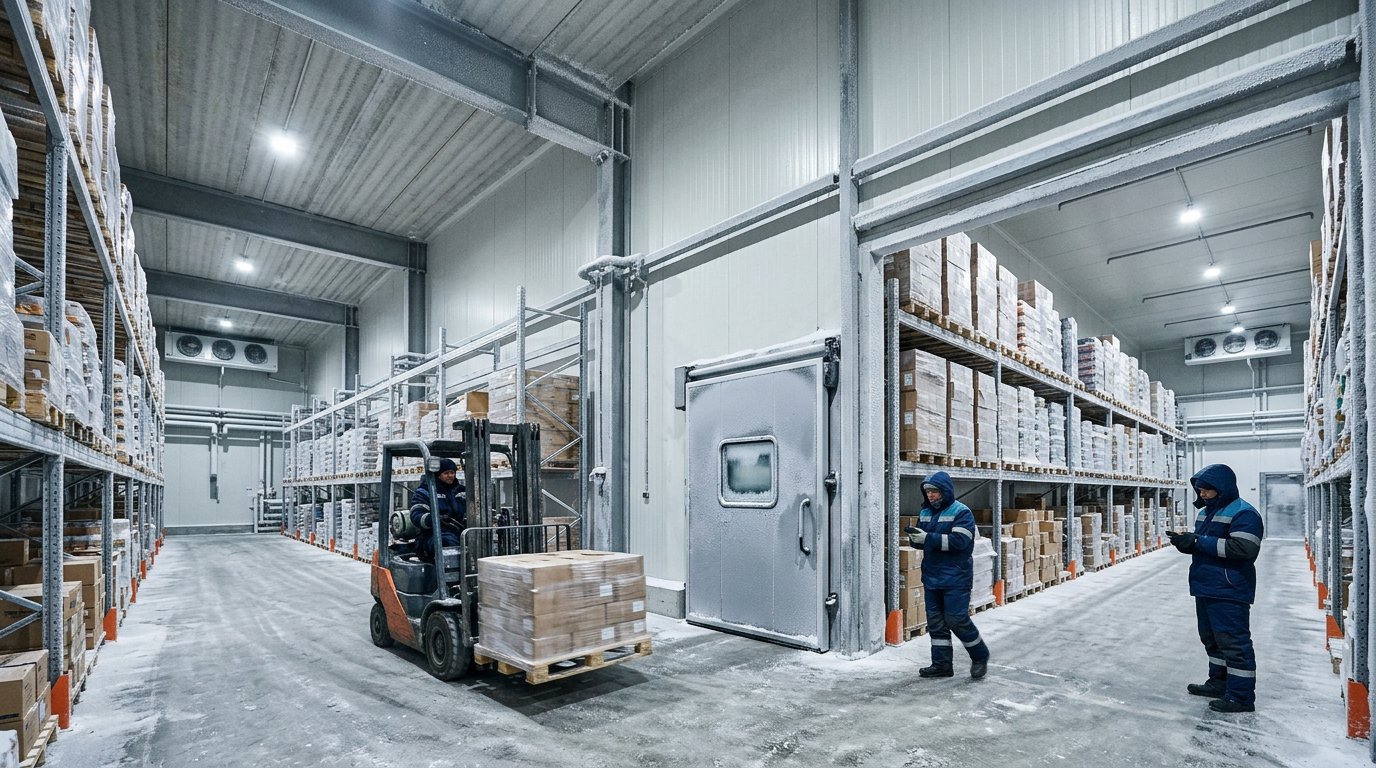
Cold storage sandwich panels are prefabricated wall and roof panels made of an insulating core (typically rigid polyurethane/PU or EPS) sandwiched between two metal facing sheets, usually galvanized steel coated with PVDF or PE. Unlike standard warehouse sandwich panels, cold storage panels are engineered to withstand extreme temperature differentials, prevent condensation, and keep the cold chain stable for years of continuous operation.
Applications span a wide range: frozen storage for seafood and meat, pharmaceutical cold rooms, ice cream storage, and food logistics distribution centers. Because these panels come into direct contact with the cold chain, joints must be fully air-tight to avoid thermal bridging, which triggers condensation and mold growth over time.
Core Material Choice: PU vs EPS vs PIR
The two most common core materials for cold storage are rigid polyurethane (PU) foam and EPS (Expanded Polystyrene), each with distinct characteristics:
- PU (Polyurethane): very low thermal conductivity (around 0.022 W/m·K), so for the same thickness, PU delivers better insulation than EPS. Ideal for very low temperature rooms such as freezers and blast freezers thanks to superior space efficiency.
- EPS (Expanded Polystyrene): thermal conductivity around 0.033–0.038 W/m·K, more economical, and adequate for cold rooms operating above 0°C down to about -10°C.
- PIR (Polyisocyanurate): a PU variant with better fire resistance, often specified for pharmaceutical or food facilities under strict fire protection regulations.
Beyond the core, the outer metal coating also determines panel lifespan. For the humid environment of cold storage facilities that are frequently cleaned with chemical agents, PVDF or food-grade coatings are recommended over standard PE. A deeper look at how metal coatings resist corrosion is available in our article on corrosion-resistant sandwich panel walls for chemical plants, principles that also apply directly to the damp, acidic conditions found in cold storage facilities.
Panel Thickness by Storage Temperature Zone
Core thickness is the single most decisive factor for insulation performance. Below is a general guide for PU panel thickness across different temperature zones (actual values vary depending on local climate conditions and project specifications):
- Chiller room (0°C to +8°C): 75–100 mm is generally sufficient.
- Cold room (-5°C to 0°C): 100–125 mm is recommended.
- Freezer room (-18°C to -25°C): 150–200 mm to keep the refrigeration compressor running efficiently.
- Blast freezer (below -30°C): 200 mm and above, often paired with PIR panels for maximum performance.
Insufficient thickness forces the refrigeration compressor to work harder, raising electricity consumption and accelerating equipment wear. Conversely, oversizing thickness without proper calculation only adds construction cost with no meaningful benefit. Ideal thickness sizing should involve a heat load calculation that accounts for room volume, door opening frequency, and ambient surrounding temperature.
How to Choose the Right Cold Storage Panel
Key points to check when selecting a supplier and specification for cold storage panels:
- Verify core density: good PU density for cold storage sits around 40–42 kg/m³. Density that is too low causes insulation performance to degrade faster over time.
- Joint system: choose a cam-lock or tongue-and-groove joint system with low-temperature-rated sealant so joints stay airtight despite repeated thermal expansion and contraction cycles.
- Food-grade or pharmaceutical certification: for food or pharmaceutical warehouses, ensure the panel carries relevant certification and has a non-porous surface that is easy to clean and resistant to bacterial growth.
- Supplier track record: ask for case studies of similar cold storage projects that have been running for at least 2–3 years to gauge long-term durability.
- Compare with other panel applications: if your project also includes outdoor areas such as a loading dock or canopy, our guide on outdoor sandwich panels: types, specs & how to choose can help you align specifications across different zones of the building.
Beyond PU and EPS cores, some projects also consider magnesium (MgO) core panels for transitional areas that need higher fire resistance without the extreme operating temperatures of a freezer room. A detailed specification and price comparison is available in our article on magnesium (MgO) sandwich panels: specs & price guide.
Installation and Maintenance of Cold Storage Panels
Even the best materials can fail to deliver if installation is careless. Best practices during cold storage panel installation include sealing every joint with a low-temperature-rated polyurethane sealant rather than standard silicone, which can harden and crack under repeated extreme temperature cycling. Supporting structural framing should also use materials with a low expansion coefficient to avoid gaps forming from differential thermal movement between the frame and the panels.
The most vulnerable areas for temperature leakage are the wall-floor junction, room corners, and the area surrounding cold storage doors. Sliding or swing doors for cold rooms should ideally include double rubber gaskets and a heater strip around the frame to prevent ice buildup that can damage the seal over time.
Once installed, routine maintenance remains essential. Periodic inspection of sealant condition, signs of corrosion on the metal facing, and surface temperature checks using a thermal camera can detect weak insulation points before they escalate into major problems such as cold air leakage or mold growth behind the panel. Surface cleaning should also use agents that do not damage the protective metal coating, particularly in facilities with strict hygiene standards such as pharmaceutical and processed food warehouses.
From an energy efficiency standpoint, choosing the right thickness and core quality from the start is far cheaper than patching insulation shortfalls later. The electricity cost of keeping a frozen room running 24 hours a day for years typically far exceeds the price difference between a high-quality panel and a cheap, under-specified alternative.
Frequently Asked Questions (FAQ)
1. How long do cold storage sandwich panels last?
With correct installation and periodic joint maintenance, quality PU panels for cold storage can last 15–20 years before the core experiences significant insulation performance decline.
2. Are EPS panels sufficient for a -20°C freezer?
Technically yes, but they require much greater thickness than PU to achieve an equivalent insulation value, making them generally less efficient in terms of space and construction cost for such extreme temperatures.
3. Can cold storage panels be installed on a multi-story floor?
Yes, but it requires additional structural calculations for panel and refrigeration system loads, along with properly sealed floor-wall junction details to prevent temperature leakage at those joints.
Choosing the right cold storage sandwich panel is not just about price per square meter — it is a long-term investment in energy efficiency, product hygiene, and operational reliability for your frozen warehouse. Consult your project's specific requirements with a technical team to get the most suitable thickness and specification recommendation.