

A sandwich panel warehouse can go up in weeks. Permission to use it does not always arrive that fast. Many owners assume the paperwork ends once the PBG building approval is issued, then get caught out when a bank or an auditor asks for a second document: the Sertifikat Laik Fungsi, or SLF.
PBG is permission to build. SLF is permission to occupy. They are separate filings, made at different times, and only one of them expires. This guide puts them in order for panel-clad buildings, including the technical findings that surface most often when the assessor walks the site.
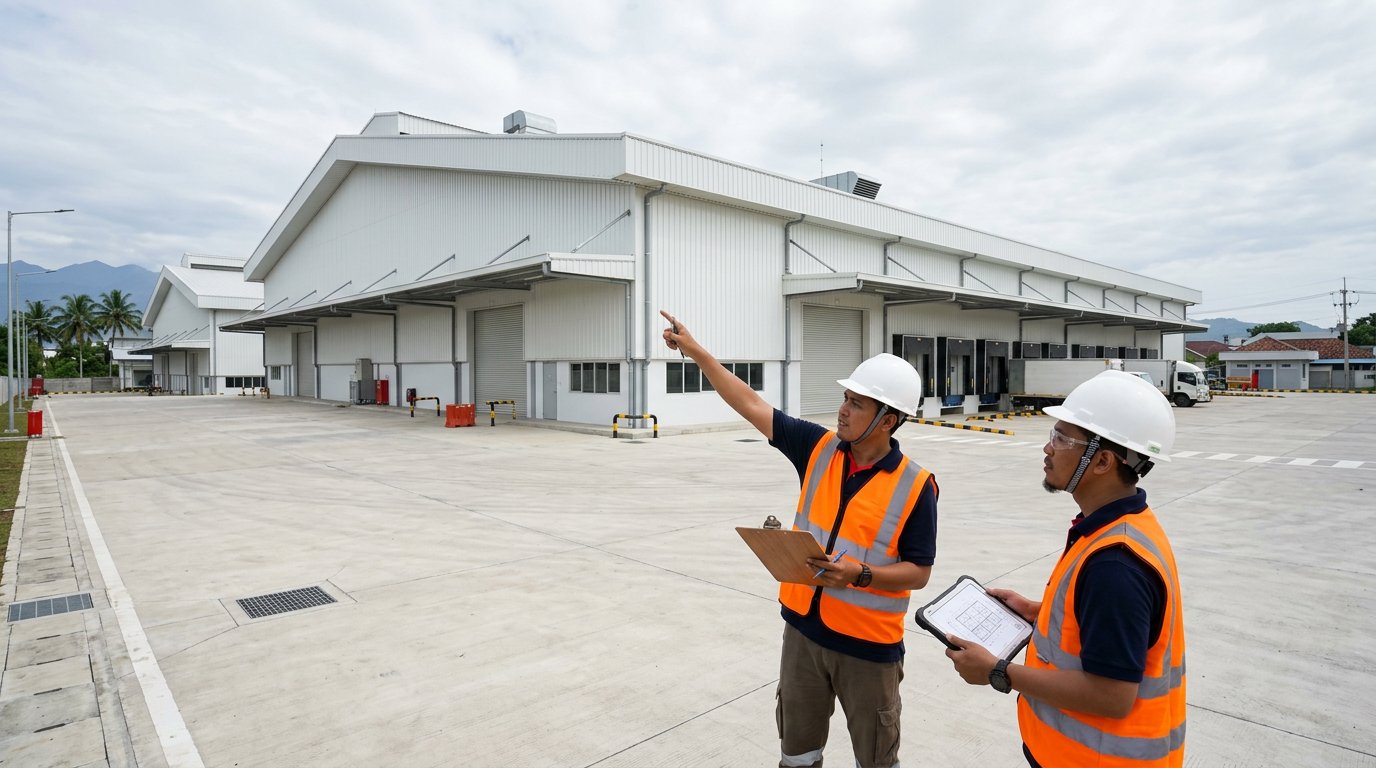
SLF does not follow automatically from PBG
SLF is a certificate issued by the local government declaring a building fit for its intended function before it may be used, defined in Article 1 point 18 of Government Regulation 16/2021. Without it, a building may not legally be operated even though construction is finished and the PBG is valid.
The practical difference is simple. PBG is judged on intent: drawings, structural calculations, a fire protection plan. SLF is judged on reality, meaning what actually stands on site and whether it still matches what was approved.
For panel owners, that gap opens in details which felt minor at the time: panel thickness swapped mid-project because of stock, purlin spacing widened to save steel, a core type substituted without redrawing anything. All of it shows up during inspection. The approval sequence is covered in our PBG permit guide.
Whoever asks for it first is rarely a government officer. Banks want SLF before accepting a building as collateral, corporate tenants list it in due diligence, and insurers reach for it when pricing warehouse cover. One delayed document can hold up a transaction worth far more than the filing.
How long an SLF lasts, and when to renew
SLF has an expiry date, and this is the part most often missed. Article 297 of GR 16/2021 splits the validity period in two:
- 20 years for single detached houses and row houses.
- 5 years for all other buildings, including warehouses, factories, cold storage, kiosks, and other commercial structures.
- Simple single-storey detached and row houses carry no validity limit at all.
That puts virtually every commercial sandwich panel building in the five-year group. Renewal is not a re-stamping exercise: the building is inspected again, and the state of the envelope after five tropical years is part of the assessment.
Common consultant practice is to file no later than 60 calendar days before expiry, with document preparation starting about six months ahead. Local practice varies, so confirm deadlines and the document list with your regional technical agency.
The four reliability aspects, and how panels answer them
Fitness assessment rests on four reliability aspects: safety, health, comfort, and accessibility. A panel-clad building has strong answers for the first three, provided the paperwork exists.
Safety covers structure and fire protection. This is where the core material's reaction to fire must be documented in black and white rather than claimed in a brochure. A test report carrying a laboratory reference and the correct standard is the evidence inspectors look for, as set out in our panel fire rating guide.
Health concerns ventilation, lighting, and surface cleanability. Tight joints and non-porous facings make this section straightforward, particularly for food warehouses.
Comfort looks at internal temperature and noise, where datasheet thermal conductivity figures usually suffice. Accessibility deals with circulation and escape routes, outside the material question but still counted.
Documents and the SIMBG filing route
Everything is filed through the building management information system, the SIMBG portal. The sequence runs roughly like this:
- Prepare as-built architectural, structural, and utility drawings that match the final site condition.
- Collect product documents: panel datasheets, reaction-to-fire test reports, and steel mill certificates.
- Appoint a certified technical assessor for non-residential or multi-storey buildings. Their report is a mandatory attachment.
- Upload the file set to SIMBG, then wait for administrative verification and the agency's site inspection.
- Close out any findings until the SLF is issued with its number and expiry date.
For new buildings, a statement of fitness from the supervising consultant or construction manager can generally stand in for an assessor's study. For buildings standing for years without an SLF, the assessor route applies.
Cost: the government fee is zero, the consultant is not
Issuing the SLF itself generally carries no regional levy; the levy applies to PBG instead. The largest line item is not a payment to the treasury but professional fees.
The 2026 market range for technical assessor services on commercial buildings sits around Rp25,000 to Rp75,000 per square metre, depending on complexity, storey count, and location. Add testing costs where the structure needs non-destructive verification. These are market indications, not official tariffs.
Five findings typical of sandwich panel buildings
- Panels installed beyond the manufacturer's allowable span, leaving visible roof deflection. The limits are in our span and purlin spacing tables.
- No fire test report at all, only a fire rated label on the supplier's brochure.
- Panel joints bulging or beginning to separate, the classic sign of delamination.
- As-built drawings still showing the original, superseded panel specification.
- Pipe and cable penetrations cut on site and left unsealed, breaking fire compartment integrity.
Four of those five findings are purely about documents and workmanship discipline, and sorting them during construction is far cheaper than opening the building back up. If you need panel datasheets and test reports as SLF attachments, request them through our contact page.
Frequently asked questions
Does a sandwich panel warehouse need an SLF?
Yes. The obligation attaches to the building being put into use, not to the cladding material. Warehouses, factories, and other commercial structures fall into the other buildings group with a five-year validity period.
My building has stood for ten years without an SLF. Can it still be certified?
It can. The route runs through a certified technical assessor who evaluates the building as it stands, with the result filed in SIMBG. Buildings that fall short receive a remediation list first.
What is the risk of operating without an SLF?
GR 16/2021 provides graduated administrative sanctions, from written warnings to restriction or suspension of activity. Beyond sanctions, a missing SLF routinely stalls bank financing, insurance claims, and customer audits.