
A natural rubber factory is one of the harshest environments a building wall can face. A single site may combine acid-smelling coagulation tanks, wet milling floors hosed down every shift, latex concentrate tanks releasing ammonia vapour, and crumb rubber dryers venting hot air.
Plastered brick cracks and grows mould; bare galvanised sheet can develop white spotting within months. This guide maps the zones of a natural rubber, latex concentrate and crumb rubber (SIR) plant, then sets out a sensible sandwich panel specification for each one, including the technical limits worth knowing before you ask for a quotation.
Four loads that wear out rubber factory walls
Unlike a dry warehouse, wall failure in a rubber plant almost always comes from several loads acting together rather than one single cause. Understanding all four is the fastest way to avoid buying the wrong panel.
- Ammonia vapour. Latex concentrate is preserved with ammonia, in both HA (high ammonia) and LA (low ammonia with a secondary preservative) grades. Ammonia attacks zinc and aluminium-zinc coatings, as well as copper in electrical fittings. This is why unprotected galvanised panels show white spotting and early corrosion.
- Organic acids. Coagulation uses formic or acetic acid. The resulting mist and droplets lower the surface pH of the wall, lift thin polyester paint, and then eat into the metallic layer beneath.
- Permanent humidity. Creper, hammer mill and soaking areas are effectively never dry. Water enters through panel joints that were sealed on one face only, then wets the core from the inside where nobody can see it.
- Heat and odour. Dryer exhaust runs hot, while the process releases hydrogen sulphide, mercaptans and volatile organic compounds, which are the usual source of odour complaints from neighbouring communities.
Because the mechanisms resemble those in chemical plants, the underlying principles are covered in depth in our articles on corrosion-resistant sandwich panel walls for chemical plants and why sandwich panels rust and how to prevent it. Rather than repeating them, this article translates those principles into rubber factory layouts.
Map the zones before choosing a panel
The biggest budget mistake is applying one specification across the whole plant. A baling and packing hall does not need the same panel as a latex centrifuge room. The practical split we use on site:
- Wet-acid zone (coagulation tanks, wet milling): near-saturated humidity, acid mist, splashing. Use PVC plastisol or PVDF coated panels, seal joints on both faces, and protect the lower wall with a concrete or stainless dado up to roughly 1.2–1.5 m so the panel never takes direct impact or splash.
- Ammonia zone (latex concentrate tanks and rooms): avoid exposed zinc surfaces. Specify a thick organic coating, seal every cut edge, and confirm the sealant is alkali resistant.
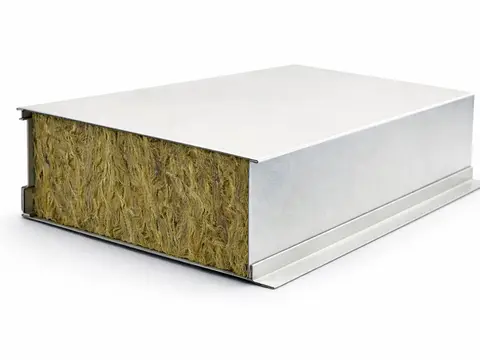
- Hot zone (around dryers, boiler and generator rooms): mineral wool cores classified A2-s1,d0 to EN 13501-1, not plastic cores. Check the panel service temperature limit and keep clearances from hot dryer surfaces.
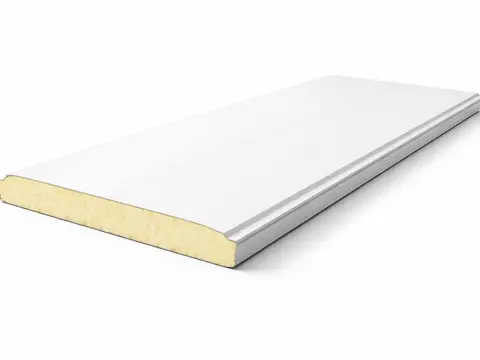
- Dry zone (pressing, bale packing, warehouse): EPS or PIR cores with an industrial grade polyester coating are usually sufficient. Redirect budget towards forklift impact protection and guard rails instead.
- Clean zone (laboratories for PO, PRI and dirt content testing): flush, easily cleaned wall and ceiling panels with coving at the corners and tidy service penetrations.
Steel and coating: three numbers that set wall life
When comparing quotations, these three numbers matter more than the headline price per square metre:
- Metallic coating mass. For rubber factory environments, an aluminium-zinc coating in the AZ100 class is a reasonable starting point. Do not accept a thin substrate with no stated coating mass in the quotation documents.
- Organic coating type and thickness. Standard polyester at roughly 20–25 microns suits dry zones. For wet-acid and ammonia zones, PVDF at around 25 microns or PVC plastisol at around 100–200 microns gives a far thicker barrier against vapour and splash.
- Target corrosivity category. Refer to ISO 12944 categories: wet process areas in rubber plants typically fall in C4 to C5, and coastal sites can sit in an even more aggressive category. Ask the supplier to state the category they are designing for instead of making a generic “corrosion resistant” claim.
Joints, sealant and the details that leak first
In nearly every repair case we attend, the panel itself is still sound. What failed was the detailing.
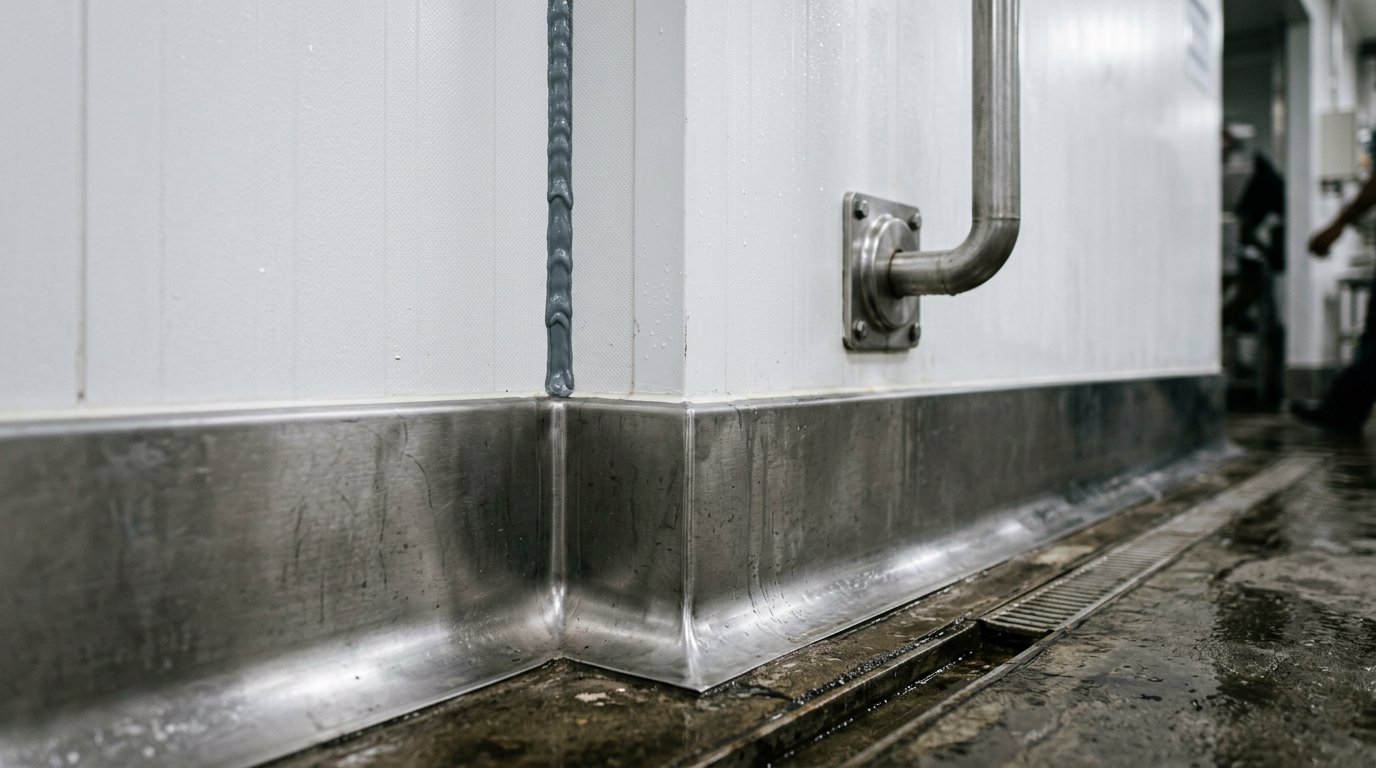
- Cut edges around door openings, pipes and ducting are the number one corrosion entry point. Every cut edge must be resealed on site rather than left bare.
- In wet zones, seal panel joints on both faces, not only the face visible from the corridor.
- Use a neutral cure sealant that tolerates alkali and weak acid. A sealant that releases acid while curing is not ideal against metal surfaces in a humid environment.
- Form coved wall-to-floor junctions and slope the floor 1–2% to drains so wash water never ponds at the foot of the panel.
- Take pipes and cables through proper sleeves and flanges, not a rough hole filled with sealant.
If your factory walls already show dark patches and a musty smell, we cover remediation separately in our article on mouldy warehouse walls and how to deal with them.
Ventilation and odour: the numbers inspectors check
Good walls will not solve an odour problem if the air is not managed. Two references are commonly applied in Indonesia: the odour level standards in KepMenLH No. 50 of 1996, which set limits including ammonia at 2 ppm, hydrogen sulphide at 0.02 ppm and methyl mercaptan at 0.002 ppm as odour values, and the workplace threshold limit values in Permenaker No. 5 of 2018 governing worker exposure.
The design implications are direct. Process zones are held at negative pressure relative to clean areas and offices, air change rates are raised in wet rooms and dryer halls, and exhaust air is routed to odour treatment rather than discharged near the site boundary. Sandwich panel partitions actually make this easier, because each zone can be tightly separated without wet trades, so the pressure regime that was designed on paper is the one that actually forms on site.
Indicative 2026 cost and technical limits
As a rough planning figure rather than a quotation, installed panel cost on rubber factory projects generally falls in these ranges:
- EPS core 50–75 mm, polyester coating, dry zones: roughly IDR 200,000–350,000 per m².
- PIR core 75–100 mm, wet zones with PVDF or plastisol coating: roughly IDR 450,000–800,000 per m².
- Mineral wool core 75–100 mm for hot zones and reaction-to-fire requirements: roughly IDR 550,000–950,000 per m².
Final pricing depends on volume, wall height, penetration complexity and project location. Two technical limits are worth recording at the planning stage: the maximum panel thickness we supply is 150 mm, and we supply wall, partition and ceiling panels — roof panels are not included. For roofing, coordinate with a separate supplier from the design stage so the wall-to-roof junction does not turn into a leak point.
Five mistakes that keep repeating
- One specification for the whole plant. It fails in both directions: wet zones end up underprotected while dry zones are overspent.
- Skipping cut-edge sealing. A few minutes of work per opening decides whether corrosion starts in year two or year ten.
- Running panels down to a wet floor. A panel foot standing in wash water will corrode from the bottom up. Use a dado and coving.
- Ignoring ventilation. A tightly sealed room without air management simply traps acid and ammonia vapour inside.
- Delaying roof coordination. Because we do not supply roof panels, the wall-to-roof detail has to be agreed across suppliers at design stage.
FAQ
Can ordinary galvanised panels be used in a latex concentrate room?
Not recommended. Ammonia vapour attacks the zinc layer, so galvanised panels without a thick organic coating will show white spotting and early corrosion. Specify PVDF or PVC plastisol coating and make sure every cut edge is sealed on site.
What panel thickness suits a crumb rubber plant?
For dry zone partitions, 50–75 mm is usually enough. Wet zones and air-conditioned rooms typically use 75–100 mm. Around dryers and boiler rooms the core choice matters more than the thickness figure: use mineral wool. The maximum thickness we supply is 150 mm.
Can sandwich panels be installed in a rubber plant that is already operating?
Yes, and this is the main advantage. Dry installation lets partitions go up zone by zone between production schedules, with no plastering to contaminate process areas and no curing wait.
Is an EPS core safe for a baled rubber warehouse?
Baled rubber is itself a high fire load commodity, so warehouse fire strategy must never rest on the walls alone. For high risk areas and rooms with heat sources, use a mineral wool core classified A2-s1,d0 and coordinate with your fire protection designer.
How should panels be maintained in acid and ammonia environments?
Schedule regular washdowns with a neutral detergent, inspect sealant and cut edges at least annually, and repair any scratch that penetrates the organic coating promptly, before corrosion spreads underneath the layer.
Next steps
Every rubber factory is different. The mix of wet zones, the distance to dryers, ammonia levels in the latex hall and the plant's position relative to the coastline all change the correct specification. Our team can review your layout and requirements, then prepare a zone-by-zone panel specification with a cost breakdown. Discuss your plans with us and request a quotation through the sandwichpanels.id contact page.