

What Are Sandwich Panel Doors?
Sandwich panel doors are industrial doors constructed from insulated layered panels — typically two galvanized steel sheets with a PIR (Polyisocyanurate) or PU (Polyurethane) insulation core. This design produces a lightweight yet robust door with excellent thermal insulation properties. These doors are widely used in cold storage facilities, cleanrooms, food processing plants, pharmaceutical warehouses, and other industrial buildings requiring temperature control and hygiene standards.
Unlike conventional wooden or solid steel doors, sandwich panel doors are engineered to comply with GMP, CPOB, and HACCP standards. The PIR/PU core material provides high insulation values (low U-values), while steel facings on both sides ensure durability against impact, corrosion, and mold growth.
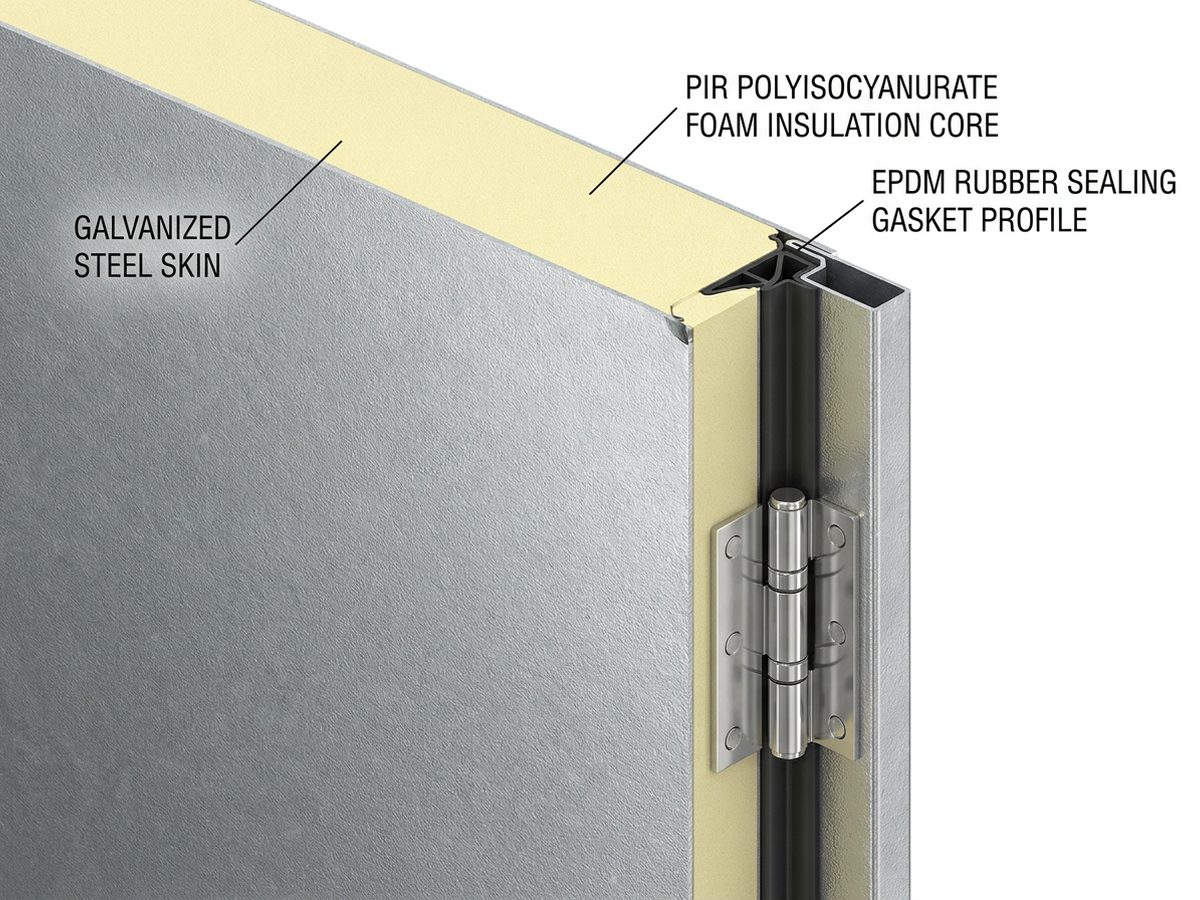
Types of Sandwich Panel Doors
Choosing the right door type depends on your specific application, traffic frequency, and temperature requirements. Here are the main types available in the Indonesian market:
1. Swing Doors
Swing doors are the most common type for light-duty cold storage and cleanroom applications. Heavy-duty hinges allow single or double-direction opening. Advantages include lower initial cost and simple maintenance. However, swing doors require sufficient clearance space in the surrounding area — this needs to be factored into room layout planning.
2. Sliding Doors
Sliding doors are ideal for high-traffic areas where space is limited. An overhead track system allows the door to slide sideways without consuming swing space. Available in manual and automatic variants with motion sensors. Sliding doors suit large cold storage facilities, loading dock areas, and inter-room access in food processing plants.
3. Hermetic Doors
Hermetic doors use a specialized mechanism that presses the panel evenly against the frame when closed, creating a perfect airtight seal. These doors are mandatory for ISO Class 5-8 cleanrooms, pharmaceutical laboratories, and Modular Operating Theatres (MOT) in hospitals. Dual sealing systems on all four sides ensure no air leakage or cross-contamination.
4. Rapid Roll Doors
For applications with very high open-close cycles — such as food production lines or storage areas with heavy forklift traffic — rapid roll doors with flexible PVC material and insulation core are the preferred choice. Opening and closing speeds reach 2 meters per second, minimizing temperature loss and outside air contamination.
Key Technical Specifications
When evaluating sandwich panel doors for your project, pay attention to these technical specifications:
- Panel Thickness: Available in 50mm, 75mm, 100mm, and 150mm. Freezer cold storage (-25°C) typically requires at least 100mm, while 50-75mm is sufficient for cleanrooms.
- Core Material: PIR (Polyisocyanurate) — better fire resistance, higher insulation values, suitable for extreme temperature applications. PU (Polyurethane) — economical, good insulation for moderate temperatures. EPS — most economical option for light-duty needs.
- Steel Facing: G550 galvanized steel with 0.4-0.6mm thickness per side. SUS304/SUS316 stainless steel options are available for pharmaceutical cleanrooms or areas with high hygiene requirements.
- Sealing System: EPDM or silicone gaskets around the door perimeter. Ensure specifications include floor seals for cold storage applications.
- Hardware: Heavy-duty stainless steel hinges, handles with internal emergency release mechanisms, and hydraulic closers for swing doors.
Factors Affecting Door Pricing
Sandwich panel door pricing varies based on several key factors. Understanding cost components helps you develop realistic budgets:
- Door dimensions: Standard 900×2100mm sizes are more affordable than custom doors for large cold storage (up to 3000×3500mm).
- Thickness and core material: 100mm PIR panels can be 30-50% more expensive than 50mm EPS.
- Mechanism type: Manual swing doors are the most economical; automated sliding doors with sensors can cost 2-3× more; hermetic doors with precision sealing systems are the most expensive.
- Finish material: SUS304 stainless steel adds significant cost compared to standard galvanized steel.
- Order volume: Orders of 10+ units typically receive lower per-unit pricing than single-unit purchases.
How to Choose the Right Sandwich Panel Door
Follow this selection guide based on your project type to avoid costly mistakes:
For Cold Storage
Prioritize high thermal insulation. Choose PIR panels at least 100mm thick (see our cold storage panel guide) with tight floor seals. Sliding doors are more practical for forklift access, while swing doors suit personnel access. Always ensure internal emergency release handles for worker safety.
For Pharmaceutical Cleanrooms
Hermetic doors with SUS304 or SUS316 stainless steel finishing are mandatory. The sealing system must maintain positive/negative pressure differentials between rooms. Surfaces must be smooth with no crevices that could accumulate contaminants — critical for CPOB and GMP compliance.
For Food Processing Plants
Choose doors with easy-to-clean surfaces that resist chemical cleaning agents and meet HACCP standards. Rapid roll doors are particularly helpful in production areas with high open-close frequency. Ensure materials do not absorb moisture or support bacterial growth.
Common Selection Mistakes to Avoid
Many projects encounter issues due to simple, avoidable mistakes in door selection:
- Ignoring floor seals: Without proper floor seals, cold storage loses 20-30% more energy efficiency.
- Choosing minimum thickness: 50mm panels for -25°C freezers cause condensation and increased electricity bills.
- Not considering traffic patterns: Swing doors in forklift pathways can suffer hardware damage within weeks.
- Forgetting emergency release: A serious safety hazard — workers can become trapped inside cold storage.
- Wrong cleanroom specification: Non-hermetic doors in ISO Class 7 and above cleanrooms will fail validation.
FAQ — Sandwich Panel Door Common Questions
Are sandwich panel doors fire-resistant?
Doors with PIR cores have fire ratings up to Class 0 (BS 476) or B1 (DIN 4102). For applications requiring higher fire ratings, mineral wool (Rockwool) core panel options are available, achieving up to 2-hour fire ratings.
What is the service life of sandwich panel doors?
With proper installation and maintenance, sandwich panel doors can last 15-20 years. The most frequently replaced components are sealing gaskets (every 3-5 years) and hydraulic closers (5-7 years).
Can sandwich panel doors be used outdoors?
Yes, with the right finish. Use minimum G550 galvanized steel or stainless steel with weatherproof coating. Ensure the sealing system is designed for outdoor exposure (UV and rain).
Is routine maintenance required?
Maintenance is relatively minimal: check sealing gaskets every 6 months, lubricate hinges and sliding tracks, and verify hydraulic closer functionality. For hermetic doors, sealing pressure calibration should be checked annually.
Conclusion
Sandwich panel doors are a critical investment for facilities requiring temperature control, cleanliness, and operational efficiency. From cold storage to pharmaceutical cleanrooms, choosing the right type, specifications, and materials directly impacts long-term operational costs and regulatory compliance.
PT. Ruida Grup Indonesia provides various sandwich panel door types — swing, sliding, hermetic, and rapid roll — with PIR and PU core materials and finishes ranging from galvanized steel to stainless steel. Each unit is manufactured to your project specifications, including custom dimensions and specialized sealing requirements.
Need technical consultation for your project doors? Contact our team via WhatsApp for a no-obligation technical discussion and price estimate.