

What Is an Industrial Metal Door?
An industrial metal door is a heavy-duty door made from steel, galvanized steel, or stainless steel, engineered specifically for industrial environments. Unlike standard wooden or aluminum doors, metal doors provide structural strength, fire resistance, and extended service life that factory operations demand.
In Indonesia, industrial metal doors are found in manufacturing plants, logistics warehouses, cold storage facilities, utility rooms, and cleanroom environments. Designs range from conventional swing doors and sliding doors to rolling shutters that accommodate vehicle and forklift access.
Why Standard Doors Don't Cut It in Industrial Settings
Residential or office doors are not built to withstand heavy operational loads. Industrial environments pose unique challenges: constant forklift traffic, extreme temperature differentials, high humidity, dust, and physical security requirements.
Industrial metal doors are designed around three core factors: durability — resistance to impact and corrosion; insulation — ability to maintain thermal separation; and security — protection against unauthorized access. Without the right door specification, you risk physical damage, temperature leakage in cold storage, or security incidents that disrupt operations.
Types of Industrial Metal Doors
1. Swing Doors — Standard Access Solution
Swing doors are the most common type for personnel access across production areas, electrical panel rooms, and inter-room passages. Available in single or double leaf configurations, with galvanized steel or stainless steel construction. Fire-rated variants offer 60 to 180 minutes of fire resistance.
Advantages include simple installation, relatively low cost, and easy maintenance. The main limitation is the swing clearance required, making them unsuitable for high-traffic forklift zones.
2. Sliding Doors — Space-Efficient Design
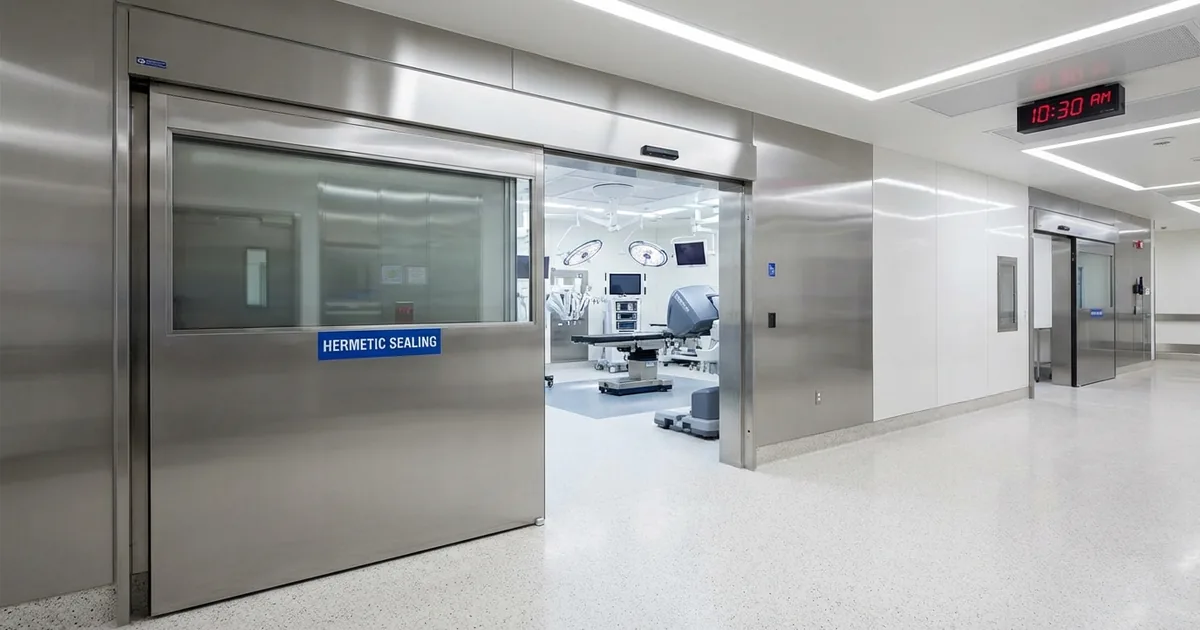
Sliding doors excel in cold storage, cleanrooms, and space-constrained areas. The rail system allows lateral movement without occupying swing clearance. Materials typically combine sandwich panel doors cores (PU/PIR) with steel or aluminum frames.
For cold storage applications, sliding doors include heating wires in the frame to prevent seal freezing. In cleanrooms, automated sliding doors with motion sensors are standard to minimize contamination from hand contact.
3. Rolling Shutter Doors — Wide Access for Warehouses
Rolling shutters use interlocking galvanized or stainless steel slats that coil upward. They are commonly installed at loading docks, warehouse entrances, and areas requiring wide openings for forklifts and trucks.
Motorized variants offer operational convenience, while perforated models allow ventilation in areas needing airflow. Some models include wind-lock systems for high-wind regions.
Metal Door Comparison Table
- Swing Door: Personnel access, small areas — Galvanized steel, stainless — Economical, easy to install — Requires swing clearance
- Sliding Door: Cold storage, cleanroom — Sandwich panel + steel — Space-saving, good insulation — Needs rail maintenance
- Rolling Shutter: Loading dock, warehouse — Galvanized slats — Wide opening, motorized — Low thermal insulation
- Fire-Rated Door: Fire-risk areas — Thick steel + intumescent core — 60-180 min rating — Heavier and more expensive
Choosing the Right Metal Door Material
Galvanized Steel
Galvanized steel is the most economical and widely used option in Indonesia. The zinc coating provides corrosion protection in moderately humid environments. Suitable for general warehouses, non-food production areas, and covered external access points.
Stainless Steel (SS304 / SS316)
For food processing, pharmaceutical, and cleanroom facilities, stainless steel is mandatory. SS304 offers corrosion resistance and easy cleaning — ideal for areas requiring routine sanitation. SS316 adds chemical resistance, suitable for more aggressive environments like chemical plants.
Sandwich Panel Doors
Combining steel faces with PU/PIR insulation cores, these doors provide thermal insulation alongside structural integrity. Highly recommended for cold storage, freezer rooms, and temperature-controlled cleanrooms.
How to Select the Right Metal Door for Your Project
- Define primary function: Personnel access, forklift passage, or large vehicle entry? This determines the door type needed.
- Evaluate environmental conditions: High humidity? Food-grade area? Extreme temperatures? Match material to operational conditions.
- Measure opening dimensions: Width, height, and wall thickness determine frame and door panel specifications.
- Check safety regulations: Some areas require fire-rated doors by law. Consult local fire safety authorities or your HSE advisor.
- Budget for total cost: Account for installation, steel frames, hardware (handles, hinges, closers), and long-term maintenance — not just the door price.
Common Mistakes When Choosing Industrial Metal Doors
- Wrong material choice: Using galvanized steel in food-grade areas that require stainless steel — risk of contamination and audit failure.
- Ignoring dimensions: Doors too small for forklift access, or oversized, wasting space and budget.
- Underestimating load: Heavy swing doors without adequate hinges and frames — rapid sagging and operational failure.
- Forgetting accessories: Floor springs, door closers, panic bars, or weather seals are often overlooked despite being critical for optimal function.
- Non-standard installation: Using general contractors without industrial door experience — imprecise fit, leaking seals, and uneven operation.
FAQ — Industrial Metal Door Questions
What is the difference between standard metal doors and fire-rated doors?
Fire-rated doors feature a special intumescent core that expands under heat and are certified to resist fire for specific durations (60, 120, or 180 minutes). Standard metal doors, while made of steel, do not carry a fire-resistance rating.
What is the minimum thickness for factory metal doors?
For single-leaf swing doors, minimum 1.2 mm steel for light-duty applications and 1.6-2.0 mm for high-traffic areas. Rolling shutters use 0.8-1.2 mm slats depending on opening width.
Can metal doors be custom-sized?
Yes, industrial metal doors are typically fabricated to order based on wall opening dimensions. While standard sizes exist, custom fabrication is recommended for new construction or renovation projects to ensure precise fit.
How long does installation take?
Standard swing door installation can be completed in 1-2 days per unit. Sliding doors require 2-3 days due to additional rail and frame work. Motorized rolling shutters may take 3-5 days depending on complexity.
Industrial Metal Door Installation Essentials
Pre-Installation Preparation
Before installation, verify that wall opening dimensions match the door frame specifications. For steel structure buildings, frames are typically welded directly to steel columns. For concrete walls, use appropriate anchor bolts. Ensure the floor is level and threshold height is precise — errors at this stage cause door sagging or jamming later.
Frame Installation
Steel frames must be installed perfectly vertical and horizontal with a maximum deviation tolerance of 2 mm. Gaps between the frame and wall are filled with expanding cement or fire-rated sealant. For fire-rated doors, perimeter sealing is critical and must meet certification standards.
Door Leaf Installation & Adjustment
Heavy industrial door leaves require at least two people for installation. Hinges must be precisely aligned. Door closers need adjustment based on door weight and desired closing speed. For sliding doors, rails must be perfectly level, and rollers must be lubricated and move freely. After installation, test the full range of motion — open, close, lock — for at least 10 cycles.
Metal Door Maintenance for Extended Service Life
Routine maintenance can extend industrial door service life from 10 to over 20 years:
- Monthly checks: Inspect hinges, handles, and locks for looseness or wear. Lubricate all moving parts.
- Quarterly maintenance: Check seals and gaskets for cracks or aging. Clean rails and rollers of dust and debris.
- Annual inspection: Examine steel surfaces for corrosion or rust signs. Treat and repaint as needed. For fire-rated doors, schedule inspection by a certified checker.
- Emergency readiness: Record all maintenance activities. Stock critical spare parts — hinges, handles, seals. Train maintenance staff on basic troubleshooting.
Indonesian Industrial Door Regulations & Standards
Industrial door installations in Indonesia must comply with several regulations and standards:
- SNI 03-1729-2002: Steel structural design code for buildings, covering door frames and support structures.
- SNI 03-6574-2001: Standard test methods for doors and windows.
- Fire Safety Regulations (Permen PUPR): Mandates fire-rated doors in designated areas.
- Occupational Safety (K3): Emergency exit doors must open outward and include panic bars.
- Food & Pharma GMP: Doors in food and drug production facilities must be cleanable, corrosion-resistant, and gap-free to prevent pest entry.
Cost Factors & Budget Planning
The total cost of ownership for industrial metal doors includes:
- Door unit cost: Varies by type and material. Galvanized steel swing doors IDR 1.5-3 million/m², stainless steel IDR 4-8 million/m², electric rolling shutters IDR 2-5 million/m².
- Installation cost: Typically 15-25% of door price, depending on complexity.
- Hardware: Door closers, handles, locks, hinges — IDR 500K-2 million per set.
- Shipping costs: Calculated by distance; heavy industrial doors can incur significant transport fees.
- Maintenance reserve: Budget 3-5% of door cost annually for upkeep.
When selecting metal doors, look beyond the lowest price — evaluate total lifecycle cost. Stainless steel doors may cost more upfront but offer the lowest 10-year maintenance expense. Cheap galvanized doors may need replacement every 3-5 years.
Conclusion
Choosing the right industrial metal door for your factory or warehouse goes beyond price comparison. Material selection, door type, dimensions, and installation quality determine long-term performance and maintenance costs. Whether you are building a new facility, renovating an existing warehouse, or adding cold storage capacity — ensure your door specifications match operational requirements and applicable regulations.
PT. Ruida Grup Indonesia supplies a comprehensive range of industrial metal doors including swing doors, sliding doors, rolling shutters, and fire-rated models in galvanized steel, stainless steel, and insulated sandwich panel construction. Contact our team to discuss your industrial door requirements today.