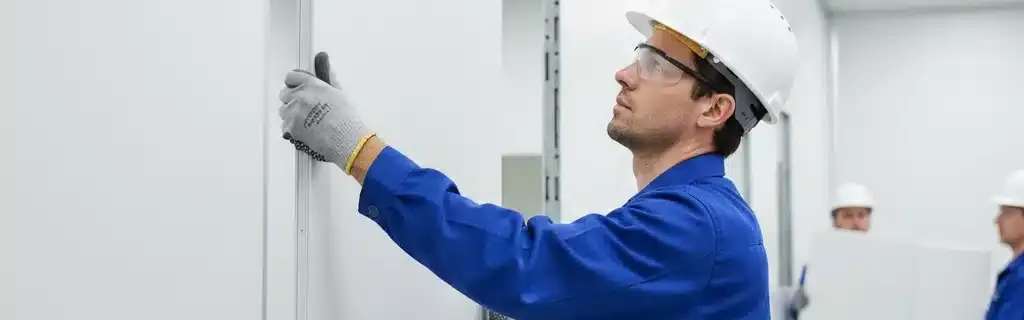

The Problem with Visible Joints on Sandwich Panel Walls
Conventional sandwich panels come with a well-known aesthetic drawback: clearly visible joints between panels. These vertical lines every 1,000–1,200 mm not only disrupt visual appeal but also create potential weak points for air, dust, and moisture infiltration.
For commercial buildings — showrooms, office lobbies, and factory public areas — a clean, premium wall appearance is a priority. Prominent joint lines can undermine the professional impression and overall aesthetic value of the building.
This is where invisible joint sandwich panels come in. Using a hidden interlock system, these panels produce a nearly seamless wall surface — delivering a clean, modern, and professional look.
What Are Invisible Joint Sandwich Panels?
Invisible joint sandwich panels are insulated wall panels with a concealed joining system designed to minimize or eliminate visible joint lines. Unlike standard tongue-and-groove systems that leave 2–4 mm joint gaps, the invisible joint system uses a specialized locking profile that makes seams virtually undetectable from a normal viewing distance.
These panels are available with PIR (Polyisocyanurate), rockwool, and EPS core materials, with PVDF or PE-coated steel sheet facings. Thicknesses range from 50–150 mm, tailored to the thermal and acoustic insulation requirements of the building.
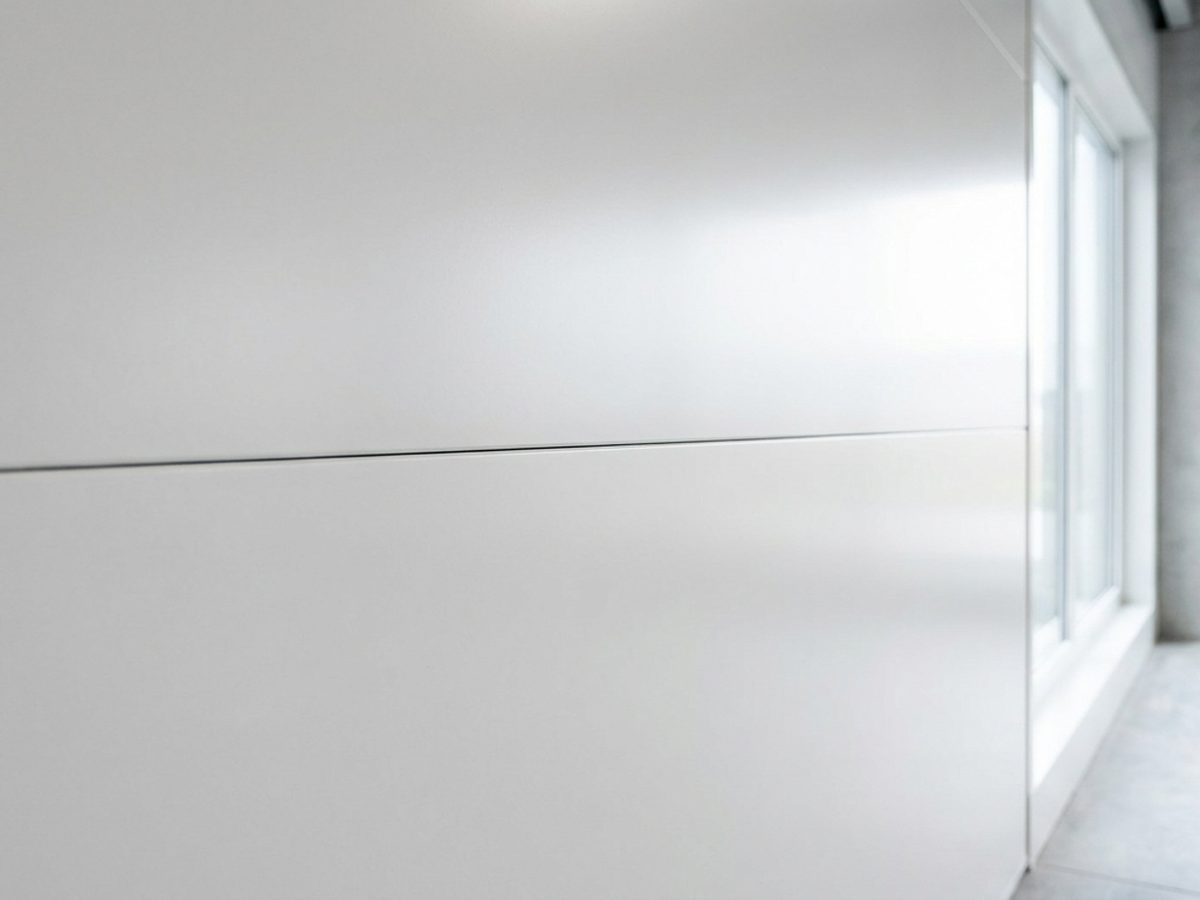
Why Hidden Joints Matter
Panel joints are not merely an aesthetic concern. In industrial and commercial applications, exposed joints can cause several serious issues:
- Thermal bridging — joint gaps create heat transfer paths that reduce overall insulation efficiency
- Dust and moisture infiltration — loose joints become entry points for contaminants
- Mold growth — trapped moisture in joint crevices encourages microorganism growth
- Reduced property value — lined wall appearance lowers the premium feel of the building
The invisible joint system addresses all these issues by creating a continuous surface that is more hygienic, more thermally efficient, and more visually appealing.
Core Material Options for Invisible Joint Panels
Core material selection is critical to invisible joint panel performance. Here are the three main options available:
| Core Material | Advantages | Best Applications |
|---|---|---|
| PIR (Polyisocyanurate) | Superior insulation, Class B1 fire rating, high dimensional stability | Cold storage, cleanrooms, premium industrial buildings |
| Rockwool | Class A fire resistance, excellent acoustics, extreme temperature tolerance | High fire-risk facilities, acoustic rooms |
| EPS | Cost-effective, lightweight, standard insulation | General warehouses, non-critical partitions |
For projects balancing aesthetics, insulation, and fire safety, PIR invisible joint panels offer the best all-around performance. These systems are widely used in modern cold storage facilities and food factory lobbies that require both a clean look and high technical performance.
Consulting a specialist when selecting core material is essential. Factors like operating temperature, humidity levels, local fire regulations, and project budget all influence the final decision. An experienced technical team can help calculate the optimal specifications for your specific application.
Advantages Over Conventional Systems
Compared to standard joint sandwich panels, invisible joint systems offer significant advantages:
- Premium aesthetics — flat wall surface with no prominent vertical lines, ideal for public areas and showrooms
- Better thermal insulation — tight joints reduce thermal bridging by up to 30%
- Water and dust resistance — concealed locking design prevents contaminant infiltration
- Easy cleaning — flat surfaces with no hard-to-reach crevices, perfect for hygienic environments
- Faster installation — click-lock system reduces installation time by up to 20% compared to traditional methods
- Increased property value — modern appearance enhances commercial appeal
One important caveat: invisible joint panels require higher installation precision. Substrate unevenness tolerance must be under 3 mm per 3 meters, and the installation team must be experienced with this specialized locking system.
Common Mistakes When Choosing and Installing Invisible Joint Panels
Field experience reveals several frequent mistakes:
- Selecting core material without considering the environment — EPS in damp conditions will degrade. Always match material to operating conditions.
- Uneven substructure — invisible joints are highly sensitive to unevenness. The mounting surface must be leveled first.
- Ignoring thermal expansion — metal panels expand and contract. Leave a 5–10 mm expansion gap at corners and structural interfaces.
- Using incompatible sealant — acid-based sealants can damage PVDF coatings. Use manufacturer-recommended neutral-cure sealants.
- Overlooking complementary accessories — corner trims, end caps, and base flashings must match the invisible joint profile.
FAQ
Are invisible joint panels more expensive than standard panels?
Yes, invisible joint panels are typically 15–25% more expensive due to the more complex locking profile and higher manufacturing precision. However, this cost difference is often offset by lower long-term maintenance costs and increased property value.
Can invisible joint panels be used for exterior walls?
Yes, these panels are designed for both interior and exterior applications. For exterior use, ensure PVDF coating for UV and weather resistance. The joint drainage system must also be considered to prevent rainwater penetration.
What is the minimum thickness for cold storage applications?
For cold storage at -25°C to +5°C, the recommended minimum thickness is 100 mm for PIR panels and 120 mm for EPS panels. The exact thickness depends on the target temperature and ambient environmental conditions.
Can installation be done without a specialized contractor?
Not recommended. The invisible joint system requires a specially trained team. Installation mistakes can damage the locking profile and eliminate the invisible joint effect. Use a contractor with proven experience in these systems.
Conclusion
Invisible joint sandwich panels are the answer for projects that refuse to compromise between insulation performance and aesthetics. With nearly invisible seams, these panels deliver a clean, modern, premium wall appearance — perfect for cold storage, high-end cleanrooms, industrial lobbies, and commercial buildings.
It's worth noting that not every project needs invisible joints. For standard storage warehouses or areas rarely seen by customers, conventional panels are sufficient. However, if your project involves brand-representation areas — such as lobbies, showrooms, or production areas frequently visited by auditors — the investment in invisible joints is well worth it.
The key to invisible joint project success lies in three factors: choosing the right core material, preparing a precise substructure, and working with an experienced installation team. When all three are met, the final result adds significant value to your building.
Interested in applying invisible joint sandwich panels to your project? Contact our team for a free specification consultation and get the best price quote tailored to your needs. We provide site surveys, budget calculations, and installation by certified teams across Indonesia.