

Quick Answer: When Should You Choose a Pass Box and When Should You Choose an Air Shower?
If your main need is to transfer materials, documents, tools, or components between cleanroom zones without opening the main room door, a pass box is the right device. If your main concern is loose particles attached to personnel and garments before entry into a clean area, an air shower is the more relevant solution.
The confusion happens because both devices sit around transition points and both are linked to contamination control. As a result, some projects try to use an air shower to solve a material-transfer problem, or assume a pass box is enough to manage personnel entry risk. That is where the workflow starts to break down.
This article is for buyers, engineers, contractors, and facility owners who need a clean decision path. The point is not to repeat definitions. The point is to connect each device to real workflow risk, room pressure stability, and the practical sequence of what to buy first.
- A pass box controls material transfer between zones without relying on the main room door.
- An air shower reduces loose particles on personnel before they enter a clean space.
- One device does not replace the other. In many facilities, both are used together.
The Basic Functional Difference You Should Separate Early
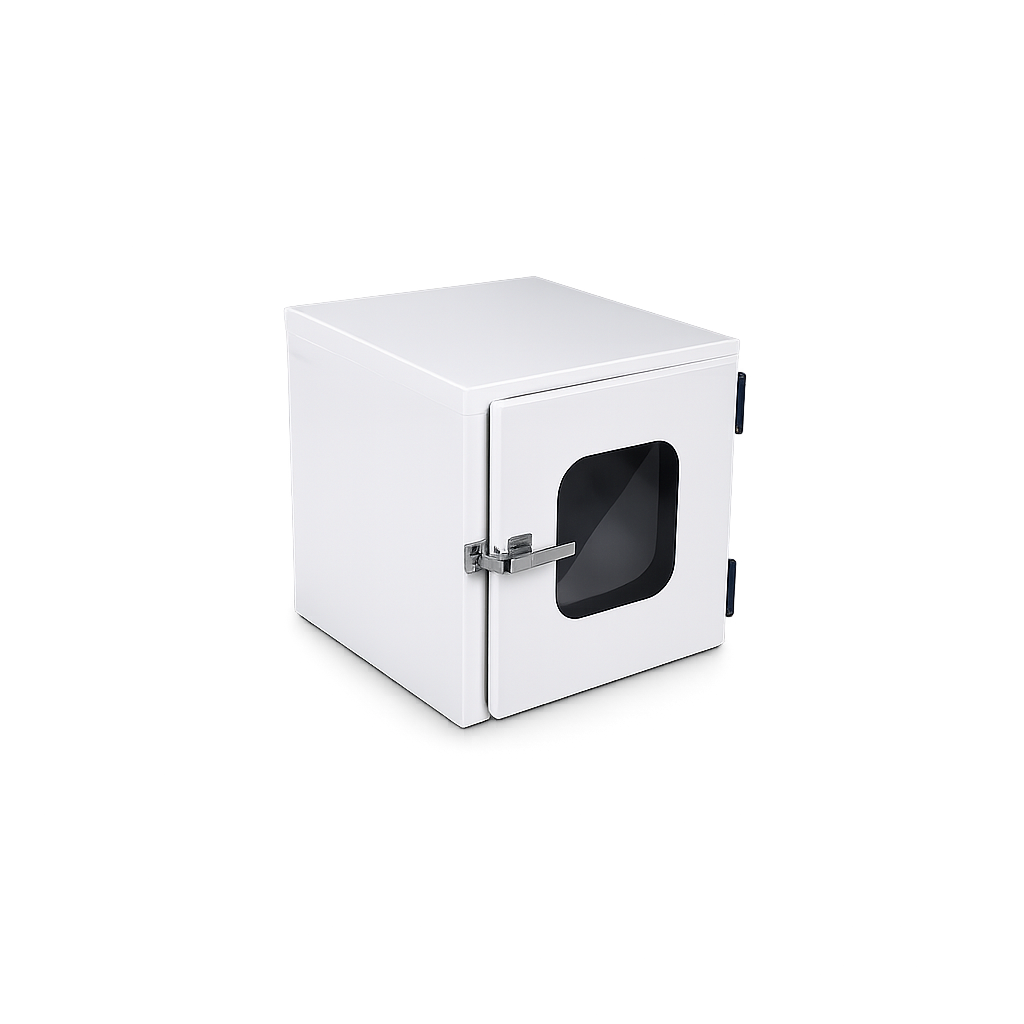
The live page for Interlock Pass Box Static shows the device as a transfer chamber with interlock behavior so both doors do not open at the same time. Its job is to protect pressure control and reduce uncontrolled air exchange when materials move between adjacent zones.
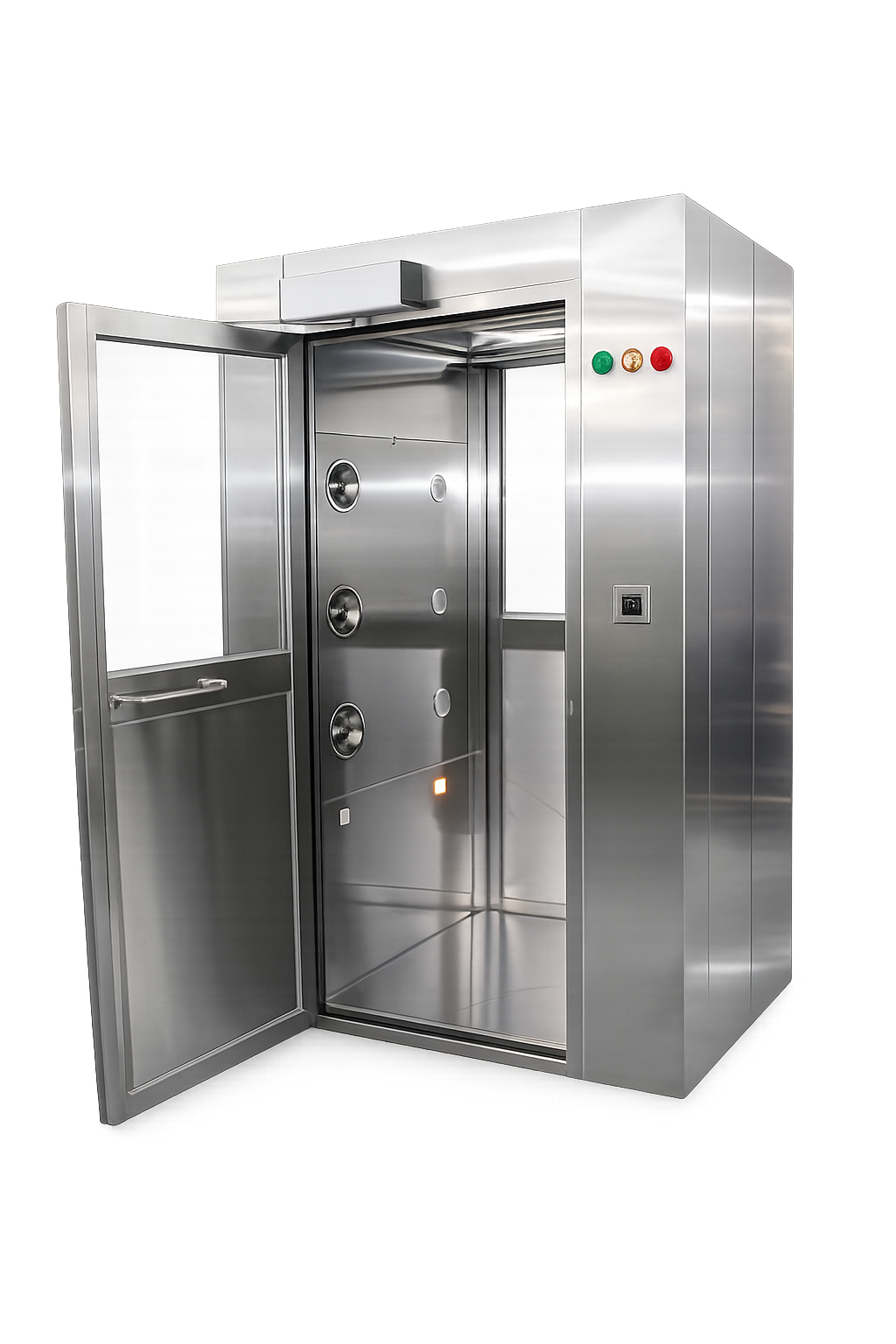
The live page for Single-Person Air Shower positions the unit for personnel flow. It uses clean, high-velocity air to remove loose particles from garments and exposed surfaces before the operator enters the cleanroom. The related air shower article already on the site discusses effective air velocity in the 20 to 25 meter per second range, while the product page shows 25 m/s and H14 99.995 percent filtration at 0.3 microns.
So the logic is straightforward. A pass box protects the material route. An air shower protects the personnel route. Once the project team keeps those two routes separate, the buying decision usually becomes much easier.
The harder cases happen when the phase-one budget only allows one device. That is when the decision should return to the dominant contamination source: material movement or personnel entry.
When a Pass Box Matters More Than an Air Shower
A pass box deserves priority when the facility moves materials more often than it rotates people. This is common in sampling rooms, weighing rooms, small laboratories, and production spaces where the operator count is low but the flow of raw materials, tools, samples, or finished items is constant. Every time the main door opens for transfer, room pressure and particle control become harder to maintain.
In those situations, a pass box creates immediate value. Vials, tools, small components, packaging, and documents can move through an interlocked chamber without turning the main cleanroom door into a regular transfer route. In rooms with tight pressure relationships, even short uncontrolled air exchange can become a recurring problem.
- Choose a pass box first if material transfer happens more often than personnel traffic.
- Choose a pass box first if the room must keep pressure stable while items move in and out throughout the day.
- Choose a pass box first if the transferred items fit inside a controlled chamber.
- Choose a pass box first if the main bottleneck is material handling rather than operator decontamination.
The existing pass box guide on the site already points out that static pass boxes fit standard transfer tasks, while dynamic pass boxes fit higher-risk transfers that need active filtration. That matters because even inside the pass box family, the project still has to match the device type to the transfer risk.
When an Air Shower Should Come First
An air shower becomes more urgent when personnel are the largest contamination source. In many pharmaceutical, electronics, and food cleanrooms, operators remain the most consistent particle carrier even after gowning. That is why the air shower sits at the personnel entry point as an extra control layer.
If your facility has heavy shift change, frequent personnel movement, or internal monitoring that shows particle spikes when people enter, an air shower usually has a more visible effect than a pass box. The high-velocity clean air released through multiple nozzles strips loose particles from the outer garment surface before the person reaches the controlled zone.
The live product data currently highlights SS304 construction, H14 99.995 percent filtration at 0.3 microns, 12 nozzles, and 25 m/s air velocity. That is a useful reminder that an air shower is not just an interlocked doorway. Its real performance depends on air velocity, nozzle coverage, filter condition, and control timing.
- Choose an air shower first if the main problem is personnel movement into the clean area.
- Choose an air shower first if shift change is busy and the entry point becomes crowded.
- Choose an air shower first if particle spikes are linked to operator entry events.
- Choose an air shower first if the project needs stronger personnel control before entry into sensitive rooms.
Can a Pass Box Replace an Air Shower, or the Other Way Around?
No. That is the mistake that creates the most wasted spending. A pass box does not remove particles from people. An air shower is not the right transfer tool for small materials, documents, or routine item movement between rooms. Each device exists because the contamination route is different.
If a facility tries to replace a pass box with an air shower, the material-transfer process usually remains inefficient. Staff still open the main room door too often, pressure stability still suffers, and materials end up moving through the personnel route. If a facility tries to replace an air shower with a pass box, the particles attached to garments still enter with the operator.
In better-designed facilities, both devices work together. The pass box protects the material route. The air shower protects the personnel route. Once those two contamination routes are separated, the cleanroom workflow becomes easier to control and easier to defend during audit or qualification review.
A Practical Checklist Before You Request a Quote
Do not start with the device name. Start with the actual workflow map of the facility. Once the personnel route and material route are visible, it becomes much easier to see whether the project needs a pass box first, an air shower first, or both at the same time.
- Map the dominant contamination source: people, materials, or both.
- Measure material-transfer frequency and personnel-entry frequency per shift.
- Identify the cleanliness class of every zone connected by the material and personnel paths.
- Check whether the transferred items fit a pass box chamber or require a different handling path.
- Review the need for interlock type, active filtration, UV, or monitoring based on process risk.
- Confirm transition-space dimensions, electrical utility, and maintenance access before ordering.
It also helps to review the wider cleanroom equipment category plus the existing pass box guide and air shower guide. Those pages help once the project has already decided which route needs stronger control first.
If you need a simpler rule, use this one. If the most expensive risk comes from material movement, prioritize the pass box. If the most visible risk comes from personnel entry, prioritize the air shower. If both routes are active and sensitive, do not force one device to do two jobs.
FAQ: Common Questions About Pass Box vs Air Shower
Do you still need a pass box if an air shower is already installed?
Often yes, if materials move between zones on a regular basis. The air shower helps personnel entry, but it does not create a controlled chamber for tools, samples, packaging, or documents.
Is an air shower enough to protect a sterile area without a pass box?
Not by itself. An air shower reduces particle load from people, but it does not solve the material-transfer problem. If items move across rooms frequently, the material route still needs dedicated control.
When does a facility need both devices at the same time?
It usually needs both when personnel traffic is high and material transfer is also routine. That combination is common in pharmaceutical production, controlled laboratories, precision electronics, and other facilities with multiple active cleanliness zones.
Conclusion: Separate the Personnel Route from the Material Route
A pass box is for material-transfer control. An air shower is for personnel decontamination control. As long as the procurement decision starts from those two different contamination routes, the project will make a far more rational and defensible choice.
If you are choosing transition equipment for a new cleanroom or an upgrade project, send the personnel flow, material flow, and target cleanliness class to the technical team first. For a faster review of whether you need a pass box, an air shower, or both, contact our technical team on WhatsApp so the specification path and purchase order sequence start from the right assumptions.