

The Problem with Holes in Your Panels
A hole in a sandwich panel is not just a cosmetic issue. Even a small opening lets rainwater in, invites pests, and accelerates corrosion on the metal skin. In cold storage or air-conditioned spaces, a breach becomes a thermal leak that drives up energy bills fast. In food warehouses, holes in the wall also create entry points for pests that threaten product safety.
You might assume the only fix is replacing the entire panel. But for small to moderate damage, patching is far more practical — cheaper and quicker. This guide covers when and how to patch a sandwich panel without full replacement, including the right materials and step-by-step procedures.
Common Causes of Panel Holes
Understanding the cause helps prevent repeat damage:
- Heavy equipment impact: Forklifts or cranes clipping panels during tight maneuvers. This is the most common cause in warehouses and factories.
- Falling objects: Construction materials or tools dropped from height striking the panel surface.
- Advanced corrosion: Paint peels off over time, and the exposed metal gradually erodes into holes. Coastal areas are more vulnerable due to salt exposure.
- Poor installation: Over-tightened screws or misaligned panels can trigger cracking. If you are about to install panels, follow this warehouse sandwich panel wall installation guide for lasting results.
- Rodent damage: Mice or rats gnawing through panels in food storage areas. Panels with thicker metal skins resist this better.
When to Patch vs. When to Replace
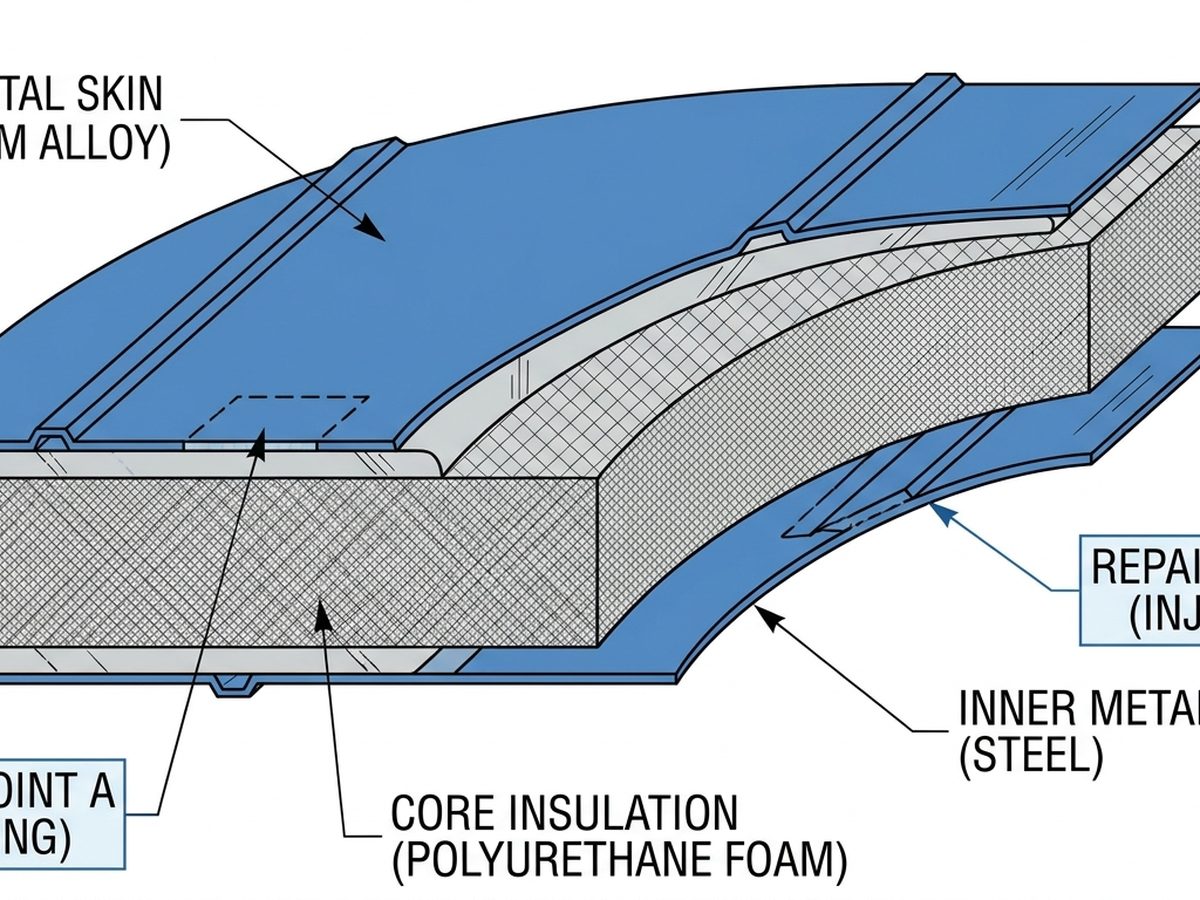
Not all damage qualifies for patching. This decision matters because patching a panel that should be replaced can be dangerous. Here is the guideline:
Can be patched:
- Holes under 10 cm in diameter
- Damage limited to one side of the panel skin
- Core insulation intact and not water-contaminated
- No structural deformation in the framing
- No more than 3 holes on a single panel
Needs full replacement:
- Holes exceeding 20 cm or penetrating both skins
- Core insulation soaked or severely degraded
- Panel warped or bent from heavy impact
- Damage at joints compromising structural integrity
- Panel already patched previously in the same area
If your panel is beyond patching and needs replacement, check this guide on leaking sandwich panel wall causes and solutions to understand when replacement is the only option.
Tools and Materials You Need
Gather these before starting the repair:
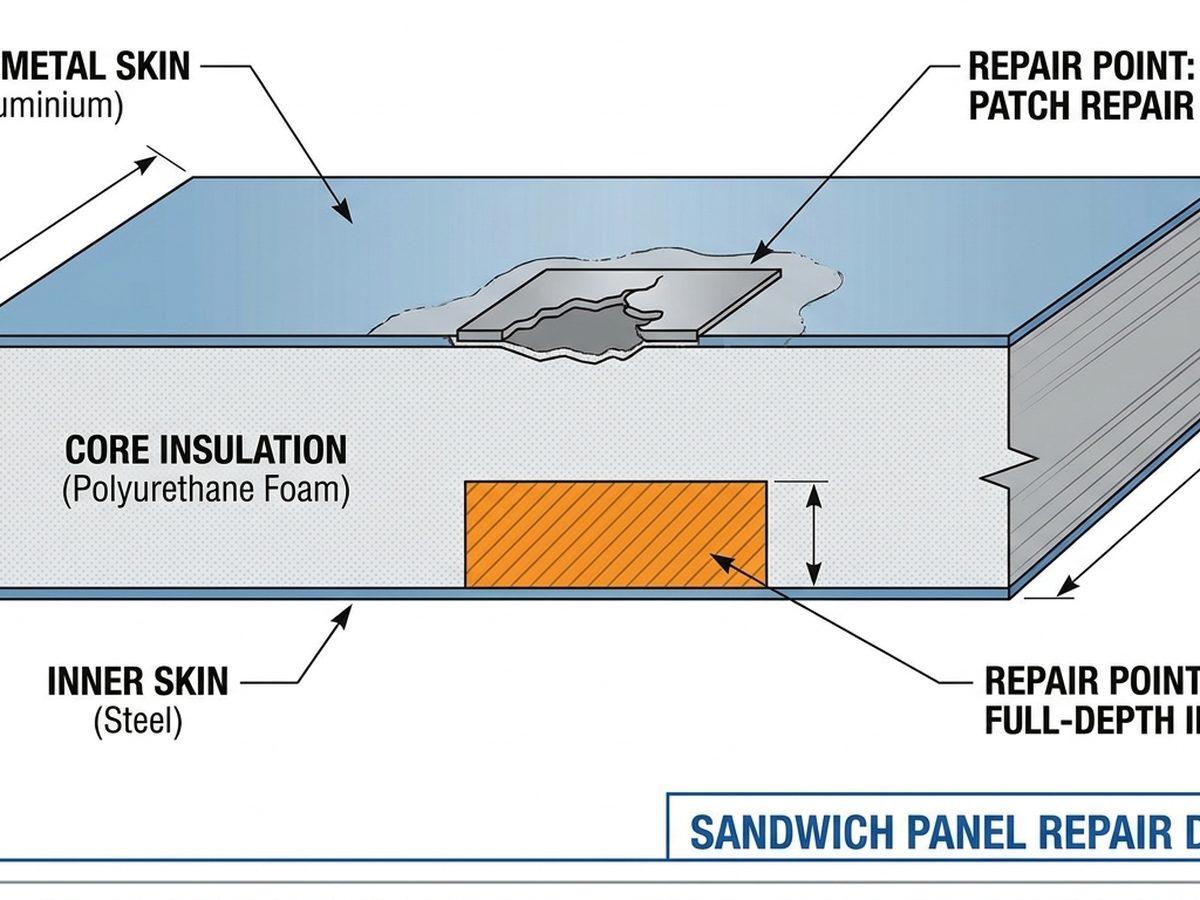
- Metal patch sheet: at least 5 cm larger than the hole on all sides. Use material that matches or is compatible with the original panel.
- Polyurethane or silicone sealant: choose one rated for UV and weather resistance. For cold storage panels, use a sealant that stays flexible at low temperatures.
- Self-drilling screws: for securing the patch. Use stainless steel to avoid galvanic corrosion.
- Sandpaper and anti-rust primer: if corrosion is present around the hole, this is mandatory before patching.
- Tin snips, drill or electric screwdriver
- Paint brush and matching paint: for finishing and surface protection
Step-by-Step Patching Procedure
Follow this procedure for a durable repair. Make sure the weather is clear when working outdoors — rain interferes with sealant curing.
1. Clean the Damaged Area
Remove dust, dirt, and loose paint around the hole. Wipe with a clean cloth and lightly sand the surface to ensure the sealant bonds properly. This step gets skipped often, but it determines whether the patch holds or fails.
2. Check the Core Insulation
Inspect the insulation inside the panel. If it is wet, dry it with a heat gun or leave it exposed for a few hours until completely dry. Wet insulation causes mold and drastically reduces thermal performance. If the core is too far gone, patching may not be the right fix — consider panel replacement instead.
3. Cut the Metal Patch
Use tin snips to cut the patch to size. Measure carefully — the patch must overlap the hole by at least 5 cm on every side. Use material that matches or is compatible with the original panel. Do not use plain steel on an aluminum panel, as this causes galvanic corrosion.
4. Apply Sealant
Spread polyurethane sealant around the hole perimeter and on the back of the patch where it will contact the panel. The sealant acts as both adhesive and waterproof barrier. Make sure the sealant covers completely with no gaps — even tiny gaps let water through.
5. Position and Screw the Patch
Place the patch over the hole and press gently to spread the sealant evenly. Secure with self-drilling screws at each corner and the midpoint of each side. Avoid over-tightening, which can deform the panel. For panels in windy areas, add extra screws at the center of the patch.
6. Paint and Finish
Wait for the sealant to cure per the manufacturer's instructions, typically 24-48 hours. Sand the patch surface, apply anti-rust primer, then paint to match the surrounding panel. This step matters not just for looks but for long-term weather protection.
Common Mistakes to Avoid
Many patching jobs fail early because of these errors:
- Skipping surface preparation: Sealant will not adhere to dirty or oily surfaces. This is the number one reason patches fail.
- Using a patch that is too small: A 5 cm overlap on each side is the minimum for holding strength against wind and thermal expansion.
- Choosing the wrong sealant: Use a product rated for UV exposure and thermal expansion. Rigid sealants crack when the panel expands.
- Ignoring wet insulation: Trapped moisture will keep causing problems under the patch, including odor, mold, and reduced insulation value.
- Skip primer: Without primer, paint peels quickly and corrosion returns within months.
- Patching in the rain: High humidity prevents sealant from curing and bonding properly.
Post-Repair Maintenance
After patching, do not just forget about it. Schedule inspections every 6 months to keep the repair in good shape:
- Check if the sealant is intact or cracking — small cracks should be resealed immediately
- Look for any new corrosion around the patch, especially near screw points
- Verify the panel surface remains flat without waviness or new dents
- For cold storage panels, check if room temperature remains stable after the repair
- Address any new issues before they grow — small damage is far cheaper to fix
Routine maintenance like this falls under preventive steps that extend the overall lifespan of your sandwich panels.
Quick FAQ
How much does patching cost compared to replacement?
Patching typically runs 20-30% of full panel replacement cost. The exact amount depends on hole size, materials used, and whether you do it yourself or hire a technician. For small holes, patching materials are available at hardware stores at reasonable prices.
How long does a proper patch last?
Done correctly with quality materials, a patch holds for 5-10 years. Weather exposure, sealant quality, and regular maintenance are the biggest factors in repair longevity.
Can you patch cold storage panels?
Yes, as long as the sealant and patch material are rated for low-temperature environments. Choose a sealant that stays flexible below freezing and make sure the core insulation is completely dry before patching. Incorrect repairs in cold storage can cause condensation and freezing that worsen the damage.
What if the hole is on the roof?
For roof patches, make sure the patch follows the roof slope so water runs off instead of pooling. Consider adding a waterproof membrane and ensure the sealant cures fully before rain exposure. Working at height also requires proper safety equipment.
Does patching affect insulation performance?
If done correctly, the impact is minimal. A proper metal patch and sealant maintain air tightness. However, if the core insulation is damaged and not addressed, performance drops regardless of how neat the surface patch looks.
Conclusion and Next Steps
Patching a hole in a sandwich panel is a practical fix for light to moderate damage — not just a cost shortcut. The key is choosing the right materials, following proper procedure, and keeping up with inspections afterward. Keep in mind that a sloppy patch can actually make things worse over time.
If the damage is too extensive or you are unsure about the panel's structural condition, consult a professional. At SandwichPanels.id, we supply quality panels and offer guidance on maintenance and repair. Reach out to our team to discuss your panel condition and options — we are ready to help determine whether patching is sufficient or replacement is necessary.