
The Main Problem: Leaks at Panel Joint Gaps
Leaking sandwich panel joints rank among the most common complaints in warehouse, factory, and cold storage projects. Water seeps through the gap between panels, leaving brown stains on walls, triggering rust on steel skins, and damaging the contents inside. In cold storage, even a single drip can mean ice forming at the joint — which gradually widens the gap and degrades thermal insulation.
Short answer: joint leaks almost always come from incorrect sealant application and mismatched joint profiles, not from defective panels. Most cases can be repaired without replacing the panel, provided the fix matches the type of damage.
Causes of Leaks at Sandwich Panel Joints
Several root causes show up repeatedly on-site:
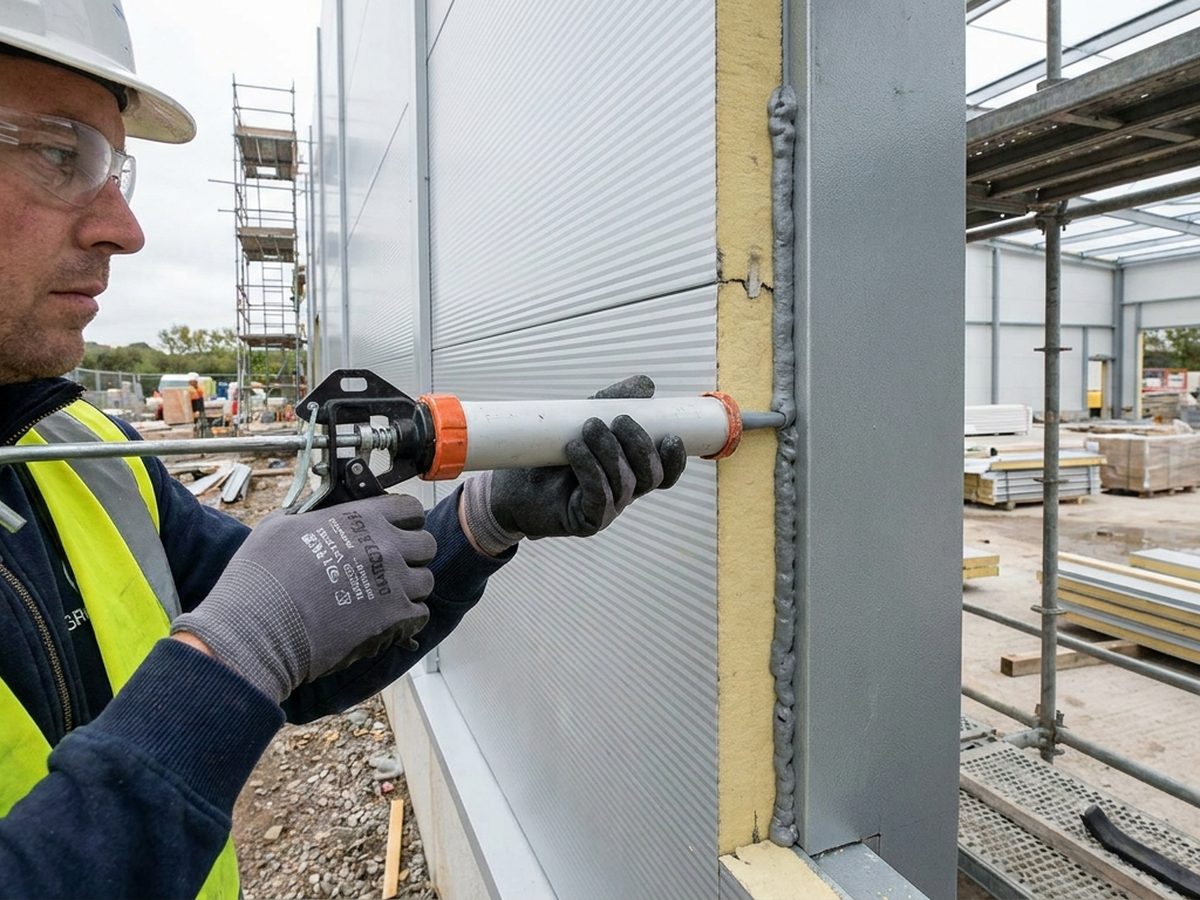
- Sealant does not fill the entire gap. Installers smear sealant on the surface instead of injecting it into the full depth of the joint. When temperatures fluctuate, this superficial layer cracks and water enters.
- Mismatched joint profiles. Using cam-lock profiles on panels manufactured for overlap systems, or vice versa. The mismatch creates cavities that sealant cannot seal properly.
- Pre-installation panel warping. Panels stored flat can bow. When forced together, the joint never sits flush even after screwing — leaving a gap.
- Poor roof drainage. Water ponds on the panel roof and eventually seeps through the top joints. This is not a joint defect per se, but the result is the same: water leaking through the seam.
- Expired or wrong-type sealant. Glass-grade silicone used where polyurethane is required. Silicone lacks the elasticity to expand and contract with temperature cycles, so it detaches from the steel surface after repeated heat-cold cycling.
Repair Solutions by Leak Type
Effective repair starts with identifying the type of leak:
Vertical Joint Leaks (Walls)
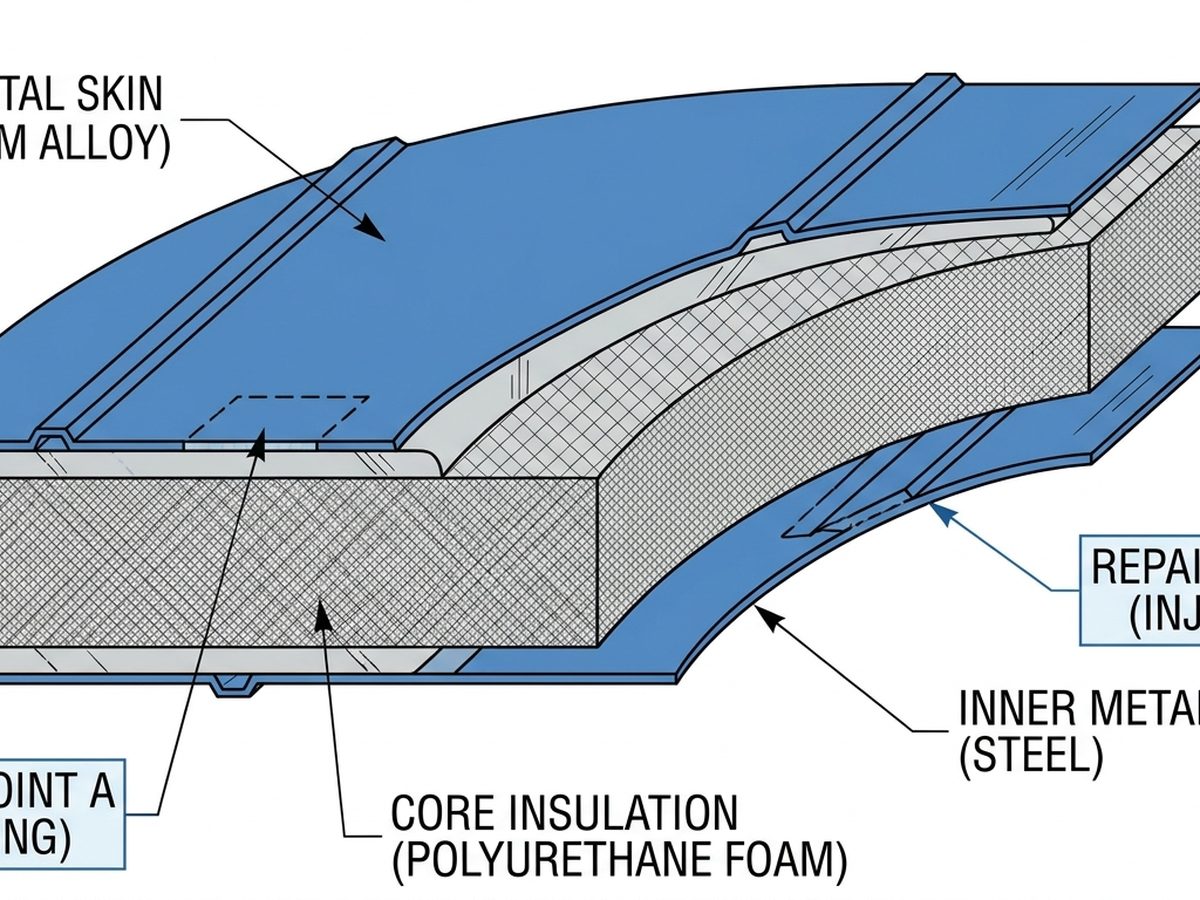
Cut out the old sealant with a utility knife. Clean dust and rust from the steel surface. Apply bonding primer as recommended by the sealant manufacturer. Then inject polyurethane sealant designed for modular joints — make sure it fills the full depth of the gap, not just the surface. Smooth with a spatula and allow 24 hours of curing before touch-up paint.
Horizontal Joint Leaks (Roof)
Roof joints carry direct rainwater loads, making them more critical. Beyond replacing the sealant, check whether flashing and ridge caps are still tight. Install butyl tape under the joint profile as a secondary layer. Butyl tape has permanent tack and UV resistance — a reliable backup if the primary sealant starts cracking.
Penetration Leaks (Pipes, Cables, Vents)
Every penetration hole must be sealed with a rubber boot or flashing collar, not just sealant alone. Sealant cannot withstand the water pressure flowing down a pipe. A rubber boot conforms to the pipe shape and bonds with the panel surface.
Choosing the Right Sealant Material
Not all sealants are the same. A quick comparison:
- Polyurethane (PU) sealant — Flexible and strong, suited for panel joints subject to thermal movement. The standard for sandwich panel projects in Indonesia.
- Butyl tape — Backup layer under roof joint profiles. Does not replace sealant, but reduces leak risk if the primary sealant fails.
- Silicone — Good for glass and ceramics, less ideal for steel joints because metal adhesion drops over temperature cycles.
- MS Polymer — Hybrid alternative: flexible like silicone but adhesive like PU. Higher price, but decent performance in tropical climates.
For Indonesia's climate — where roof temperatures can hit 60°C and sudden heavy rain is common — PU sealant remains the most reliable choice for primary joints. Butyl tape as a backup on horizontal roof areas.
Mistakes to Avoid During Repair
- Stacking new sealant over old. The old sealant has already lost elasticity. Stacking only covers the problem without sealing the gap. Always clean first.
- Skip the primer. PU sealant needs primer for optimal adhesion to zinc-coated steel skins. Without primer, the sealant can peel after 6-12 months.
- Applying sealant on a wet surface. Moisture blocks adhesion. Wait until the surface is fully dry or use a heat gun to speed drying.
- Ignoring roof pitch. If the roof is too flat, water ponds. Sealant has a hydrostatic pressure limit — standing water will eventually seep through micro-gaps.
- Replacing panels without fixing the cause. New panels will leak again if the joint profile, sealant, and drainage are not corrected. The panel itself is rarely the problem — the joint is.
Frequently Asked Questions (FAQ)
Can leaking panel joints be repaired without replacing the panel?
Yes. Most joint leaks can be fixed by replacing the sealant and adding a backup layer (butyl tape). Panel replacement is only necessary when the steel skin is severely rusted or the insulation core is permanently saturated with water.
How long does sandwich panel joint sealant last?
Quality polyurethane sealant lasts 8-15 years depending on UV exposure and thermal movement load. Silicone tends to resist UV better but is less flexible. Visual inspection every 2 years helps detect early cracking.
How can leaks be prevented in new projects?
Ensure the joint profile matches the panel system, use PU sealant plus butyl tape on roofs, verify panel straightness before installation, and conduct a water test before handover. Prevention is far cheaper than repair.
How much does joint leak repair cost?
Sealant repair costs range from Rp 35,000 to Rp 75,000 per linear meter depending on sealant type and access. Scaffolding adds cost. Early repair is far more economical than waiting until panels are severely damaged.
When should panels be replaced instead of just re-sealing?
Replace panels if the insulation core is permanently wet (especially PU panels in cold storage), if the steel skin is rusted through, or if the panel is warped so badly that the joint cannot close even when forced.
Conclusion and Next Steps
Leaks at sandwich panel joints almost always stem from sealant and installation issues, not from the panels themselves. Identify the leak type — vertical, horizontal, or penetration — then apply the matching repair method. Use quality PU sealant and butyl tape as a backup on roof areas. Do not stack new sealant over old, and always use primer.
If your panels show signs of recurring leaks, consult the sandwichpanels.id technical team for an inspection and proper repair recommendations. For related guidance on corrosion that often accompanies joint leaks, see our article on preventing sandwich panel rust. Preventing leaks from the start is far cheaper than fixing damage that has spread. Contact us for a free consultation and a quote on quality sealant and panels.