

The Real Problem on the Ground
You spent millions on EPS sandwich panels. The salesperson said it was moisture-resistant, waterproof, and fit for any condition. Six months later, blackish-green spots start appearing on those once-pristine white walls. A musty smell fills the air. Employees complain. Products stacked near the walls get stained.
This goes beyond appearances. Mold growing inside EPS sandwich panel walls is a signal that structural damage is happening right now. And the most frustrating part? You thought you bought the right material — but you didn't.
Before you panic and assume you need to replace everything, read this first. We will break down why this happens, what went wrong from the start, and the concrete steps you can take today — without tearing down the entire building.
Why This Happens
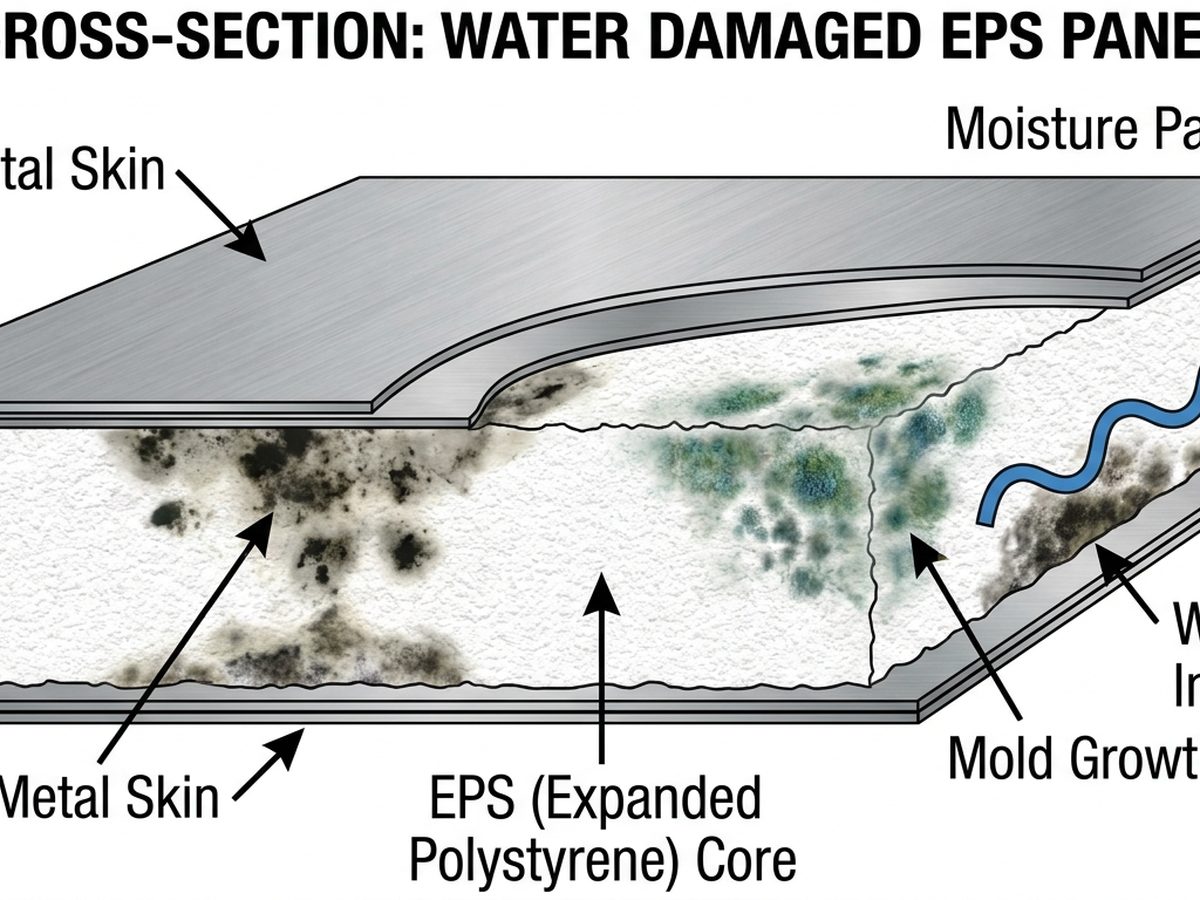
EPS, or Expanded Polystyrene, is a lightweight foam core sandwiched between two metal facings. The structure is excellent for insulation, but it has one critical weakness that is often downplayed: EPS is hygroscopic. That means once moisture or water vapor finds its way in, the EPS core absorbs that moisture and holds onto it.
Here are the three main reasons your EPS sandwich panels are growing mold:
1. Wrong Material Choice for Wet Zones
This is the most common mistake. Many distributors label EPS as "moisture-resistant," but the term is misleading. EPS is not designed for consistently high-humidity spaces — think factory washdown areas, sterilization rooms, wet processing zones, or cold storage with aggressive defrost cycles. When installed in these environments, the EPS core slowly absorbs water vapor from the surrounding air.
2. Sealant and Joint Treatment Failure
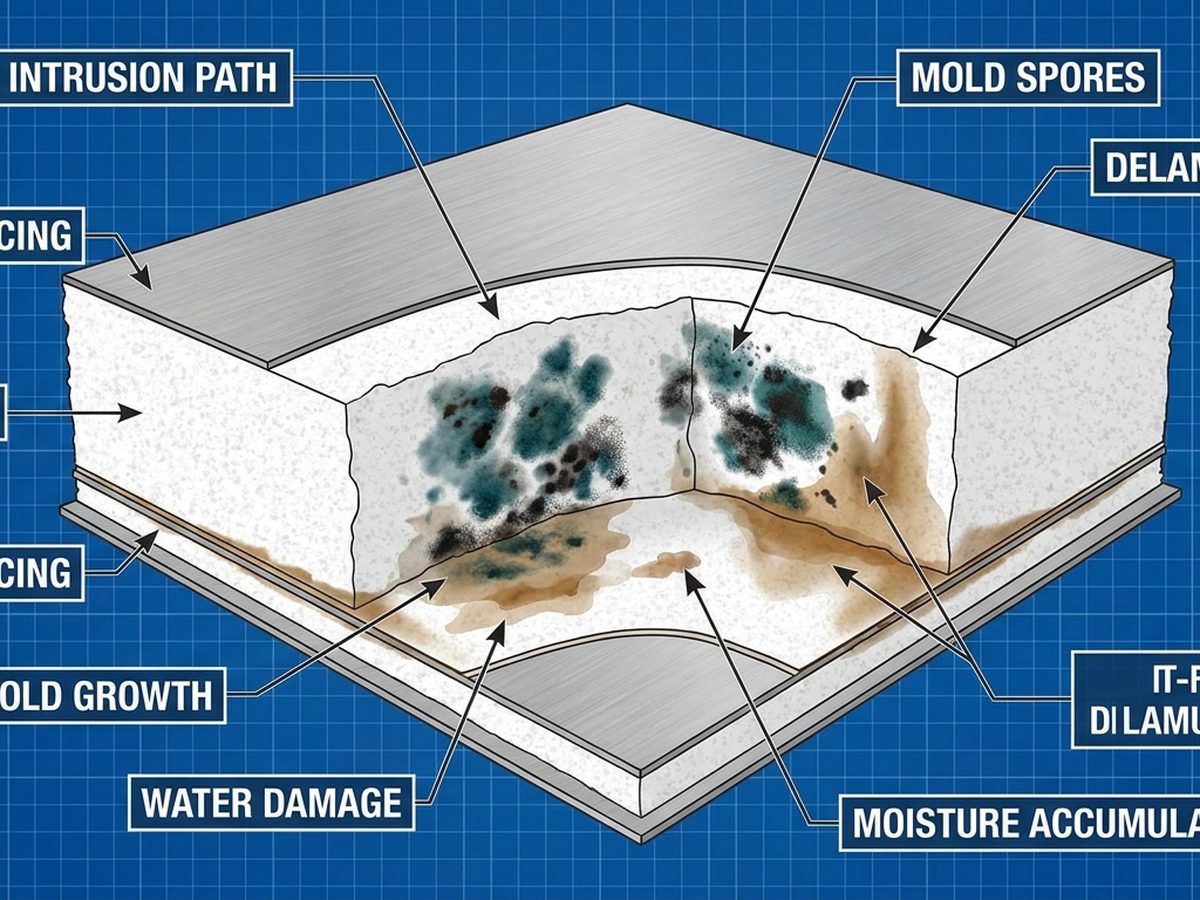
Water can penetrate through the tiniest gaps — and the joints between panels are the weakest link. Sealant that has hardened, cracked, or was applied without proper primer lets moisture seep into the joint gap. Once water breaches the core, EPS behaves like a sponge.
3. Missing Vapor Barrier on the Warm Side
In air-conditioned or refrigerated spaces, the temperature difference between indoor and outdoor creates vapor pressure. Without a vapor barrier installed on the warm side of the panel, water vapor migrates into the core, condenses, and eventually becomes a breeding ground for mold.
The Most Practical Solution
Once you understand the cause, shift your focus: do not just clean the visible mold. Break the moisture cycle that feeds it. Here are the recommended steps based on the severity of damage:
Light Damage (surface mold only, panels still solid)
- Clean affected areas with a quaternary ammonium-based anti-fungal solution — avoid bleach, which can damage metal facing coatings
- Dry the area thoroughly with an industrial dehumidifier for at least 48 hours
- Identify and fix the moisture source: cracked sealant, roof leaks, pipe condensation, or poor drainage
- Apply new sealant to all suspect joints
- Monitor room humidity — aim for below 60% RH
Moderate Damage (mold reaching joints, minor swelling)
- Remove affected panels at the joint areas
- Replace sealant and gaskets around the entire perimeter of damaged panels
- Install additional flashing or drip edges at water-prone points
- If the core is damp, inject specialized drying agent and allow time for forced-ventilation drying
Heavy Damage (panels softened, core waterlogged, persistent odor)
There is no alternative — the panels must be replaced. And when you do replace them, this is your chance to correct the original material selection error.
The Right Sandwich Panels for Wet Applications
If you must replace panels, make sure you do not repeat the same mistake. Here is a material selection guide based on room conditions:
| Room Condition | Correct Core Material | Reason |
|---|---|---|
| Wet factory areas (washdown, wet processing) | PU (Polyurethane) with >95% closed-cell content | High closed-cell ratio prevents water absorption, far more moisture-resistant than EPS |
| Cold storage / freezer | PIR (Polyisocyanurate) | Better fire rating, lower thermal conductivity, withstands defrost cycles |
| Laboratory / cleanroom | PU or PIR with stainless steel facing | Easy to sanitize, does not support microbial growth, resistant to disinfectants |
| Dry warehouse / general areas | EPS (acceptable with good ventilation) | EPS works well for dry applications on a tighter budget |
One important point: PU or PIR panels do cost more than EPS upfront. Learn more in our complete PIR vs PUR vs EPS comparison. But factor in repair costs, production downtime, and potential product contamination — a cheap panel used in the wrong application becomes far more expensive over time.
Mistakes to Avoid
After hundreds of projects, these are the repeating error patterns we see most often:
- Trusting "moisture-resistant" claims without checking technical data. Ask for the manufacturer's technical data sheet, not the sales pitch. Look for water absorption rates and closed-cell content figures.
- Ignoring room ventilation. A space without adequate exhaust fans or air circulation traps water vapor, creating an ideal mold environment — regardless of how good the panels are.
- Patching damaged sealant without drying the core first. Once the EPS core is wet, sealing the outside only traps moisture inside. This is like closing an infected wound without cleaning it.
- Using secondhand or reclaimed panels without thorough inspection. Panels that have been exposed to water on a previous project almost certainly carry mold spores inside the core.
- Skipping drip edges or flashing in areas exposed to direct splash water. This is a small investment that prevents a big headache.
Quick FAQ
Can EPS sandwich panels ever be used in damp environments?
It is not black and white. EPS can work in spaces with normal humidity levels (below 60% RH) as long as ventilation is good and there is no direct water contact. But for consistently wet areas, washdown rooms, or cold storage with extreme temperature swings — PU or PIR is the safer choice every time.
How much does it cost to replace moldy EPS panels with PU?
Costs vary widely depending on total area, access conditions, and whether product contamination needs cleanup. As a rough guide, the material price difference between PU and EPS is about 30-50%, plus demolition and reinstallation labor. We can provide an estimate based on your floor plan and site photos — at no charge.
Can I permanently eliminate mold just by painting with anti-mold paint?
No. Painting over moldy surfaces is like hiding a symptom without treating the disease. Anti-mold paint may delay new surface growth, but if the core inside is still damp, mold will continue spreading and eventually destroy the panel from within. Fixing the water source must come first.
How can I check if my sandwich panel core has water damage?
Three simple methods: (1) Tap the panel surface — a water-damaged core produces a dull, dead sound compared to the crisp sound of a dry panel. (2) Use a non-invasive moisture meter that can read through metal facings. (3) Drill a small hole in a hidden area — if the EPS powder coming out feels damp or smells musty, the core is compromised.
Conclusion and Next Steps
Mold problems in EPS sandwich panels always trace back to one fundamental error: the wrong material for the wrong conditions. EPS is a solid product for its intended applications — but not for wet rooms, high-humidity zones, or spaces with frequent water contact.
If your panels are already showing mold, step one is to assess the damage level. Light damage can be fixed with cleaning and sealant repairs. But if the core is waterlogged, replacing panels with the right material — PU or PIR — is the most cost-effective decision in the long run.
You do not have to figure this out alone. Our team can help with on-site inspection, material recommendations, and transparent cost estimates. Reach us via WhatsApp at +62 811-9898-835 or visit the contact page for a free consultation. Do not wait until mold spreads into your production zone.