

Choosing insulation material for cold storage is not a decision to be taken lightly. Many frozen food, pharmaceutical, and food distribution business owners end up regretting their panel choice. The problem: PIR panels, PUR panels, and EPS panels all look similar from the outside, but insulation performance and fire resistance are vastly different.
Quick answer: PIR panels are the best choice for cold storage requiring high fire ratings and extremely low temperatures (below -20°C). PUR panels suit standard cold rooms with limited budgets. EPS panels are only recommended for mild temperature applications or dry storage.
Key Differences at a Glance
Before diving into technical details, let's understand the fundamental differences between these three materials:
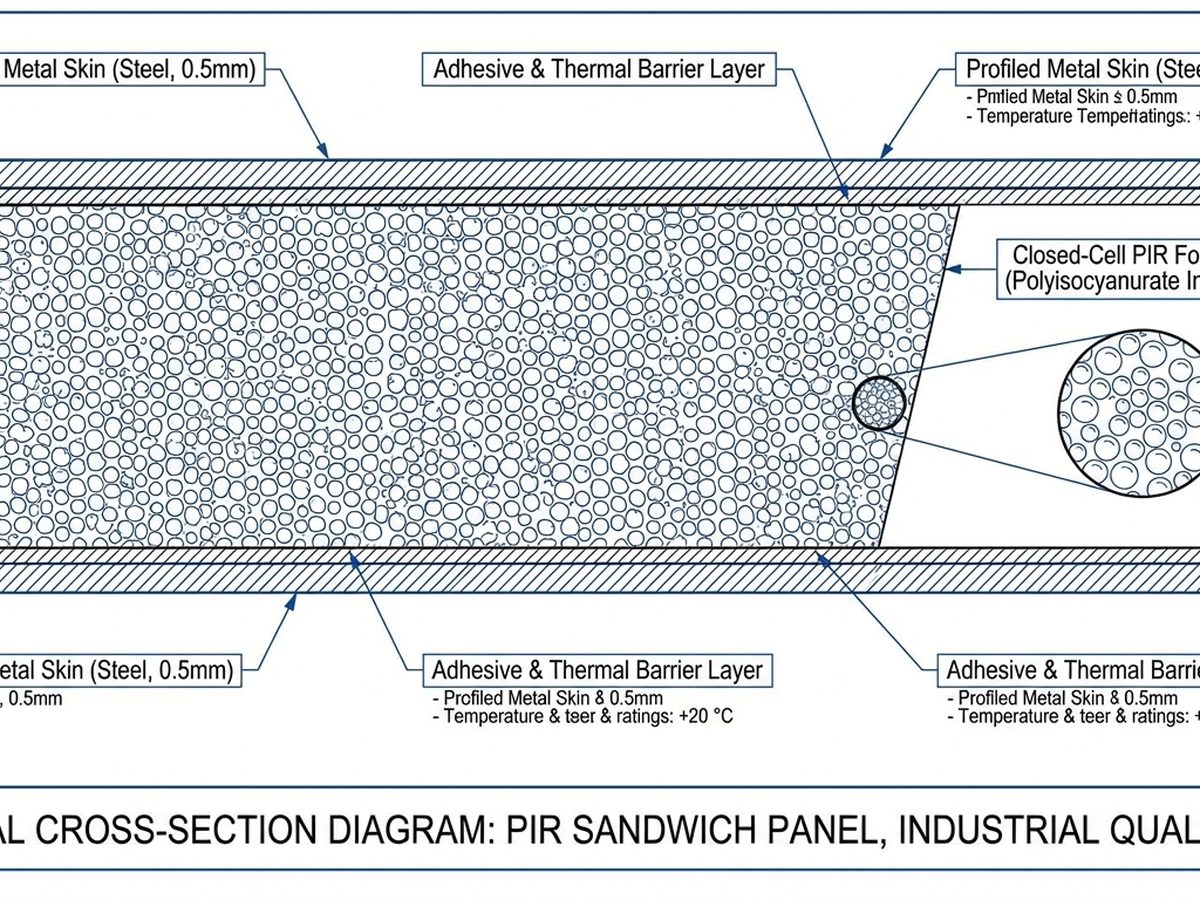
- PIR (Polyisocyanurate): A chemical modification of PUR with excess isocyanate added. Higher ignition point (250°C+), better R-value, 15-25% more expensive.
- PUR (Polyurethane): Standard industrial material with a good balance between price and performance. Ignition point around 150°C, suitable for most commercial cold storage applications.
- EPS (Expanded Polystyrene): Styrofoam-based material with the lowest price. Lowest R-value, highly flammable, only suitable for applications above 0°C.
Quick Comparison Table
| Specification | PIR Panel | PUR Panel | EPS Panel |
|---|---|---|---|
| Thermal Conductivity (W/mK) | 0.021 - 0.023 | 0.022 - 0.024 | 0.035 - 0.040 |
| Fire Rating | B1 (hard to ignite) | B2 (flammable) | B3 (highly flammable) |
| Minimum Temperature | -50°C | -40°C | -10°C |
| Density (kg/m³) | 40-45 | 38-42 | 15-20 |
| UV Resistance | Good | Adequate | Poor |
| Price per m² (estimate) | $28 - 42 | $24 - 36 | $18 - 28 |
| Service Life | 20-25 years | 15-20 years | 10-15 years |
Advantages of PIR Panels
PIR panels are the premium choice for modern cold storage for several reasons:
- Superior Fire Rating: With B1 classification (hard to ignite), PIR panels meet strict safety standards for pharmaceutical warehouses, medical facilities, and food industries regulated by BPOM.
- Extreme Temperature Performance: Can withstand temperatures down to -50°C without material degradation. This is crucial for blast freezers and deep cold storage.
- High R-Value: Lower thermal conductivity means better insulation with the same panel thickness. You can save on long-term cooling costs.
- Dimensional Stability: Does not easily shrink or warp over time, maintaining cold room seal integrity.
- Chemical Resistance: Resistant to most industrial solvents and water vapor.
Disadvantages of PIR Panels
Despite its advantages, PIR panels are not without drawbacks:
- Higher Price: Initial cost 15-25% higher than PUR can be a barrier for businesses with limited budgets.
- Availability: Not all suppliers provide PIR panels with consistent specifications. Fire rating certification verification is necessary.
- More Complex Installation: Requires skilled technicians who understand material characteristics for perfect joints.
Advantages of PUR Panels
PUR panels remain a popular choice because:
- Price-Performance Balance: For standard commercial cold storage (temperature -18°C to 0°C), PUR provides adequate insulation at a more affordable price.
- Wide Availability: Almost all cold storage contractors are familiar with PUR panel installation.
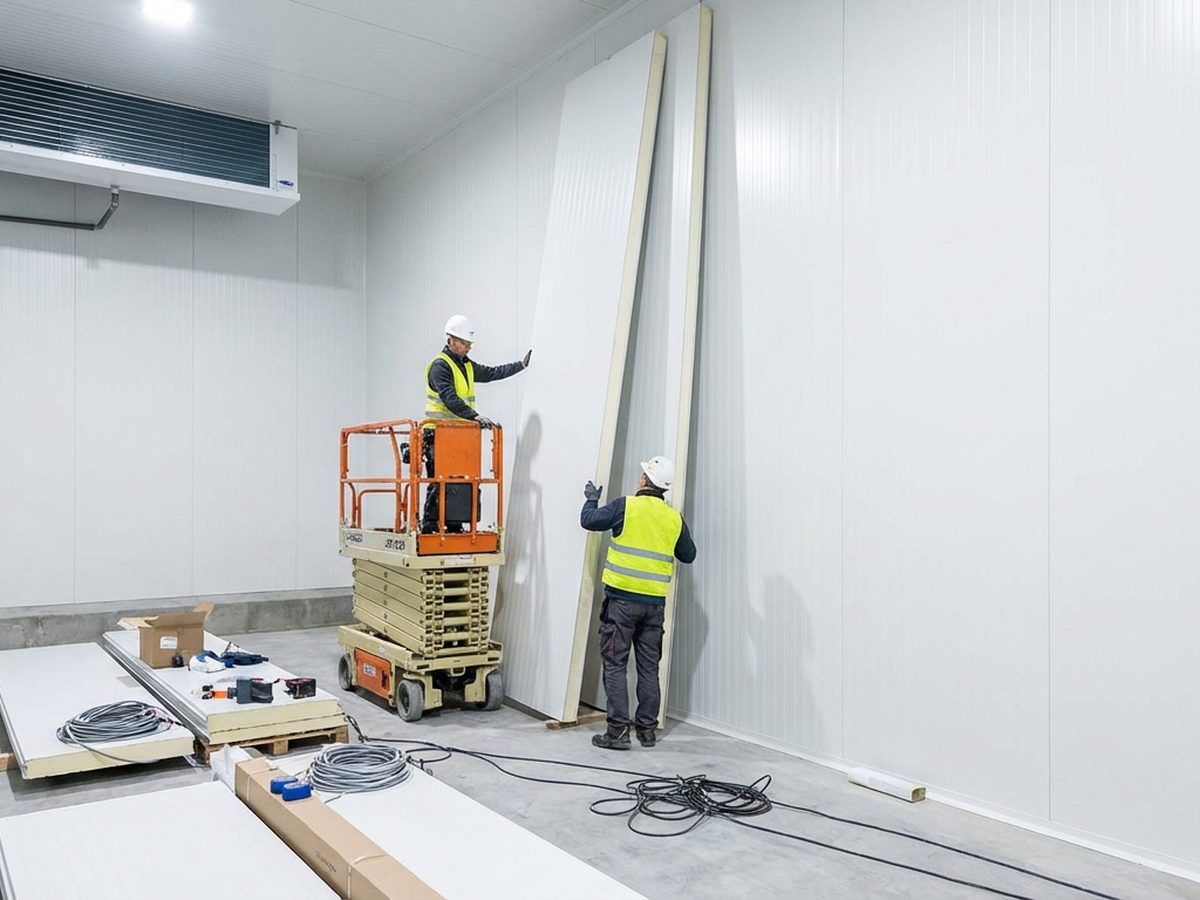
- Fast Installation: Common camlock systems make installation easy and allow disassembly if relocation is needed.
- Thickness Customization: Available from 50mm to 200mm, allowing cost optimization according to insulation needs.
Disadvantages of PUR Panels
Some considerations before choosing PUR:
- Limited Fire Rating: B2 classification means the material is flammable. For facilities with strict regulations, this can be a deal breaker.
- High Temperature Degradation: Above 150°C, PUR begins to melt and release toxic gases. Safe maximum operating temperature is 80-100°C.
- UV Sensitivity: Direct sunlight exposure over long periods can damage foam cell structure.
Advantages of EPS Panels
EPS panels still have a place in the market because:
- Lowest Price: Entry-level budget for dry storage or light cool rooms.
- Lightweight: Low density makes transportation and handling easier.
- Water Resistant: Closed-cell properties make it moisture resistant.
Disadvantages of EPS Panels
EPS limitations are quite significant:
- Low R-Value: Requires greater thickness to achieve the same insulation as PIR/PUR.
- Highly Flammable: Without flame retardant, EPS ignites easily and melts.
- Not Cold Resistant: Below -10°C, cell structure can become brittle and crack.
- Less Impact Resistant: Brittle material, prone to damage during installation.
Suitable for What Projects
Choose PIR Panels If:
- You are building pharmaceutical cold storage with CPOB/GMP standards
- Blast freezer with operating temperatures -30°C to -50°C
- Facilities with strict fire safety regulations (malls, hospitals, commercial buildings)
- Long-term investment (20+ years) is a priority
- Electricity operational costs need to be minimized
Choose PUR Panels If:
- Cold room for restaurants, supermarkets, or standard frozen food distribution
- Operating temperatures -18°C to 0°C
- Limited budget but still need reliable insulation performance
- Need a solution that is easy to install and can be disassembled
Choose EPS Panels If:
- Dry storage for dry materials that do not require cooling
- Light cool room with temperatures above 0°C
- Temporary projects or portacamps with short service life
- Very limited budget and safety is not the main priority
FAQ: Frequently Asked Questions
What is the ideal panel thickness for cold storage at -25°C?
For -25°C temperatures, it is recommended to use PIR or PUR panels with 100-150mm thickness. PIR 100mm is equivalent to PUR 120mm or EPS 180mm insulation. Always consider cooling load and door opening frequency.
Do PIR panels need special treatment during installation?
Yes. PIR panel joints require special sealant and proper camlock technique to ensure no thermal bridges. It is recommended to use experienced contractors with cold storage project portfolios.
What is the additional cost to upgrade from PUR to PIR?
For a 10x10x3 meter cold storage (300 m² walls + roof), upgrading from PUR to PIR adds approximately $1,600-2,600 to the cost. However, electricity savings can reach 15-20% per year, so ROI is achieved within 3-5 years.
Are EPS panels safe for food cold storage?
EPS with fire retardant additives can meet basic standards, but is not recommended for facilities with temperatures below -10°C or strict BPOM regulations. For food-grade cold storage, PIR or PUR with food-safe coating is more recommended.
How do I verify the fire rating of the panels I buy?
Request fire rating test certificates from accredited laboratories (such as Sucofindo or Intertek) from the supplier. Check classification according to EN 13501-1 standards (B1, B2, B3) or ASTM E84. Do not just trust marketing claims without supporting documents.
Conclusion and Recommendations
The choice between PIR, PUR, and EPS panels for cold storage should be based on your temperature requirements, safety regulations, and investment horizon.
PIR panels are the best choice for modern facilities prioritizing safety and long-term energy efficiency. PUR panels offer optimal balance for most commercial applications. EPS panels are only suitable for light applications with very limited budgets.
Before deciding, consult your specific project needs with our expert team. Every cold storage has unique characteristics, and choosing the right material will determine operational efficiency and facility lifespan.
Need a quote for cold storage with specific specifications? Contact our consultant team at sandwichpanels.id or WhatsApp for free site surveys and detailed calculations.