

The Core Problem: Leaking and Non-Watertight Panel Joints
Sandwich panel joint sealant is often the most overlooked weak point in a construction project. Contractors focus on panel thickness, core type, or coating color — then forget that sealant quality at the joints determines whether the building is actually watertight and airtight. When the wrong sealant is chosen or applied incorrectly, water seeps slowly through joint gaps, corrodes the panel skin from within, and ruins the insulation. All of this happens invisibly until the damage is severe.
This article addresses the problem most people face in the field: how to choose the right sealant for sandwich panel joints, what mistakes happen most often during application, and what steps you can take to make joints truly durable over the long term. For background on panel installation basics, see our guide to installing sandwich panels.
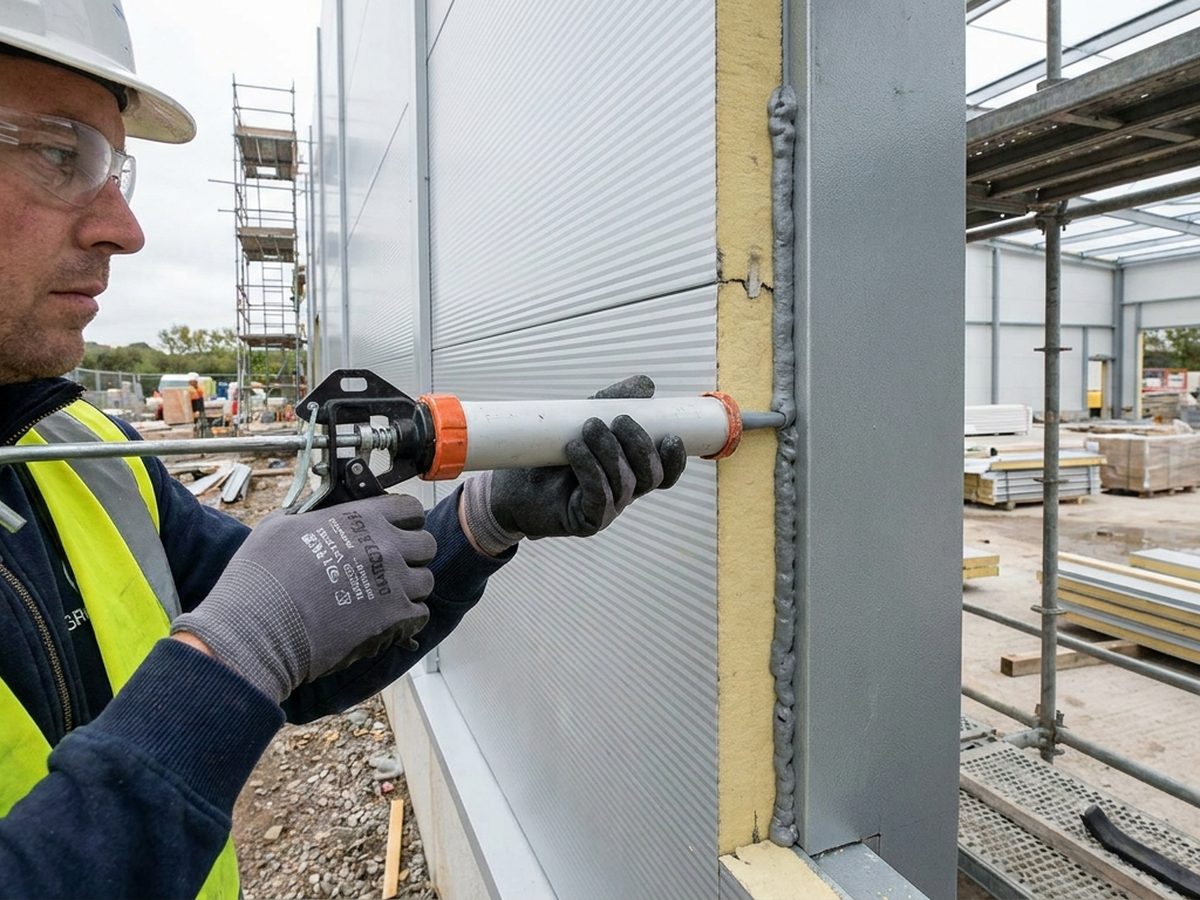
Why Panel Joints Fail: Common Causes
Several root causes explain why sandwich panel joints go wrong:
- Wrong sealant type. Using general-purpose glass silicone on exterior panel joints, for instance, leads to cracking because the material cannot handle the panel's thermal expansion coefficient.
- Poor surface preparation. Dust, oil, and rust left on the joint surface weaken adhesion. A sealant applied over a dirty layer will peel off within months.
- Missing backer rod. Without a backer rod, the sealant fills the entire joint depth — creating excessive stress and accelerating cohesive failure.
- Incorrect application thickness. Sealant that is too thin cannot absorb thermal movement. Sealant that is too thick struggles to cure properly and cracks from within.
- Applying in bad weather. Installing sealant during rain or when surface temperatures exceed 40°C leads to poor curing and reduced performance.
These causes are interconnected. One early mistake can trigger a cascade of damage down the line.
The Practical Solution: Choosing and Applying Sealant Correctly
The first and most important step is selecting a sealant that matches the panel type and environmental conditions. Here is a quick guide:
- Identify the joint type. Is it a thermal movement joint, structural joint, or simple weather seal? Each requires different sealant characteristics.
- Match the panel skin material. Steel skin panels have different requirements than aluminum skin panels. The sealant must be chemically compatible with the panel coating.
- Factor in thermal movement. Sandwich panels expand and contract with temperature changes. The sealant must absorb movement of ±25% to ±50% of the joint width.
- Consider environmental conditions. For high-humidity areas like cold rooms, choose a sealant with high moisture resistance. For exterior surfaces exposed to UV, make sure the sealant includes UV stabilizers.
Once the right sealant is selected, proper application is equally critical. Clean the joint surface with solvent, install the backer rod at the correct depth, apply sealant evenly, and tool the bead to ensure full contact with both joint walls.
Sealant Types Suitable for Sandwich Panels
Not all sealants perform the same. Here is a breakdown of the most common types used for sandwich panel joints:
1. Polyurethane (PU) Sealant
PU sealant is the most popular choice for exterior panel joints. It offers good elasticity (movement capability ±25-50%), strong adhesion to metal, and solid weather resistance. The downside: not all PU sealants handle UV well without a topcoat, and curing time is longer than silicone. To understand how different core materials affect sealant selection, read our comparison of EPS, PU, PIR, and Rockwool panels.
2. Silicone Sealant
Silicone excels at handling extreme temperatures and has better UV resistance than PU. However, it cannot be painted (poor paint adhesion) and costs more. Best suited for joints that face direct sun exposure and need an extra-long service life.
3. Butyl Sealant
Butyl sealant is often used as tape or strip for quick application. It is extremely sticky and water-resistant, but its movement capability is limited (around ±10%). Most appropriate for joints that barely move, or as a secondary seal behind mechanical fasteners.
4. MS Polymer (Modified Silane)
MS polymer combines the best of PU and silicone: paintable, strong adhesion, and weather-resistant. Movement capability sits around ±25%. This type is gaining popularity for its versatility, though pricing remains higher than conventional PU.
For cold storage projects, the sealant must carry food-safe certification and emit minimal VOC — volatile compounds can contaminate products stored inside the room. Always check that the sealant declares compliance with FDA or equivalent standards.
Mistakes to Avoid
Common errors in the field and how to prevent them:
- Skipping primer. Many sealants require primer for optimal adhesion to coated panels. Skipping primer means risking adhesion failure.
- Wrong joint width. A joint that is too narrow gives the sealant no room to move. A joint that is too wide stretches the sealant excessively. Follow manufacturer recommendations: minimum joint width should be 2× the expected movement.
- No backer rod. A backer rod prevents three-sided adhesion, which causes the sealant to tear when it moves. Use closed-cell backer rods for joints exposed to moisture.
- Applying without masking tape. Without masking tape, sealant edges become messy and difficult to tool. The result is not just poor aesthetics but potential water entrapment.
- Mixing sealants from different manufacturers. Each manufacturer formulates differently. Mixing can trigger chemical reactions that degrade performance.
- Layering new sealant over damaged old sealant. Old sealant must be completely removed before applying new material. Layering hides the problem instead of fixing it.
Quick FAQ
How long does sandwich panel joint sealant last?
Quality sealant for exterior applications typically lasts 10-20 years, depending on type and environmental conditions. PU sealant averages 10-15 years, while silicone can reach 20 years. Regular inspection every 2-3 years helps catch early degradation. For tips on keeping panels in good condition, see our sandwich panel maintenance guide.
Can the same sealant work on all sandwich panel types?
Not always. Panels with PVDF coating need special primer. Aluminum panels need sealant compatible with aluminum oxide. Always check the sealant manufacturer's compatibility chart before application.
Which sealant is best for cold storage?
For cold rooms, choose a sealant rated for low temperatures (down to -40°C), with low VOC and food-safe certification. Food-safe PU sealant or MS polymer are common choices. Avoid generic sealants that become rigid and crack at low temperatures.
What is the ideal sealant thickness at a panel joint?
The ideal sealant thickness is approximately half the joint width. For example, a 10 mm joint needs sealant about 5 mm thick. This ratio ensures the sealant is elastic enough to absorb movement without being so thick that it suffers cohesive failure.
Do I need to repaint after applying sealant?
PU and MS polymer sealants can be repainted because their surfaces accept paint. Silicone sealant cannot be painted — paint will not adhere to it. Consider your aesthetic requirements before choosing the sealant type.
Conclusion and Next Steps
Sandwich panel joint sealant is not a component you can treat as an afterthought. Choosing the wrong type or cutting corners during application leads to water infiltration, insulation corrosion, and repair costs far exceeding the initial investment in proper sealant. Start by identifying your joint type and environmental conditions, pick a compatible sealant, and follow strict application procedures — from surface preparation and backer rod installation to primer application and tooling.
If you need detailed guidance for a specific project or want to discuss sandwich panel products and the right joint systems, reach out to the SandwichPanels.id team for a free consultation.