

The Particle Contamination Problem at Cleanroom Entry Points
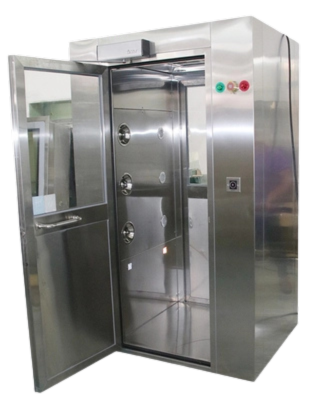
A cleanroom air shower is a decontamination device installed at clean area entrances to remove dust particles and contaminants from personnel's body and clothing before entering the cleanroom. If your facility experiences particle count spikes every time staff enters the production area, chances are you either lack an air shower or the existing unit no longer performs effectively.
The quick answer: an air shower blows high-pressure jets of HEPA-filtered clean air (20-25 m/s) over the entire body surface for 10-15 seconds. This process removes up to 99% of loose particles clinging to work clothes, hair, and skin.
In pharmaceutical and semiconductor manufacturing, a single hair strand or fabric fiber that slips into the cleanroom can disrupt the production process. The air shower serves as the last line of defense before the sterile zone, working alongside cleanroom garments, shoe covers, and positive-pressure systems to keep room cleanliness classification under control.
Why Cleanrooms Often Fail to Maintain Their Cleanliness Class
Many cleanroom facilities that have spent heavily on installation still fail to maintain their target cleanliness classification. One of the primary causes is inadequate control at personnel entry points.
Personnel Carry Contaminants from Outside
Humans are the largest source of contamination in cleanrooms. An average person releases 100,000 particles per minute while standing still, and this number jumps to 10 million particles per minute during active movement. Without an air shower, these particles enter the production area directly every time the door opens.
Cleanroom Garments Are Not Enough
Even when personnel wear gowns, gloves, and shoe covers, particles still cling to the outer surface of garments. Fibers from underclothing, dust from the changing room, or particles picked up walking from the locker to the entry door all need removal before contact with the sterile area.
Differential Pressure Disruption When Doors Open
Every time a cleanroom door opens, air exchanges between the clean area and the corridor. An air shower equipped with a double-door interlock prevents both doors from opening simultaneously, keeping differential pressure stable during personnel entry.
Air Shower Types Based on Capacity and Application
Selecting the right air shower type depends on personnel count, entry frequency, and the type of material that needs decontamination. Here are the main classifications available on the market.
Single-Person Air Shower
The most common design for small-to-medium facilities. One person enters, the door closes automatically, and air jets blow from two or three sides during a preset cycle. After completion, the cleanroom-side door opens. Suitable for laboratories, small pharmaceutical production rooms, and low-traffic sterile areas.
Double-Door Air Shower (Multi-Person)
Capacity for 2-4 people simultaneously. More efficient for facilities with large shift changes or high-volume production areas. Nozzles are mounted on both walls and the ceiling for 360-degree coverage. Cycle time is typically longer (15-20 seconds) to accommodate more personnel.
Cargo Air Shower
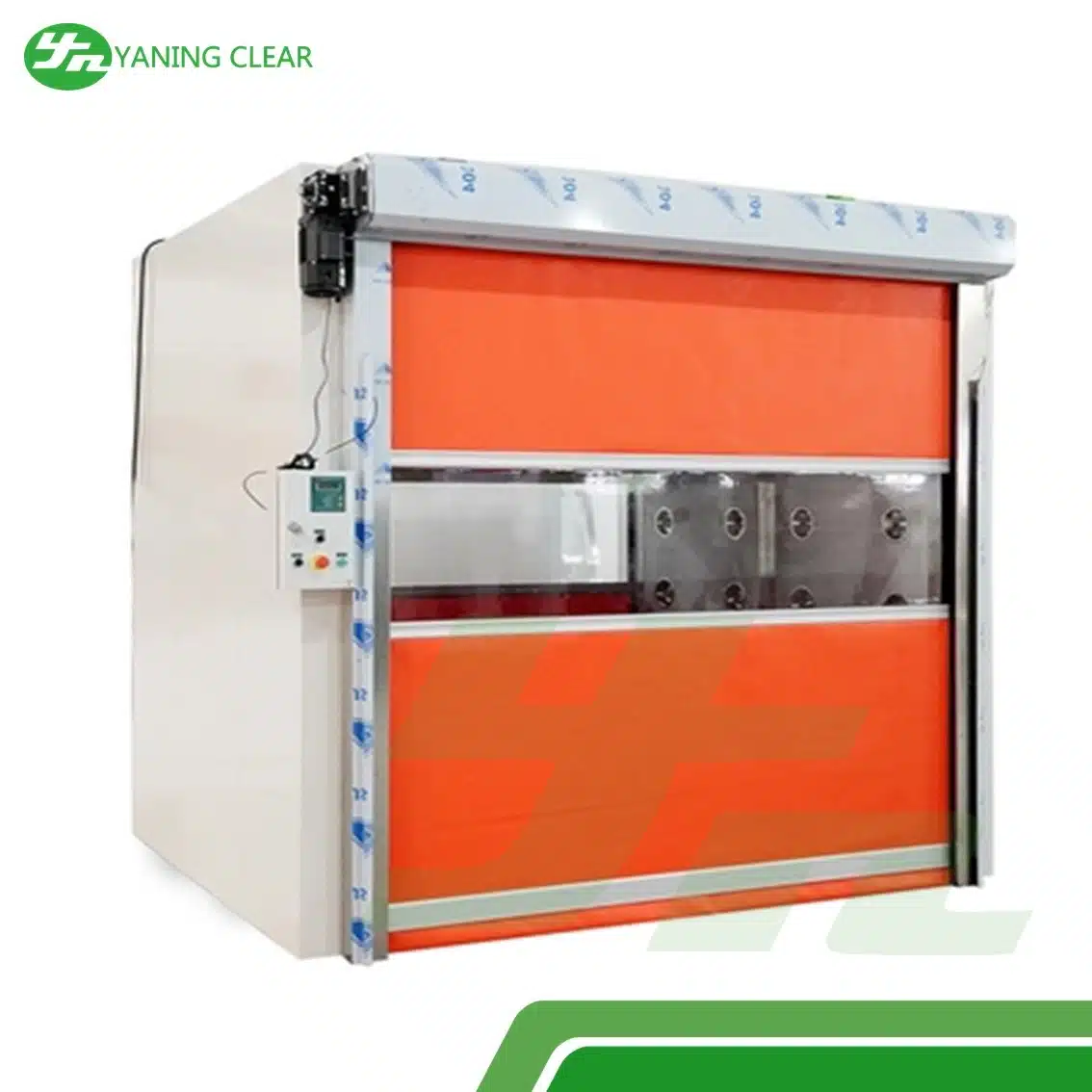
Specifically designed for decontaminating materials, trolleys, and pallets before entering the cleanroom. Larger in size with roller conveyors or flat floors for easy access. Some models include automatic fast shutter doors that speed up throughput without compromising decontamination effectiveness.
- Single-person: 1 person/cycle, suitable for labs and low-traffic areas
- Double/multi-person: 2-4 people/cycle, efficient for shift changes
- Cargo air shower: for materials and trolleys, with roller/flat floor
- Tunnel air shower: for long corridors with high traffic, walk-through cycle
Technical Specifications That Determine Air Shower Effectiveness
Not all air showers perform the same. Specification differences can mean significant variations in decontamination capability. Watch for these key parameters when evaluating products.
Air Jet Velocity
The most important parameter. The minimum effective velocity is 20 m/s at the nozzle surface. Higher velocity means more particles get dislodged from surfaces. Premium air showers reach 25-28 m/s. Below 18 m/s, decontamination efficiency drops dramatically and the unit becomes more of a formality than a functional tool.
Nozzle Count and Position
Nozzle configuration determines blow coverage area. Standard models have 12-24 nozzles on two sides. Premium models reach 36 nozzles distributed across three sides plus the ceiling. Each nozzle should be individually adjustable to optimize airflow toward body areas that collect the most particles — shoulders, chest, and waist.
Filtration System
Air showers use pre-filter plus HEPA H13/H14 to ensure the blown air is genuinely clean. A dirty HEPA filter reduces jet velocity and actually spreads captured particles. Filter replacement schedules must be followed strictly: pre-filter every 3-6 months, HEPA every 1-2 years depending on environmental conditions.
Construction Material
Air shower walls and ceilings are typically available in two options: stainless steel 304 and cold-rolled steel with powder coating. For a standard single-person air shower, powder coating suffices for most applications. Stainless steel is mandatory for pharmaceutical, food, and high-humidity environments.
Control System and Interlock
Modern air showers include a PLC (Programmable Logic Controller) that manages cycle duration, door delay, and emergency stop. A dual-door interlock system is the minimum standard — the corridor-side door and the cleanroom-side door cannot open simultaneously. Some premium models offer BMS integration and usage logging for compliance audits.
Common Mistakes When Choosing an Air Shower
Based on field experience, here are frequent mistakes and how to avoid them.
First, selecting based on the lowest price without checking jet velocity. A cheap air shower with only 15 m/s velocity is practically useless — your money buys a device that functions as an interlock door with no real decontamination effect.
Second, ignoring filter maintenance requirements. Many buyers do not account for periodic HEPA filter replacement costs. Ask the supplier about replacement filter pricing and availability before committing to a unit purchase.
Third, miscalculating capacity needs. A facility with 50 people per shift that installs only one single-person air shower creates a bottleneck at the entrance. Personnel end up rushing through or skipping the blow cycle entirely, defeating the whole purpose of the installation.
- Count personnel per shift and entry-exit frequency
- Confirm jet velocity of at least 20 m/s (check test report)
- Verify nozzle configuration meets your needs (2-side vs 3-side)
- Confirm replacement filter availability in your region
- Consider integration with existing BMS systems
FAQ: Common Questions About Cleanroom Air Showers
How long should the optimal air shower blow cycle be?
The optimal cycle ranges from 10-15 seconds for a single-person air shower. Durations shorter than 10 seconds are not effective enough to dislodge particles from the entire body surface. Durations beyond 20 seconds rarely provide significant improvement and actually reduce throughput. For cargo air showers, cycles can run longer (15-30 seconds) depending on the material size being decontaminated.
Can an air shower replace cleanroom garments?
No. Air showers and cleanroom garments complement each other rather than substitute. Cleanroom garments prevent particles from skin and underclothing from spreading into the environment. Air showers clean particles clinging to garment outer surfaces after being worn. Both are required to maintain cleanroom cleanliness classification consistently.
What are the monthly operating costs for an air shower?
Main operating costs include blower motor power consumption (0.75-2.2 kW depending on model), pre-filter replacement (every 3-6 months), and HEPA filter replacement (every 1-2 years). For a standard single-person unit, monthly electricity costs range from approximately $15-35 USD with normal 8-hour daily usage. Replacement HEPA filter costs vary depending on size and grade.
Conclusion and Next Steps
An air shower is not merely a cleanroom accessory — it is a critical component in an integrated contamination control system. Choosing the right air shower means ensuring your cleanroom investment performs according to the planned cleanliness classification target.
Focus on three main points: adequate jet velocity (minimum 20 m/s), nozzle configuration matching your capacity and traffic needs, and availability of after-sales service including replacement filters. Do not compromise on specifications for a cheaper price if the result is a cleanroom that fails to meet standards.
If you need technical consultation to determine the right type and quantity of air showers for your project, contact our technical team via WhatsApp for further discussion and a competitive pricing offer.