

A Modular Operating Theatre (MOT) is a prefabricated surgical room system assembled from factory-made panels and integrated components. Unlike conventional construction that can drag on for months, a MOT can be installed in weeks while meeting ISO 14644 cleanroom standards for particulate control.
What Is a Modular Operating Theatre?
An MOT is an operating room where every element — walls, ceiling, flooring, doors, and control systems — is manufactured in a controlled factory environment. Each component is engineered to connect with tight tolerances, creating an airtight enclosure that minimizes contamination from airborne particles and microorganisms.
The modular approach first gained traction in European hospitals during the 1990s. Today, it has become the standard for modern hospital construction across Southeast Asia, including Indonesia. The reasons are practical: faster build times, tighter quality control, and consistent results across projects.
Traditional operating rooms are built using wet construction — plastering, painting, tiling. Every joint and corner becomes a potential harbor for bacteria. MOT systems eliminate this problem with flush-mounted sandwich panels that leave no gaps, crevices, or porous surfaces.
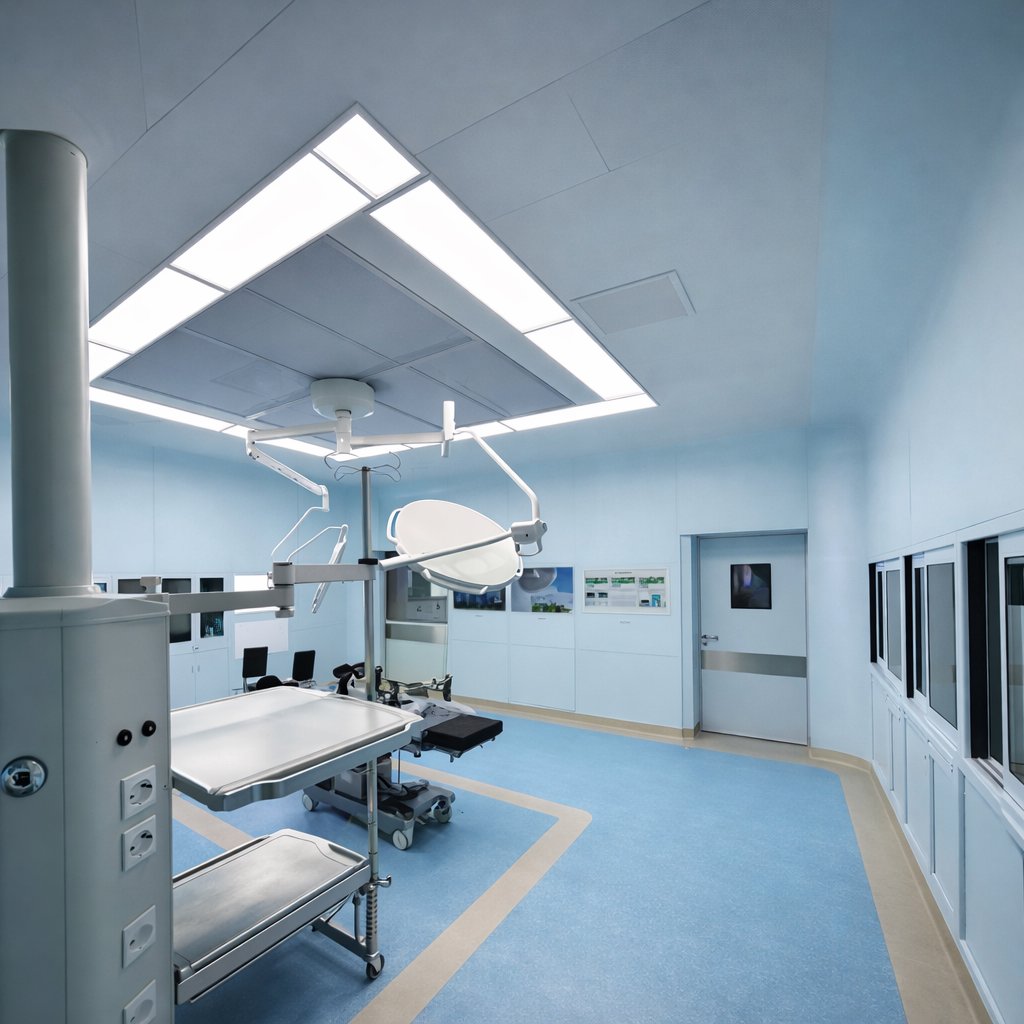
Key Components of a Modular Operating Theatre
A functional MOT is more than just panels bolted together. Several subsystems must work in concert to create a clinically viable surgical environment.
Modular Wall Panels
MOT walls use dedicated operating room modular panels finished with HPL or stainless steel. Panel thickness typically ranges from 50 mm to 100 mm, with PU or PIR cores providing thermal and acoustic insulation. Surfaces must be smooth, non-porous, and resistant to chemical disinfectants.
Panel joints use cam-lock or tongue-and-groove systems that ensure airtight seals. Room corners are formed with curved coving profiles to facilitate cleaning and prevent dust accumulation.
Laminar Air Flow Ceiling System
The operating room ceiling does far more than enclose the space above. A laminar air flow ceiling for operating theatres serves as the source of unidirectional clean air directed at the surgical table below.
These systems use HEPA H14 filters capable of capturing 99.995% of particles at 0.3 microns. Clean air is pushed downward through ceiling diffusers, then extracted at low-level wall grilles. This airflow pattern ensures particles and bacteria cannot circulate within the critical zone.
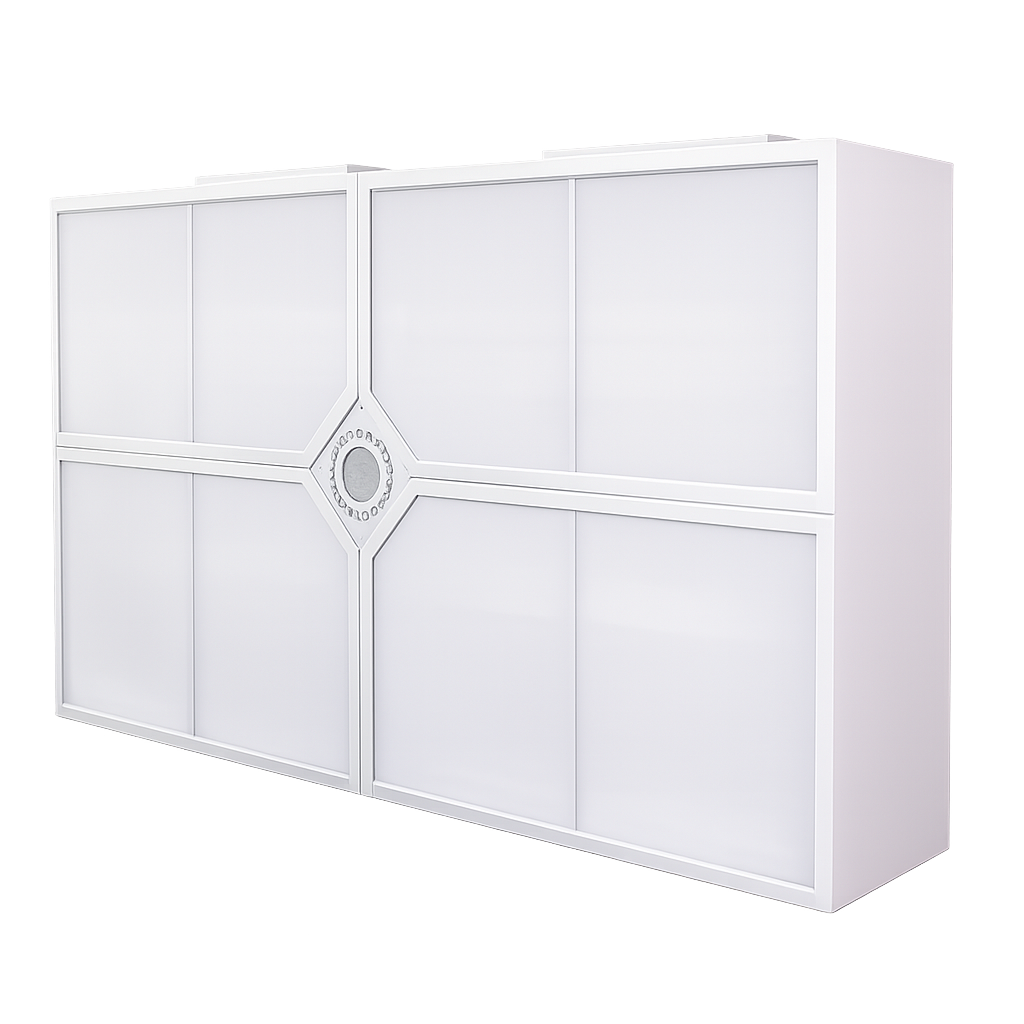
Automatic Hermetic Doors
Operating room doors must be airtight to maintain positive pressure inside the room. Automatic hermetic doors use a sliding mechanism with rubber seals on all edges. Touchless sensors trigger the opening, so surgical staff never need to contact the door surface.
Door materials are typically HPL or stainless steel with double-glazed viewing windows. Interlock systems can be installed to prevent two doors from opening simultaneously, preserving room pressure integrity.
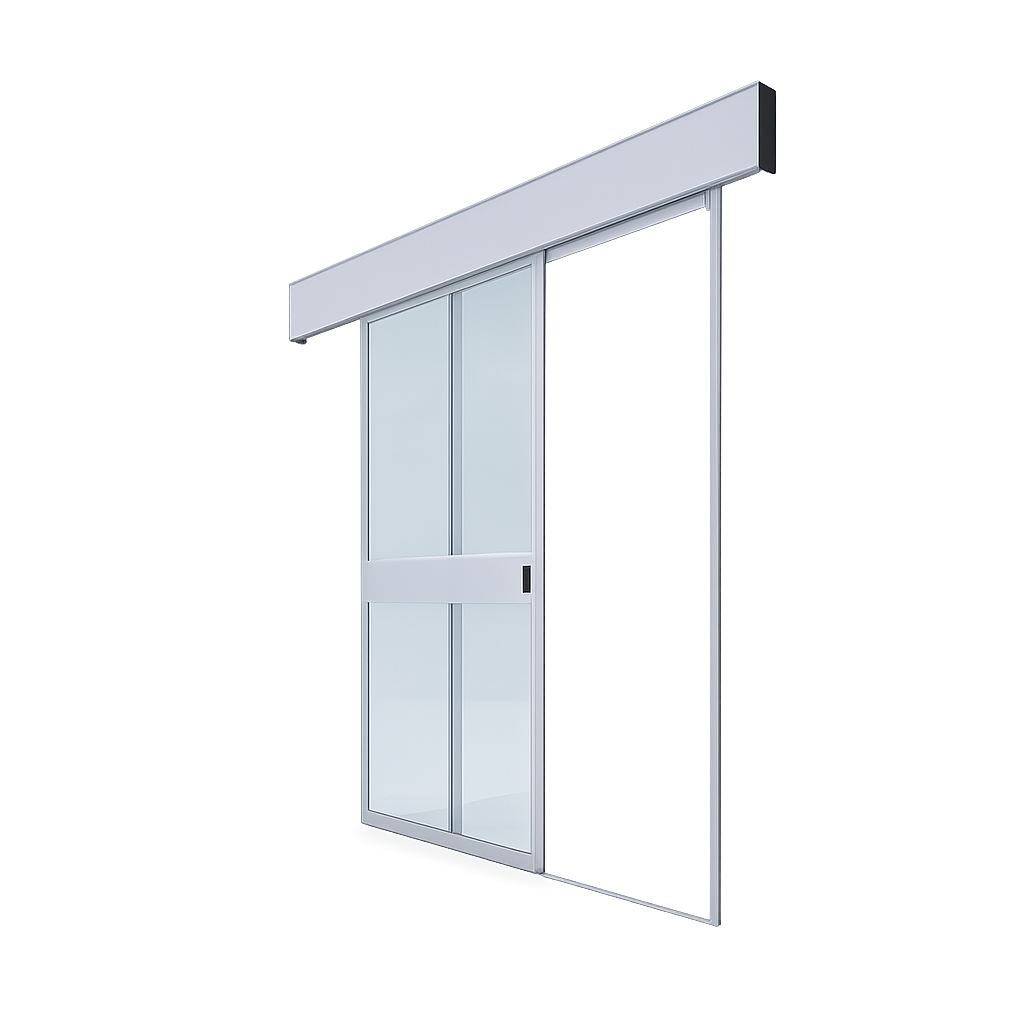
Intelligent Control Panels
Modern operating rooms feature digital control panels that let the surgeon adjust lighting, temperature, humidity, and room pressure from a single touchscreen. Some systems also display medical gas data and fire alarm status.
These panels are typically wall-embedded at a position accessible to the surgical team without leaving the sterile zone.
Observation Windows
Double-glazed observation windows allow external monitoring without opening doors. The glass must be tempered, anti-reflective, and flush-mounted with the wall surface to avoid disrupting laminar airflow patterns.
ISO 14644 Cleanroom Standards for Operating Rooms
Operating theatres fall under the cleanroom category because they must maintain specific particle concentration limits. According to ISO 14644 cleanroom classification standards, surgical rooms typically need to achieve these classes:
- ISO Class 5 (Class 100) — the zone directly below the laminar ceiling, covering the operating table area
- ISO Class 7 (Class 10,000) — the periphery zone surrounding the operating table
- ISO Class 8 (Class 100,000) — corridors and preparation rooms
Achieving these cleanroom classes depends on the combination of HVAC design, HEPA filter quality, air change rates, and the airtight integrity of every room element. MOT systems excel at that last point because prefabricated panel joints are far tighter than anything wet construction can achieve.
Additional relevant standards include HTM 03-01 (UK) for operating room ventilation and DIN 1946-4 (Germany) for surgical HVAC requirements. Indonesia's Ministry of Health references Permenkes No. 24/2016 for hospital building technical requirements.
Advantages of MOT Over Conventional Construction
Why are hospitals increasingly switching to modular systems? Here are the real-world differences:
- 60-70% faster installation. A typical MOT requires 4-8 weeks for one operating room. Conventional construction often takes 4-6 months.
- Factory-controlled quality. Every panel is produced in a controlled environment with precise tolerances. Weather conditions and worker skill variability do not affect the final result.
- Minimal disruption to hospital operations. Components arrive ready to install, so on-site work produces less dust, noise, and construction waste.
- Easier long-term maintenance. Individual modular panels can be removed and replaced without tearing down entire walls.
- Scalability. Need additional operating rooms? The modular system allows expansion without disrupting rooms already in service.
The initial investment for MOT is typically higher than a simple renovation. But when calculated on a total cost of ownership basis over 15-20 years — including maintenance, repairs, and downtime — MOT almost always comes out more economical.
Planning and Installation Phases
Building a modular operating theatre is not a project to improvise. There are defined phases that must be followed:
Phase 1 — Needs analysis. Determine the number of operating rooms, types of surgery to be performed (general, cardiac, orthopedic, transplant), and required cleanroom class. Organ transplant surgery, for example, demands full ISO Class 5 across the entire operating area.
Phase 2 — Technical design. Architects and engineers define the room layout, laminar ceiling position, HVAC routing, electrical systems, medical gas lines, and staff circulation patterns. The design must incorporate one-way traffic flow to minimize cross-contamination.
Phase 3 — Panel fabrication. Wall panels, ceiling modules, and other components are manufactured at the factory according to technical drawings. This phase typically takes 3-5 weeks depending on project complexity.
Phase 4 — On-site installation. The installation team assembles panels, mounts the HVAC system, hermetic doors, observation windows, control panels, and all utilities. This runs parallel with MEP (mechanical, electrical, plumbing) work outside the room.
Phase 5 — Commissioning and validation. After assembly, the room undergoes leak testing, particle count testing, differential pressure measurement, and cleanroom class certification. The room can only be used after passing all parameters.
FAQ: Frequently Asked Questions About Modular Operating Theatres
How long does MOT installation take from start to finish?
For a standard operating room of approximately 40-50 m², the total timeline from design to commissioning ranges from 8 to 14 weeks. Panel fabrication takes 3-5 weeks, and on-site installation requires 4-8 weeks depending on site conditions and utility readiness.
Can a modular operating room be expanded later?
Yes. Scalability is one of the core advantages of modular systems. Wall panels can be detached on one side, new modules added, and the structure reconnected. This expansion process is significantly faster and cleaner than demolishing conventional construction.
How does MOT cost compare to conventional operating room renovation?
The per-square-meter cost of MOT is generally 15-30% higher than conventional renovation at the initial stage. However, the total cost of ownership (TCO) over a 15-20 year lifecycle is typically lower due to easier maintenance, shorter downtime during repairs, and the ability to upgrade individual components without major renovation.
Conclusion
Modular Operating Theatres represent a practical choice for hospitals looking to build or renovate surgical facilities. Shorter installation timelines, guaranteed cleanliness standards, and long-term flexibility make MOT a worthwhile investment for any healthcare facility planning surgical room expansion.
Need technical consultation on Modular Operating Theatre specifications and project planning? Contact our technical team via WhatsApp for further discussion.