

Air filtration is the backbone of every cleanroom. Without the right filter cascade, your cleanroom is just an expensive room with clean walls. Yet many facilities in Southeast Asia still rely on a single HEPA layer while overlooking the critical role pre-filters and medium filters play in the air protection chain.
This guide walks you through selecting the right combination of pre-filters, medium filters, and HEPA filters tailored to your cleanroom classification, along with replacement schedules and long-term cost calculations.
What Is a Cleanroom Air Filter Cascade?
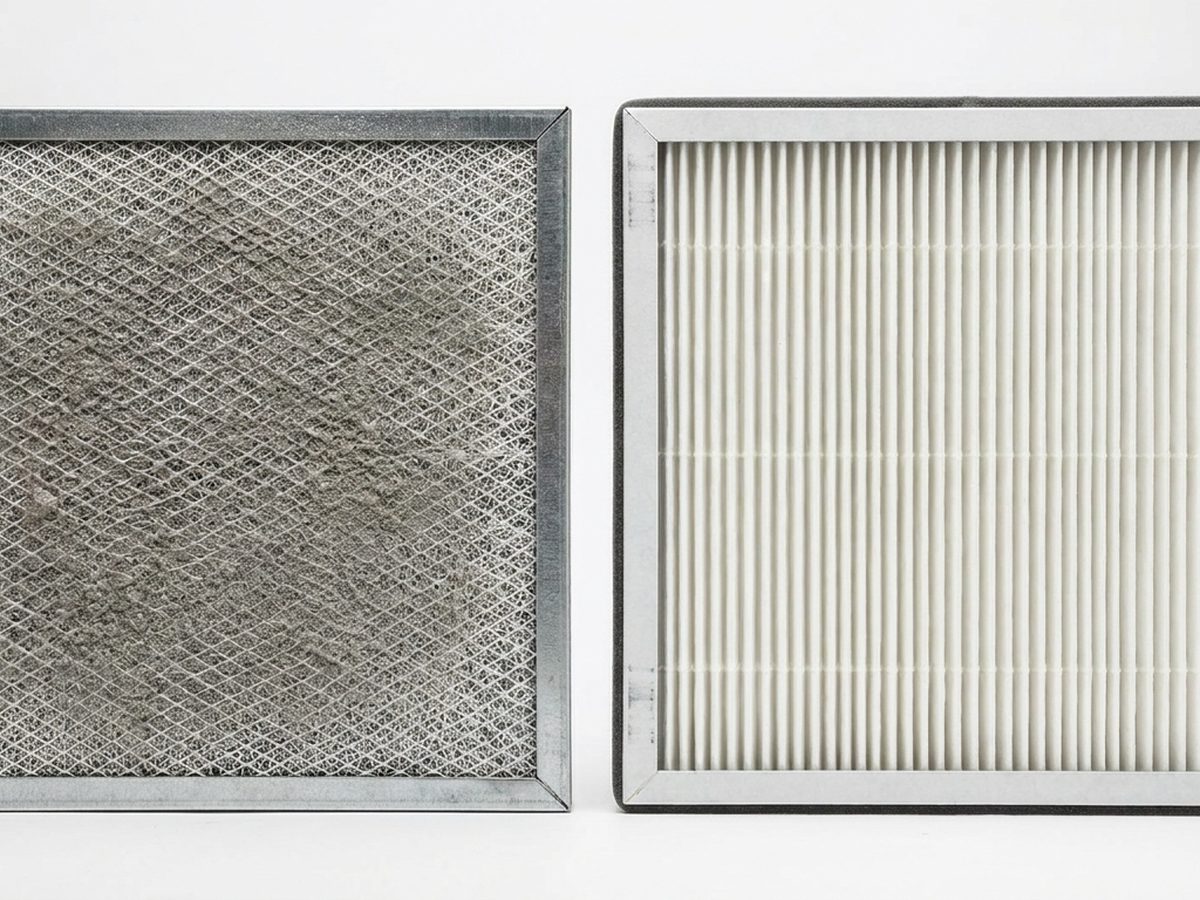
A filter cascade is a multi-stage filtration system where cleanroom air passes through progressively more efficient filter layers. Each stage serves a specific purpose:
- Pre-filter (G1-G4, MERV 1-8): Captures coarse particles like dust, fibers, pollen, and particles larger than 10 microns. These filters protect downstream stages from premature clogging.
- Medium filter (M5-F9, MERV 9-16): Captures mid-range particles of 1-10 microns such as mold spores, fine dust, and aerosols. Bridges the efficiency gap between pre-filters and HEPA.
- HEPA filter (H13-H14): Captures ≥99.95% (H13) or ≥99.995% (H14) of particles ≥0.3 microns — including bacteria, viruses, and sub-micron contaminants.
Without pre-filters and medium filters, a HEPA filter clogs within weeks — doubling replacement frequency and multiplying your operational costs.
Three Filter Levels: MERV, Efficiency, and Function Comparison
Understanding filter classifications is the first step in designing the right cascade. Here's a side-by-side comparison of the three levels:
| Parameter | Pre-Filter | Medium Filter | HEPA Filter |
|---|---|---|---|
| Class (EN 779 / ISO 16890) | G1-G4 / ISO Coarse | M5-F9 / ePM10-ePM1 | H13-H14 / EN 1822 |
| MERV Rating | MERV 1-8 | MERV 9-16 | MERV 17-20 |
| Minimum Efficiency | 60-90% at >10μm | 40-95% at 0.4μm | 99.95% (H13) at 0.3μm |
| Target Particle Size | >10 microns | 1-10 microns | ≥0.3 microns |
| Average Service Life | 1-3 months | 6-12 months | 12-36 months |
| Replacement Cost (relative) | Low | Medium | High |
Determining Your Filter Combination Based on ISO 14644 Class
ISO 14644 cleanliness classes define the maximum allowable particle count per cubic meter of air. The lower the ISO number, the stricter the filtration requirements. Here are cascade recommendations by class:
- ISO 8 (Class 100,000): H13 HEPA + F6 medium + G2 pre-filter. Suitable for general production areas with moderate cleanliness needs.
- ISO 7 (Class 10,000): H13 HEPA + F7 medium + G3 pre-filter. Minimum standard for non-sterile pharmaceuticals and electronics assembly.
- ISO 6 (Class 1,000): H14 HEPA + F8 medium + G4 pre-filter. Required for semiconductor manufacturing and certain sterile pharmaceutical processes.
- ISO 5 (Class 100): H14 HEPA + F9 medium + G4 pre-filter. Mandatory for aseptic areas, operating theatres, and sterile drug production.
For a detailed cleanroom classification guide, read: Cleanroom Classification ISO 14644: Class Guide & Standards.
Optimal Cascade Strategies by Industry
Each industry faces unique contaminant profiles and cleanliness requirements. Here are recommended cascade strategies:
- Pharmaceuticals & Medical Devices: G4 pre-filter → F9 medium → H14 HEPA. cGMP and GMP Annex 1 regulations demand the strictest filtration. Add ULPA for critical zones.
- Electronics & Semiconductors: G3 pre-filter → F7 medium → H13 HEPA. Focus on ESD (electrostatic discharge) control and conductive particle management. Use anti-static filter housings.
- Food & Beverage: G3 pre-filter → F6 medium → H13 HEPA. Prioritize food-grade certified filters rated for high humidity. Comply with HACCP and local food safety regulations.
- Hospitals & MOT: G4 pre-filter → F8 medium → H14 HEPA. Ministry of Health standards mandate minimum 99.97% efficiency for operating rooms and ICU.
- Laboratories & Research: G4 pre-filter → F8 medium → H14 HEPA. Microbiology and biotechnology labs require maximum cross-contamination protection. Consider filters with antimicrobial coating to prevent microbial growth on filter media. Cascade validation should be performed every 6 months per ISO 14644-2.
- Portable Modular Cleanrooms: G3 pre-filter → F7 medium → H13 HEPA. For containerized or modular cleanrooms, select compact-dimension filters with vibration-resistant housings for transport. Simple yet effective cascade for rapid deployment at project sites or emergency facilities.
Filter Replacement Guide: Cycles and Schedules by Stage
Timely filter replacement isn't just about cleanliness — it's a cost-saving strategy. A clogged pre-filter forces HVAC fans to work harder, increasing electricity consumption by 15-20%.
- Pre-filter: Replace every 1-3 months. Visual inspection every 2 weeks. In dusty environments, replace monthly.
- Medium filter: Replace every 6-12 months. Monitor differential pressure to determine optimal timing.
- HEPA filter: Replace every 12-36 months depending on particle load. Perform DOP testing every 6 months to verify integrity. Read our full guide: HEPA Filter Replacement Schedule Guide.
A practical rule: when differential pressure exceeds 2x the initial pressure drop, it's time to replace that filter — regardless of the calendar.
Signs Your Cleanroom Air Filters Need Replacement
Don't wait for the calendar schedule if these warning signs appear:
- Differential pressure spikes above 2x the baseline value. This is the most accurate indicator. Install manometers or digital DP sensors at each filter stage.
- Visual inspection reveals color change or dust accumulation on the filter surface. A pre-filter that has turned from white to dark gray has exceeded its service life.
- Room particle count exceeds the targeted ISO limit. Run an immediate particle count test — this could indicate a HEPA leak or a saturated medium filter.
- HVAC energy consumption rises significantly with no change in cooling load. Clogged filters increase static pressure and force fans to work harder.
Cost vs. Benefit: Why the Right Filter Cascade Saves Long-Term
Many facility managers are tempted to cut costs by reducing filtration stages. This is an expensive mistake. Here's a simple calculation:
- Without pre-filter: HEPA must be replaced every 6-8 months (vs. 24 months with a full cascade). HEPA unit cost: $200-500. Saving $15-35/month on pre-filters actually adds $800-2,000/year in HEPA costs.
- Without medium filter: 1-10μm particles hit the HEPA directly, reducing efficiency and lifespan. Energy costs rise as fans overcome rapidly increasing pressure drop.
- Complete cascade: Higher upfront investment, but TCO (total cost of ownership) is 30-40% lower over a 3-year cycle through reduced HEPA replacement frequency and energy efficiency gains.
- ROI of cascade vs single HEPA: In a 200m² ISO 7 cleanroom facility with 4 AHU units, a complete cascade saves ,000-1,700/year from reduced HEPA replacement frequency alone. Combined with 10-15% energy savings from lighter fan loads, total savings can reach ,000-2,700/year — paying back the cascade investment in under 18 months.
- Impact on validation and compliance: Consistent filter cascades help maintain particle count results within targeted ISO limits, reducing the risk of failed cleanroom audits or validations that could trigger production shutdowns and far greater financial losses.
For selecting the right ducting as part of your cleanroom HVAC system, read: Choosing HVAC Ducting for Cleanrooms Guide.
FAQ: Common Questions About Cleanroom Filter Cascades
Can I Use a HEPA Filter Without a Pre-Filter?
Technically possible, but strongly discouraged. HEPA without a pre-filter clogs with coarse particles within weeks, forcing premature and expensive replacement. Always install at least a G3 pre-filter before HEPA.
How Long Does a HEPA Filter Last with a Proper Cascade?
With regularly replaced pre-filters and medium filters, HEPA filters can last 24-36 months — even up to 5 years in clean environments. Without a cascade, HEPA lifespan can drop to 6-12 months.
What Is the Difference Between H13 and H14 for Cleanroom Applications?
H13 captures ≥99.95% of 0.3μm particles — sufficient for ISO 7-8. H14 captures ≥99.995% — required for ISO 5-6 and pharmaceutical aseptic areas. The price difference is about 20-30%, but H14 provides 10x better protection against remaining particles.
How Do I Monitor Filter Cascade Conditions?
Use differential pressure manometers at each stage. Record baseline pressure drop when new filters are installed. Replace filters when pressure drop reaches 2x baseline. For final verification, perform DOP testing on HEPA filters every 6 months.