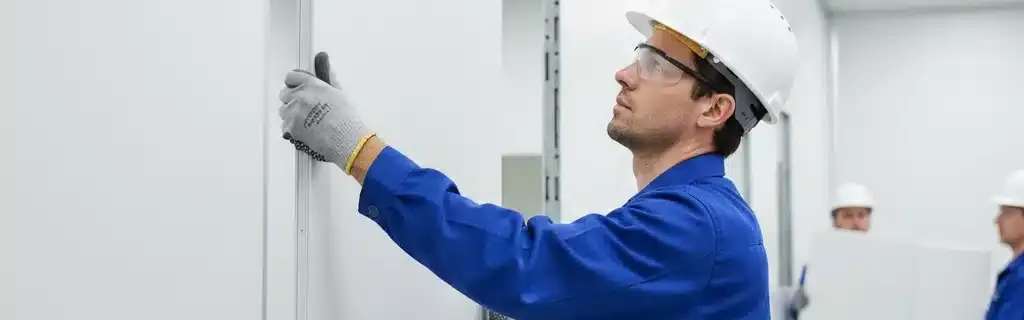

Cleanroom Air Shower Maintenance & Calibration: Complete 2026 Guide
An air shower is a critical piece of equipment in any cleanroom system. Its job is to remove contaminant particles from personnel and materials before they enter the clean zone. But like all precision equipment, air showers need regular maintenance and periodic calibration to stay effective. Without proper upkeep, filtration performance can drop significantly — increasing contamination risk and leading to failed ISO audits.
Field data from cleanroom technicians shows that an air shower left unmaintained for 6 months can lose 30-40% of its air velocity, causing it to fall below ISO 14644 requirements. This article covers maintenance schedules, procedures, and costs in full detail.
Why Air Shower Maintenance Matters
An air shower is not just a "wind-blowing door." It is a precision filtration system combining high-velocity blowers, HEPA/ULPA filters, air nozzles, motion sensors, and electronic control panels. Each component has its own service life and maintenance schedule.
A single component failure can trigger a cascade of problems:
- Clogged HEPA filter → reduced air velocity → particles not fully swept → contamination enters cleanroom
- Worn blower → uneven air pressure → some body areas unswept → personnel carry particles into ISO 5/Class 100 zones
- Unresponsive motion sensor → door opens without air shower cycle → contamination barrier fails completely
- Control panel error → inaccurate cycle duration → blow-off time too short to be effective
Beyond filtration performance, routine maintenance is essential for regulatory compliance. ISO 14644 and GMP auditors will review air shower maintenance logs during cleanroom inspections. Incomplete maintenance documentation can result in major audit findings.
Air Shower Maintenance Schedule
Daily Checks
- Check control panel display — confirm no error codes or alarms active
- Verify differential pressure indicator — should remain within normal range (typically 50-150 Pa for new filters)
- Test door interlock — both doors must not open simultaneously
- Wipe exterior surfaces with microfiber cloth and 70% isopropyl alcohol
- Record operating hours in the daily log
Weekly Checks
- Clean inlet and outlet grilles to remove surface dust
- Inspect door seals — check for tears or gaps that allow air bypass
- Test motion sensor — enter the chamber and verify the air shower starts automatically
- Listen for abnormal blower noise — grinding or squeaking indicates worn bearings
- Check UV lamp condition (if equipped) — replace if intensity has degraded
Monthly Maintenance
- Open access panel and clean blower plenum of accumulated dust
- Inspect blower belts (for belt-driven models) — check tension and wear
- Measure air velocity at 5 nozzle points using an anemometer — compare with manufacturer spec (typically 20-25 m/s)
- Verify cycle duration — should match the set parameter (usually 15-30 seconds)
- Inspect and clean magnetic door sensors
- Test emergency stop button function
Quarterly (Every 3 Months)
- Calibrate differential pressure sensor — cross-check with a reference manometer
- Visually inspect HEPA/ULPA filter from the plenum side — look for media damage or seal leaks
- Perform filter leak test using aerosol photometer (PAO test) for ISO 5 and above cleanrooms
- Check all electrical connections — ensure no loose wiring or overheating signs
- Lubricate blower bearings (for models that require it)
- Clean or replace pre-filters
Annual Overhaul
- Replace HEPA/ULPA filters — typically every 12-18 months depending on usage load and environment
- Full calibration of air velocity sensors and control system
- Blower motor inspection — measure insulation resistance and operating current
- Replace door seals if hardened or torn
- Update control panel firmware if available from the manufacturer
- Complete documentation of all maintenance activities for audit purposes
Air Velocity Calibration Procedure
Air velocity calibration is the most critical maintenance procedure for an air shower. Here are the standard steps based on industry best practices:
- Prepare tools: Have a calibrated anemometer ready (hot-wire or vane type), a tripod or positioning aid, and a calibration form
- Power down: Turn off the air shower and wait 2 minutes for the air to become static
- Position anemometer: Measure at 5 points — center and 4 corners, 15 cm from the nozzle outlet
- Take 3 readings: At each point, record 3 values and calculate the average
- Calculate variation: The difference between measurement points should not exceed 15% (common industry standard)
- Compare with specification: Minimum air velocity is typically 20 m/s for standard air showers, 25 m/s for ISO 5/Class 100 applications
- Adjust VFD: If a Variable Frequency Drive is available, adjust the blower frequency to reach the target velocity
- Document: Record all results in the calibration log and affix a calibration label to the unit
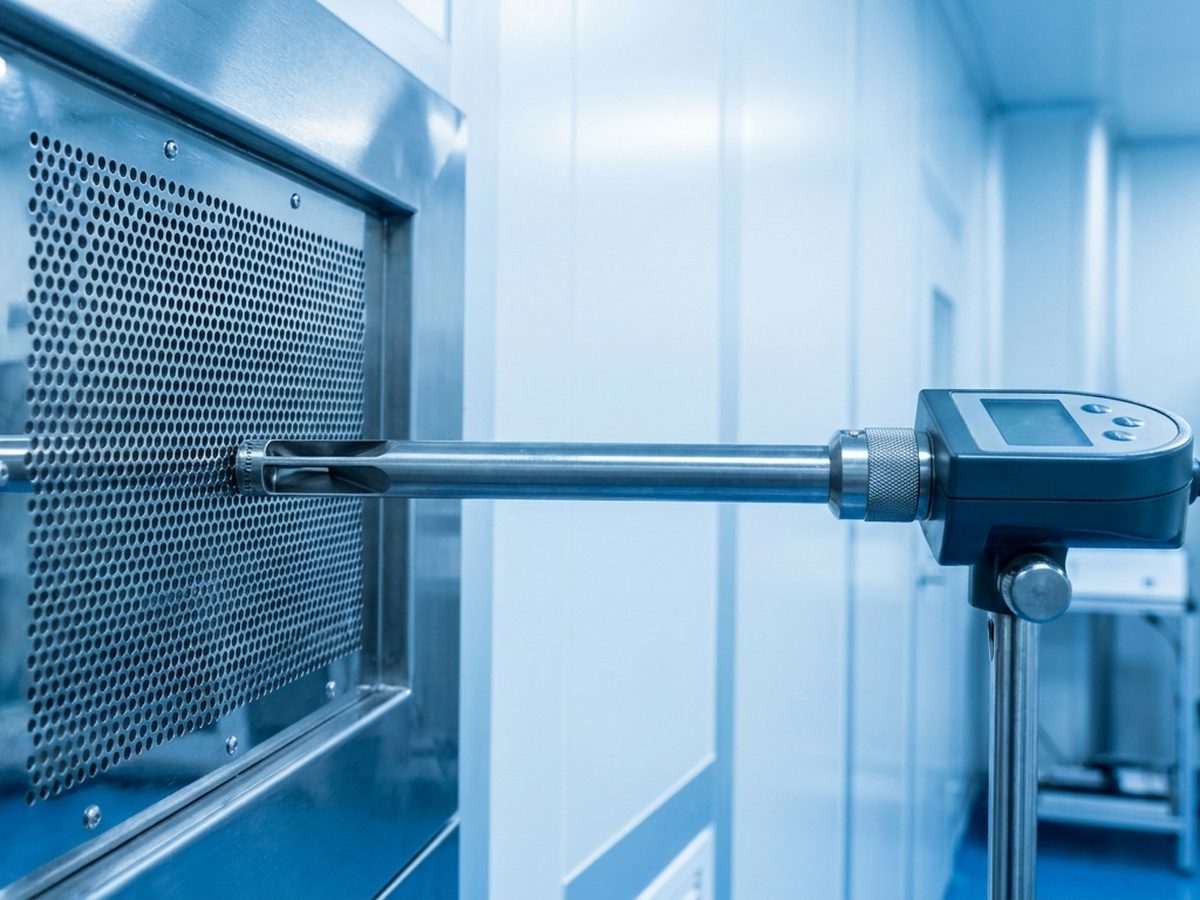
For pharmaceutical and semiconductor applications, calibration is recommended every 3 months. Historical calibration data helps predict when filters need replacement before performance drops below the threshold.
Air Shower Maintenance Costs 2026
Maintenance costs for air showers in Indonesia vary depending on model, size, and environmental contamination levels. Here are estimated cost ranges based on field data:
| Component/Service | Frequency | Estimated Cost (USD) |
|---|---|---|
| Pre-filter replacement | Every 3 months | $10 - 20 |
| HEPA filter replacement (standard 610x1220 mm) | Every 12-18 months | $160 - 260 |
| Anemometer calibration + service visit | Every 3 months | $35 - 65 |
| PAO/DOP filter leak test | Every 6-12 months | $100 - 165 |
| Blower motor replacement (if damaged) | As needed | $330 - 780 |
| Annual maintenance contract (full coverage) | Yearly | $520 - 975 |
For comparison, the cost of contaminating a single batch of pharmaceutical products can reach tens of thousands of dollars. An annual air shower maintenance investment of $500-1,000 is minimal compared to the risk of production shutdown or failed sterility testing.
Tips to Extend Air Shower Service Life
- Use quality pre-filters: Good pre-filters capture large particles before they reach the HEPA filter, extending the main filter's life by 2-3x
- Keep the surrounding area clean: The gowning room before the air shower (ante-room) must be maintained to reduce contamination load
- Train operators: Ensure all users understand proper entry procedures — do not force the interlock doors, do not carry oversized materials through
- Monitor differential pressure daily: A sharp pressure increase signals filter clogging — replace it before air velocity is affected
- Use original spare parts: Cheap aftermarket components often fail to meet the precision tolerances required
- Invest in a maintenance contract: An annual contract with certified technicians is more cost-effective than emergency repairs
For more detailed information on air shower specifications and selection, see our complete guide on cleanroom air shower functions and specifications. For a comparison with other cleanroom equipment, visit our article on pass box vs air shower differences.
FAQ: Air Shower Maintenance
What is the expected service life of an air shower?
A quality air shower (SS304 construction, industrial-grade components) has a 10-15 year service life with routine maintenance. Consumable parts like HEPA filters (12-18 months) and door seals (2-3 years) require periodic replacement.
Does an air shower need periodic calibration?
Yes. Air velocity calibration is recommended every 3 months to ensure performance meets specifications. Higher frequency (monthly) is needed for cleanrooms with strict requirements such as sterile pharmaceutical and semiconductor manufacturing.
How do I know when to replace the HEPA filter?
Three key indicators: (1) differential pressure exceeds 2x the initial value, (2) air velocity drops below 18 m/s even at maximum VFD setting, (3) PAO/DOP test results show leakage above 0.01%.
Can I perform maintenance myself?
Daily and weekly checks can be handled by trained operators. However, air velocity calibration, PAO testing, and HEPA filter replacement should be performed by certified technicians to ensure ISO compliance and safety.
How much does an annual maintenance contract cost?
For a single standard air shower unit (single-person, SS304), annual maintenance contracts range from $520 to $975. Pricing varies by location, model, and service coverage. For detailed pricing and a custom quote, our team is ready to assist via WhatsApp or the website contact form.
Need help with air shower maintenance or calibration? Our technician team serves all of Indonesia with complete after-sales support. Contact us now for a free consultation and maintenance contract quote.