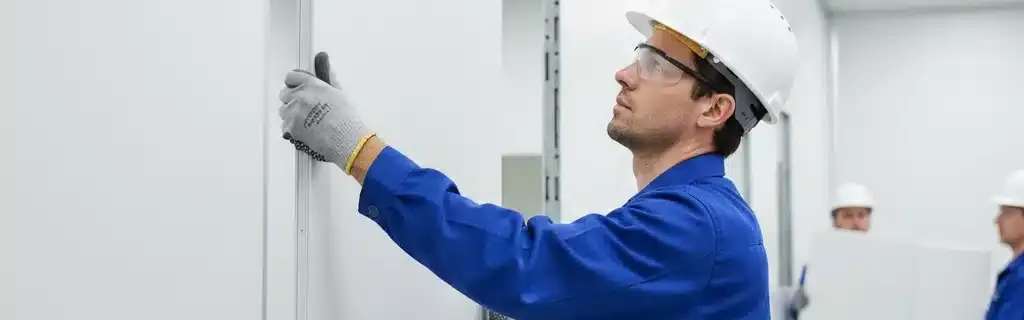

What Is a Clean Room and How Does It Work?
A clean room is a controlled environment engineered to minimize airborne contaminants such as dust, microbes, chemical vapors, and other particulate matter. In modern manufacturing, clean rooms are no longer optional — they are a mandatory requirement for companies producing sensitive components.
Clean room systems operate through a combination of HEPA/ULPA air filtration, positive pressure control, regulated temperature and humidity, and strict protocols for personnel and material entry. Every element is designed to maintain particle levels according to the specified ISO classification.
Without a clean room, a single 0.5-micron dust particle can ruin an entire semiconductor production batch, render pharmaceutical products non-sterile, or cause rapid bacterial contamination in food processing. The financial losses can range from hundreds of millions to billions of rupiah.
How Contamination Can Destroy Your Production Line
Contamination is the primary enemy of every precision manufacturing process. Contaminant particles enter through multiple pathways: personnel (skin flakes, hair, clothing), production equipment, raw materials, inadequate HVAC systems, and outside air leaking through building gaps.
The impact of contamination on manufacturing is severe:
- High product defect rates: Particles on semiconductor wafers cause short circuits. Failed batches mean wasted materials and lost production time.
- Sterility test failures: Contaminated pharmaceutical products or medical devices must be destroyed. Regulatory agencies do not tolerate sterility failures.
- Product recalls: If defective products reach consumers, recall costs and reputational damage can far exceed the initial production costs.
- Production shutdowns: Contamination investigations can halt production lines for days, destroying monthly output targets and delivery schedules.
ISO 14644 Standards: The Cleanliness Benchmark for Manufacturing
ISO 14644 is the international standard that classifies clean room cleanliness based on particle counts per cubic meter of air. The standard defines 9 classes, from ISO 1 (cleanest) to ISO 9 (ordinary room air).
Here are the most relevant classifications for manufacturing industries:
- ISO 5 (Class 100): Maximum 3,520 particles ≥0.5µm per m³. Required for semiconductor fabrication, sterile pharmaceuticals, and medical implants.
- ISO 6 (Class 1,000): Maximum 35,200 particles. Suitable for optical component assembly and precision electronics.
- ISO 7 (Class 10,000): Maximum 352,000 particles. Used for non-sterile pharmaceutical packaging and hygienic food production.
- ISO 8 (Class 100,000): Maximum 3,520,000 particles. Minimum standard for general manufacturing cleanrooms such as medical plastic assembly.
Selecting the right ISO class depends on product sensitivity and regulatory requirements. Choosing too low a class wastes money; choosing too high risks audit failure and contamination incidents.
Which Industries Need Clean Rooms the Most?
Clean rooms are not exclusive to high-tech sectors. Here are the manufacturing sectors in Indonesia that must have clean room facilities:
- Pharmaceuticals & Medical Devices: Production of sterile drugs, vaccines, and medical devices must comply with GMP (Good Manufacturing Practices) and BPOM standards. ISO 5-7 clean rooms are an absolute requirement.
- Electronics & Semiconductors: Even microscopic dust can destroy microchips. Wafer fabrication requires ISO 1-5 clean rooms.
- Food & Beverage: Dairy processing, baby food manufacturing, and sterile beverage production require ISO 7-8 clean rooms to prevent microbiological contamination per BPOM and HACCP standards.
- Automotive: Precision painting, sensor assembly, and fuel injection components require particle-free environments for consistent quality.
- Aerospace: Avionics components and navigation systems are highly sensitive to particulate and moisture contamination.
Essential Components Every Clean Room Must Have
An effective clean room requires several key components working together as an integrated system:
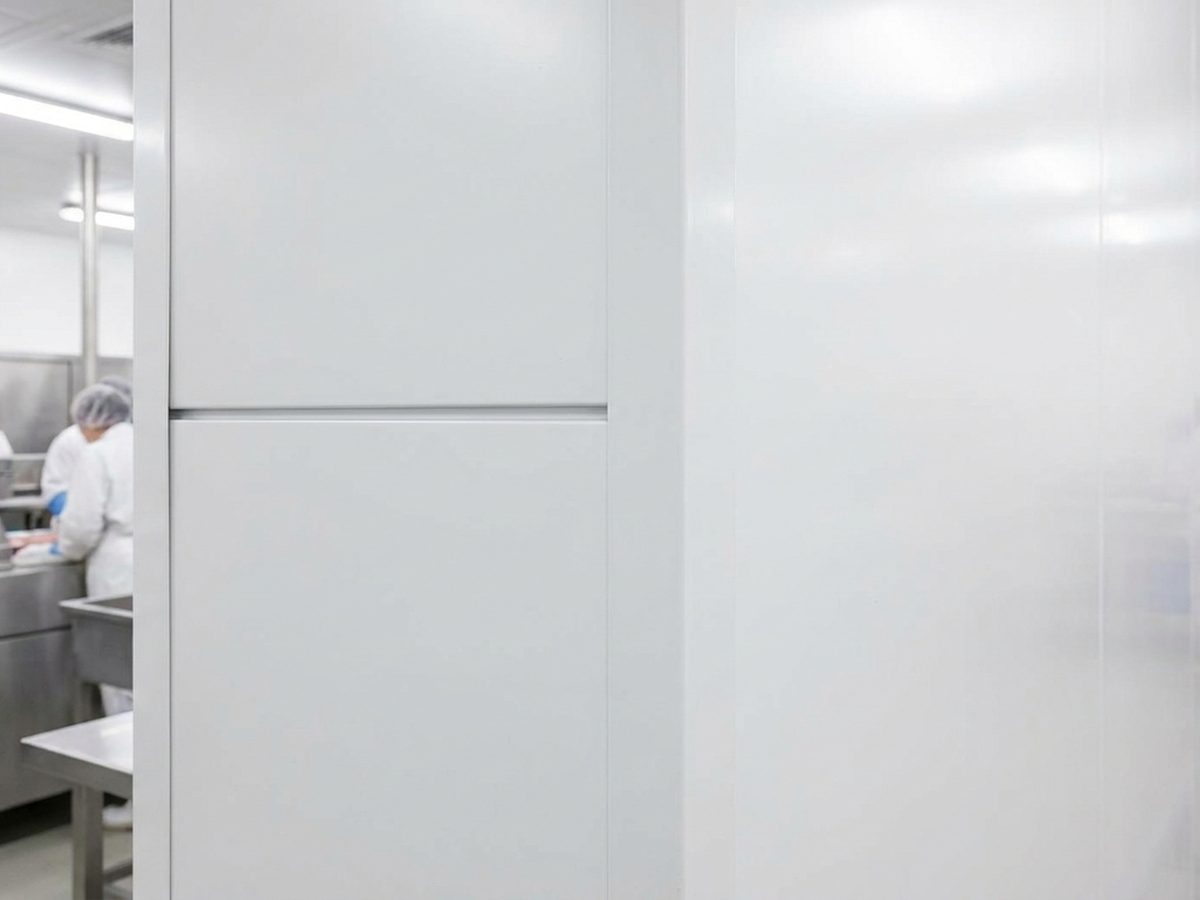
- Sandwich Panel Walls and Ceilings: Cleanroom wall materials must be smooth, non-shedding, easy to clean, and chemical-resistant. PIR/PUR sandwich panels are the top choice because their surfaces are non-porous and do not release particles.
- HVAC System with HEPA/ULPA Filtration: HEPA filters capture 99.97% of particles ≥0.3µm. Clean room HVAC must achieve high air changes per hour (ACH), typically 20-600 ACH depending on ISO class.
- Air Showers and Pass Boxes: Air showers clean personnel before clean room entry. Pass boxes enable material transfer without compromising room pressure differentials.
- Epoxy or Vinyl Flooring: Flooring must be seamless, anti-static, and chemical-resistant to prevent particle accumulation and facilitate cleaning.
- Monitoring Systems: Particle counters, differential pressure sensors, temperature, and humidity monitors must operate 24/7 to ensure the clean room stays within specifications.
Common Mistakes When Building a Clean Room
Many Indonesian manufacturers make critical errors when building their first clean room. Avoid these common mistakes:
- Choosing the wrong wall materials: Gypsum or standard brick walls shed particles and are difficult to clean. Use sandwich panels with steel or aluminum finishing.
- Neglecting airflow design: Incorrect placement of return air grilles and diffusers creates dead zones — areas where particles accumulate without proper circulation.
- Inadequate ventilation: Insufficient air changes per hour (ACH) cannot adequately dilute contaminants. Calculate ACH based on target ISO class and equipment heat load.
- No proper gowning room: An undersized changing room without pressure cascading allows contamination from non-clean areas to enter production zones.
- Neglecting operator training: The most expensive clean room is useless if operators ignore protocols — touching their face, opening doors too frequently, or wearing inappropriate garments.
FAQ: Common Questions About Clean Rooms
How much does it cost to build a clean room for manufacturing in Indonesia?
Clean room construction costs vary by ISO class and area size. For an ISO 7 clean room of 100m², estimated costs range from IDR 500 million to IDR 1.5 billion, including sandwich panel structure, HEPA HVAC system, epoxy flooring, and commissioning.
Are all pharmaceutical factories required to have clean rooms?
Yes. Under BPOM's GMP (CPOB) regulations, all sterile and non-sterile drug production must take place in controlled environments with specified cleanliness classifications. Sterile products must be manufactured in ISO 5-7 clean rooms depending on the dosage form.
How long does it take to build a clean room?
Modular clean room construction using sandwich panels can be completed in 4-8 weeks for a 100-200m² area. This timeline includes design, panel fabrication, installation, HVAC commissioning, and cleanliness validation.
Can a clean room be built inside an existing factory?
Yes. Modular clean room systems using sandwich panels can be installed inside existing factory buildings without major renovation. This is the most cost-effective solution for upgrading existing manufacturing facilities.
Conclusion: Clean Room Investment for Your Business Future
A clean room is a strategic investment, not an operational expense. For Indonesian manufacturers aiming to compete in global markets — especially in pharmaceuticals, electronics, and food processing — clean rooms are an absolute requirement to meet international quality standards.
With a properly designed and constructed clean room, you gain: consistent product quality, low defect rates, regulatory compliance, and stronger customer trust. PT. Ruida Grup Indonesia delivers complete clean room solutions — from design and sandwich panel fabrication to HEPA HVAC installation, commissioning, and validation.
Consult your clean room needs now. Contact our team for a free survey and cost estimate tailored to your production requirements.