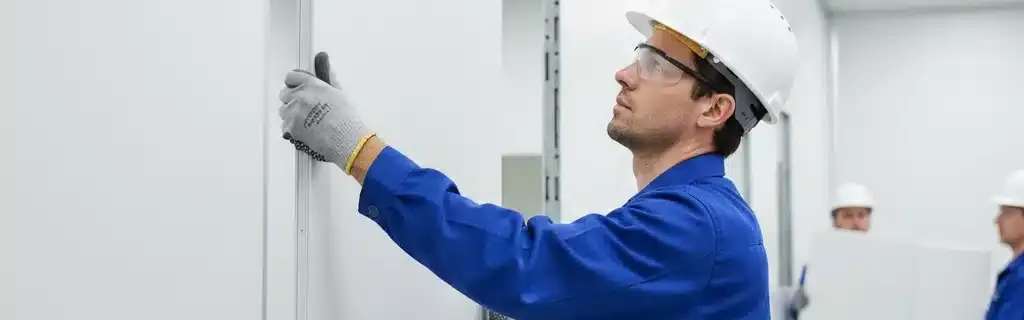

Building an internationally compliant cleanroom requires selecting the right cleanroom wall materials. The materials used not only determine the success of maintaining air cleanliness but also affect long-term operational costs. Cleanroom panels from PT Ruida Grup Indonesia provide complete solutions for various industrial needs.
Why Cleanroom Wall Material Selection is Critical
A cleanroom is a controlled space where airborne particle concentrations are maintained at specific levels according to ISO 14644 standards. Every component, including walls, must meet strict requirements established by international certification bodies.
Key characteristics that cleanroom wall materials must possess include:
- Non-particle shedding that does not generate particles that can contaminate air
- Resistant to cleaning agents that withstands various cleaning agents and disinfectants
- Smooth surface that provides smooth, non-porous surface to prevent contaminant accumulation
- Structural integrity that provides strength to withstand differential pressure
- Chemical resistance that withstands various chemicals that may be used
Choosing the wrong material can result in serious issues. Consult with our expert team at sandwichpanels.id for the best recommendations.
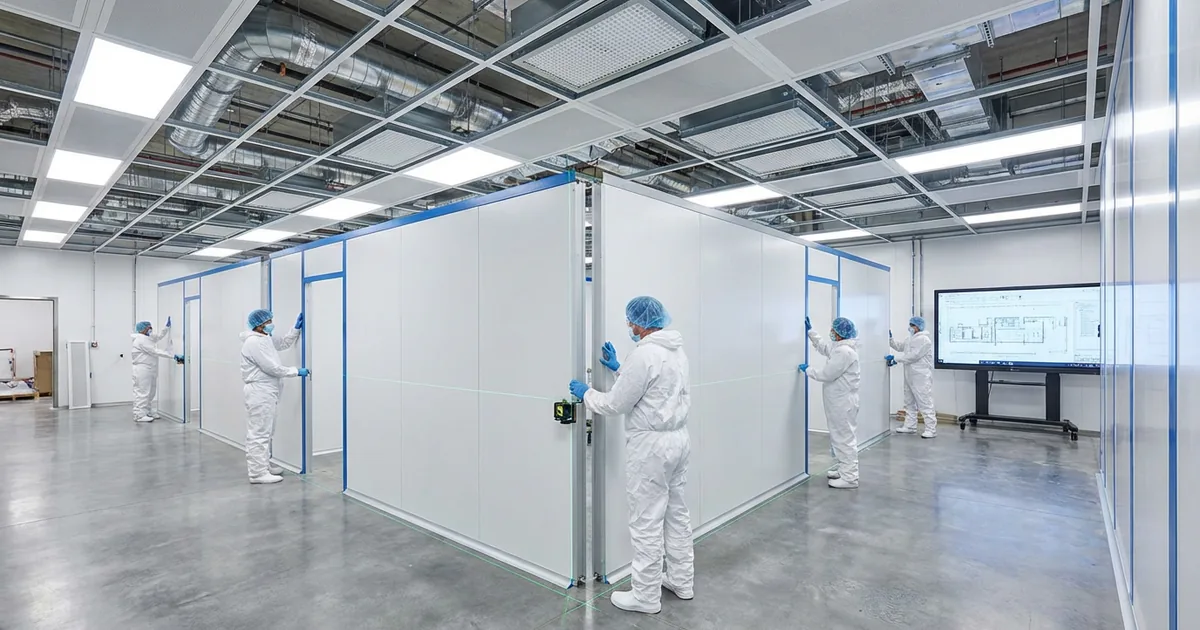
Types of Cleanroom Wall Materials
1. Sandwich Panel (EPS, PU, Rockwool)
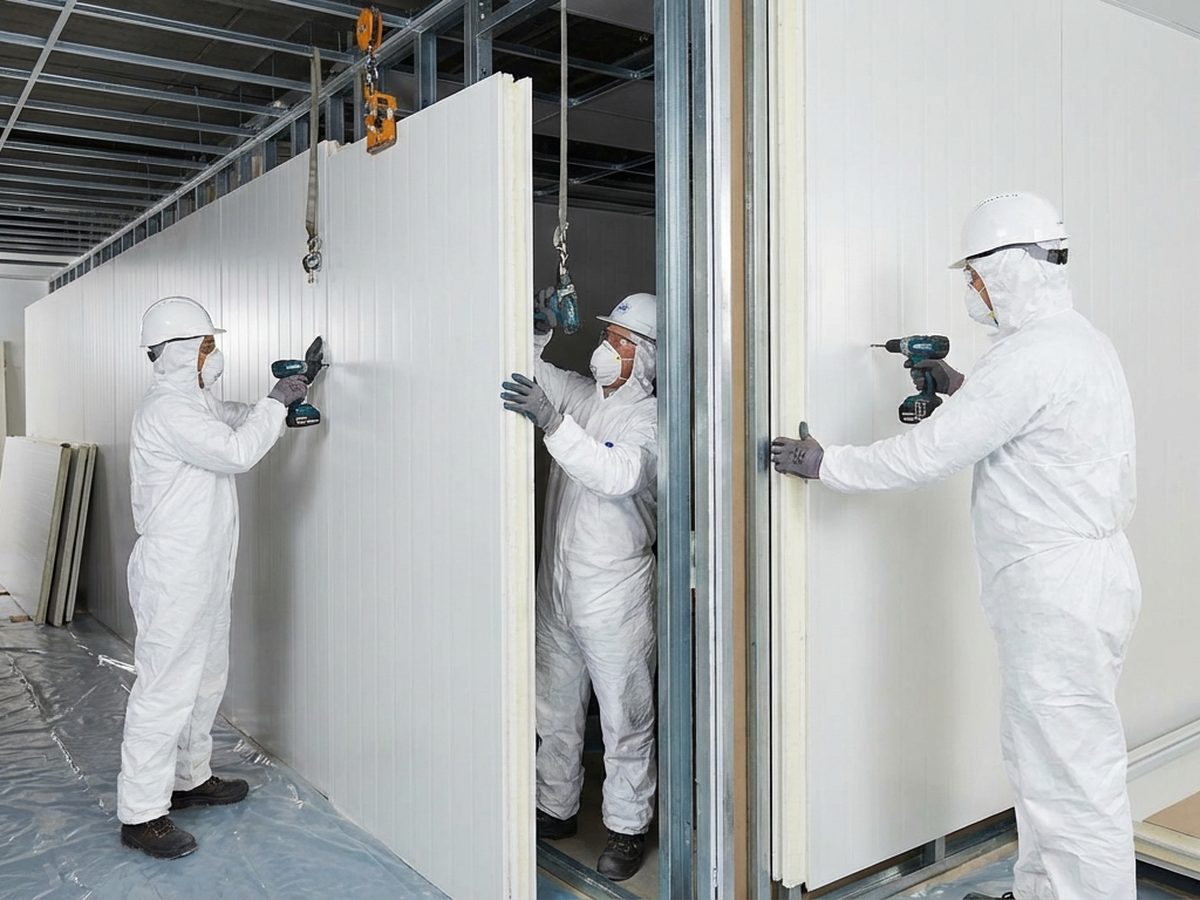
Sandwich panels are the most popular choice for modern cleanroom walls due to their balance of performance and cost. These panels consist of several layers: galvanized steel or pre-coated stainless steel face, EPS/PU/Rockwool core insulation, and PVC/HPL/anti-microbial surface finish.
Advantages of sandwich panels:
- Fast installation with modular system reducing production downtime
- Good thermal and acoustic insulation for HVAC energy efficiency
- Available in various thicknesses (50mm, 75mm, 100mm, 150mm) as needed
- Customizable surface for specific industry requirements
- More economical than premium materials like full stainless steel
Disadvantages to consider:
- Panel joints require special sealant to maintain integrity
- Not suitable for areas with heavy mechanical loads or high impact
- Requires periodic sealant maintenance to prevent leakage
For cold storage applications integrated with cleanrooms, 150mm thickness with PU core is recommended for optimal thermal insulation.
2. Cleanroom Modular Panel (Aluminium Honeycomb)
Modular panels with aluminium honeycomb structure offer premium solutions for cleanrooms with strict requirements. The honeycomb structure provides high structural strength with lightweight, facilitating installation and future modifications.
Key advantages include:
- Very smooth and non-porous surface for maximum sanitation
- Ease of modification and relocation when layout changes are needed
- Compatible with integrated HVAC ducting systems
- Longer service life with minimal maintenance
This type is ideal for ISO 5-7 cleanrooms requiring layout flexibility and future expansion possibilities.
3. Gypsum Board with Special Coating
For ISO 8 cleanrooms or transition spaces that don't require extreme particle control, gypsum board with epoxy coating can be a more economical solution. This material is suitable for renovating existing buildings to convert conventional spaces into simple cleanrooms. Important note: This material requires more intensive maintenance and has shorter service life compared to sandwich or modular panels.
Technical Specifications to Consider
Panel Thickness and Applications
Panel thickness selection must be matched to application requirements:
- 50mm is suitable for light partitions and ISO 8 cleanrooms with moderate thermal insulation
- 75mm is standard for ISO 7 cleanrooms with good thermal insulation
- 100mm is for high-performance ISO 5-6 cleanrooms with excellent thermal insulation
- 150mm is recommended for integration with cold rooms or extreme temperature applications
Surface and Coating Options
Surface finish choice significantly affects sanitation ease and material durability:
- PVC coating is an economical choice, easy to clean, and mold resistant for standard applications
- HPL (High Pressure Laminate) has high scratch resistance with premium aesthetic
- Stainless steel 304/316 is for areas with extreme sanitation requirements like aseptic filling
- Anti-microbial coating is special additional protection for pharmaceutical and food processing
Required Certifications and Standards
Ensure selected materials meet the following standards:
- ISO 14644-1 (Classification of air cleanliness) according to target class
- GMP (Good Manufacturing Practice) for pharmaceutical applications
- HACCP for food & beverage industry
- Fire rating according to Indonesian local regulations
How to Choose the Right Cleanroom Wall Material
1. Determine Cleanliness Class (ISO Class)
Each industry has different cleanliness class requirements:
- ISO 5 (Class 100) for aseptic filling, surgical suites, and vaccine production
- ISO 6 (Class 1,000) for sterile manufacturing and injectable drug production
- ISO 7 (Class 10,000) for pharmaceutical production and medical device manufacturing
- ISO 8 (Class 100,000) for assembly, packaging, and less critical applications
2. Evaluate Specific Industry Requirements
Pharmaceutical & Biotech: Prioritize surfaces resistant to aggressive disinfectants like hydrogen peroxide and chlorine-based cleaners. Consider anti-microbial coating for additional protection. Integration with pass box and air shower systems is critical to prevent cross-contamination.
Food & Beverage: Resistance to extreme temperatures from cooking and freezing processes. Ease of daily sanitation with pressure washing. HACCP compliance and BPOM regulations.
Electronics & Semiconductor: Electrostatic control (ESD) to protect sensitive components. Minimize material outgassing that can affect lithography processes. Resistance to chemical solvents for cleaning processes.
3. Consider Comprehensive Lifecycle Cost
Don't just look at initial material price. Also consider:
- Installation and production downtime costs during construction
- Maintenance frequency and costs during service life
- Material service life (15-25 years for quality sandwich panels)
- HVAC energy costs affected by thermal insulation quality
Common Mistakes to Avoid
- Ignoring thermal bridging that can cause condensation and microbial contamination sources
- Material incompatible with cleaning protocol causing coating to peel and generate contaminant particles
- Underspecifying for future expansion making cleanrooms impossible to modify
- Ignoring HVAC integration making walls incompatible with return air pathways
- Installation by non-certified teams causing improper joints and seals that compromise cleanroom integrity
FAQ: Frequently Asked Questions
What is the cost of cleanroom wall materials per square meter?
Costs vary by material and specifications: EPS sandwich panel $28-40/m², PU sandwich panel $35-55/m², Modular aluminium honeycomb $50-95/m², Stainless steel panel $75-125/m². Prices exclude installation and accessories.
Can local materials be used for cleanrooms?
Yes, many sandwich panel components are locally produced with export quality. What matters is coating and surface finish meet international standards, core material has fire rating certification, and installation is done by experienced cleanroom teams.
What is the service life of cleanroom wall materials?
With proper maintenance: Sandwich panels 15-25 years, Modular panels 20-30 years (relocatable), Gypsum with coating 10-15 years (requires periodic recoating).
Can cleanroom walls be relocated?
Modular systems allow relocation with minimal damage. Gypsum or masonry systems cannot be moved. This flexibility is important for facilities planned for expansion.
What is the cleanroom certification process?
After installation, cleanrooms must be tested by third-party auditors: Particle count test per ISO 14644-1, Air change rate verification, Pressure differential test between zones, and HEPA filter integrity test.
Conclusion and Recommendations
Selecting cleanroom wall materials is a strategic decision affecting long-term operations. Sandwich panels with PU or Rockwool core offer the best balance of performance, cost, and ease of installation for most industrial applications.
For optimal decisions: Clearly define required cleanliness class. Evaluate lifecycle cost not just initial price. Ensure integration with HVAC and other cleanroom equipment. Choose a partner with proven experience and certification.
Need consultation for your cleanroom project? Our team is ready to help from planning to certification. Contact us through our contact page or WhatsApp for detailed discussion and quotation tailored to your specific project needs.