

The Main Problem: Confusion About Sandwich Panel Thickness
Many project owners feel overwhelmed when choosing the right sandwich panel thickness. Is 50mm enough for cold storage? Or should you go with 100mm? Making the wrong choice can have serious consequences: rooms that don't cool properly, skyrocketing operational costs, or structures that can't handle the load.
The problem is that every supplier gives different recommendations. Some offer 75mm at a cheap price, others recommend 150mm "just to be safe." Without clear understanding, you might buy the wrong product and regret it later.
Thickness is not just a number. Every millimeter determines how well your room is insulated, how efficiently your cooling system works, and how long your investment will last. Understanding the principles of thickness selection will save time, money, and prevent future problems.
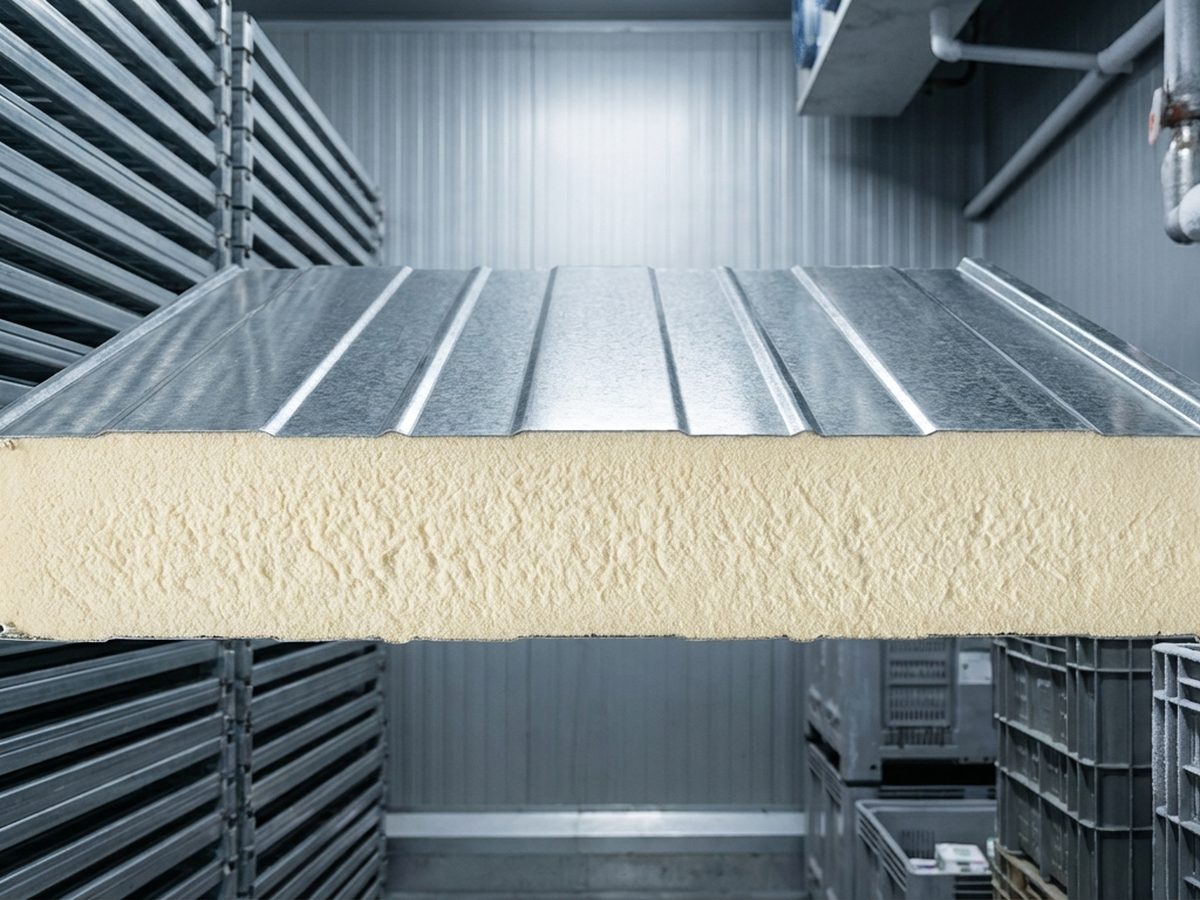
Why Thickness Selection Is Confusing
This confusion is understandable due to several factors:
- No universal standard - Optimal thickness depends on application, geographic location, and specific insulation needs
- Fragmented information - Technical data is scattered across sources, often contradictory
- Sales pressure - Some suppliers push what they have in stock, not what you actually need
- Lack of technical education - Many buyers don't understand the relationship between thickness, R-value, and energy efficiency
However, choosing thickness isn't complicated once you understand the basic principles.
Solution: Thickness Selection Guide by Application
Here are the standard sandwich panel thicknesses commonly used in the industry, along with application recommendations:
1. Thickness 50mm - 75mm
This thickness is suitable for:
- Non-critical room partitions
- Cleanrooms with mild temperature control
- Warehouse interior walls that don't require extreme insulation
- Areas with minimal temperature difference between inside and outside
50mm panels typically use EPS core with an R-value around 1.3-1.5 m²·K/W. Sufficient for light applications but not recommended for cold storage. 75mm panels offer slightly better performance with R-values around 2.0-2.5 m²·K/W, but still limited for applications requiring strict temperature control.
If you are considering this thickness for cooling applications, ensure the target temperature is not too low and product storage duration is not too long. For rooms that only need to be slightly cooler than outside temperature, 50-75mm can be an economical choice.
2. Thickness 100mm
This is the most popular choice for:
- Medium-scale cold storage (0°C to -10°C)
- Pharmaceutical and vaccine warehouses
- Food processing rooms
- Industrial roofs with good ventilation
With PU or PIR core, 100mm panels provide an R-value of about 4.5-5.5 m²·K/W. This is the sweet spot for most cold storage applications.
100mm thickness offers the perfect balance between insulation performance, cost, and ease of installation. Many commercial cold storage contractors choose this thickness as their default standard due to its flexibility. These panels are light enough to be handled by standard installation teams, yet thick enough to maintain temperature stability even when doors are frequently opened.
3. Thickness 150mm - 200mm
Premium thickness for:
- Freezer rooms (-18°C to -25°C)
- Blast freezers
- Cold storage in tropical regions with extreme outside temperatures
- Projects with high energy efficiency requirements
150mm panels with PIR core can achieve R-values of 7-8 m²·K/W, reducing compressor load and significantly saving electricity costs in the long run.
For freezer applications requiring very low temperatures, 150mm is the minimum recommended. 200mm panels are used for extreme applications like blast freezers or cold storage in areas with ambient temperatures above 35°C. Although the initial investment is higher, operational savings can reach 40-60% compared to thinner panels under the same conditions.
Common Mistakes to Avoid
Avoid these common errors when selecting thickness:
- Too thin for the application - Choosing 75mm for a freezer room forces the compressor to work extra hard, increasing operational costs by 30-50%. Overworked compressors also fail faster, adding maintenance and replacement costs.
- Ignoring core material - 100mm EPS panels differ greatly from 100mm PIR. Same thickness, insulation performance can differ 2-3 times. Always pay attention to the core type, not just thickness.
- Not considering joints - Thermal bridging at joints can reduce insulation effectiveness by 15-20%, so choose the right joining system. Camlock or hidden screw systems provide better sealing than conventional methods.
- Focusing only on initial price - Thicker panels cost more upfront, but energy savings usually provide ROI within 2-3 years. Calculate total cost of ownership, not just purchase price.
- Ignoring local weather factors - Cold storage in Jakarta with 35°C outside temperature needs thicker insulation compared to cooler locations like Bandung.
Quick Reference Table
Here's a quick table to help you choose:
| Application | Target Temperature | Recommended Thickness | Core Material |
|---|---|---|---|
| Room partitions | Normal room | 50-75mm | EPS |
| Cleanroom | 18-22°C | 50-75mm | EPS/PU |
| Chiller room | 0-10°C | 75-100mm | PU/PIR |
| Cold storage | 0 to -5°C | 100mm | PU/PIR |
| Freezer room | -18°C to -25°C | 150-200mm | PIR |
| Blast freezer | -35°C or lower | 200mm | PIR |
FAQ: Common Questions About Panel Thickness
What is the minimum thickness for cold storage?
For cold storage at 0°C to -5°C, minimum 100mm with PU or PIR core. For freezers below -18°C, use minimum 150mm. Using thickness below these standards will result in inefficient electricity consumption and shorter compressor lifespan.
Is 200mm thickness always better?
Not necessarily. While 200mm panels provide the best insulation, they are also heavier and more expensive. For applications that don't require extreme temperatures, 200mm might be over-engineering. Consult with technicians to find the optimal balance between performance and cost.
Can I add insulation outside the panels?
Yes, some projects use 100mm panels with additional external insulation. However, this approach requires special planning and can add construction complexity. Generally, it's more efficient to use panels with the right thickness from the start.
Conclusion and Recommendations
Choosing the right sandwich panel thickness is a long-term investment. Don't be tempted by cheap thin panels that will make you pay higher electricity bills every month.
As a quick guide:
- Room partitions: 50-75mm
- Standard cold storage (0°C): 100mm
- Freezer (-18°C): 150-200mm
Remember that thickness is only one factor. Core material, seal quality, and proper installation are equally important. The right combination of all these elements will ensure your cold storage operates optimally for years.
Before deciding, always consult with experienced technicians who understand local conditions and your specific industry needs. The time invested in careful planning will pay off with reliable system performance and minimal operating costs.
Still unsure about the right thickness for your project? Our technical team is ready to help analyze your specific needs. Contact us for a free consultation and get optimal thickness recommendations with complete cost estimates.