

Food Panel vs Regular Sandwich Panel: The Difference Most People Miss
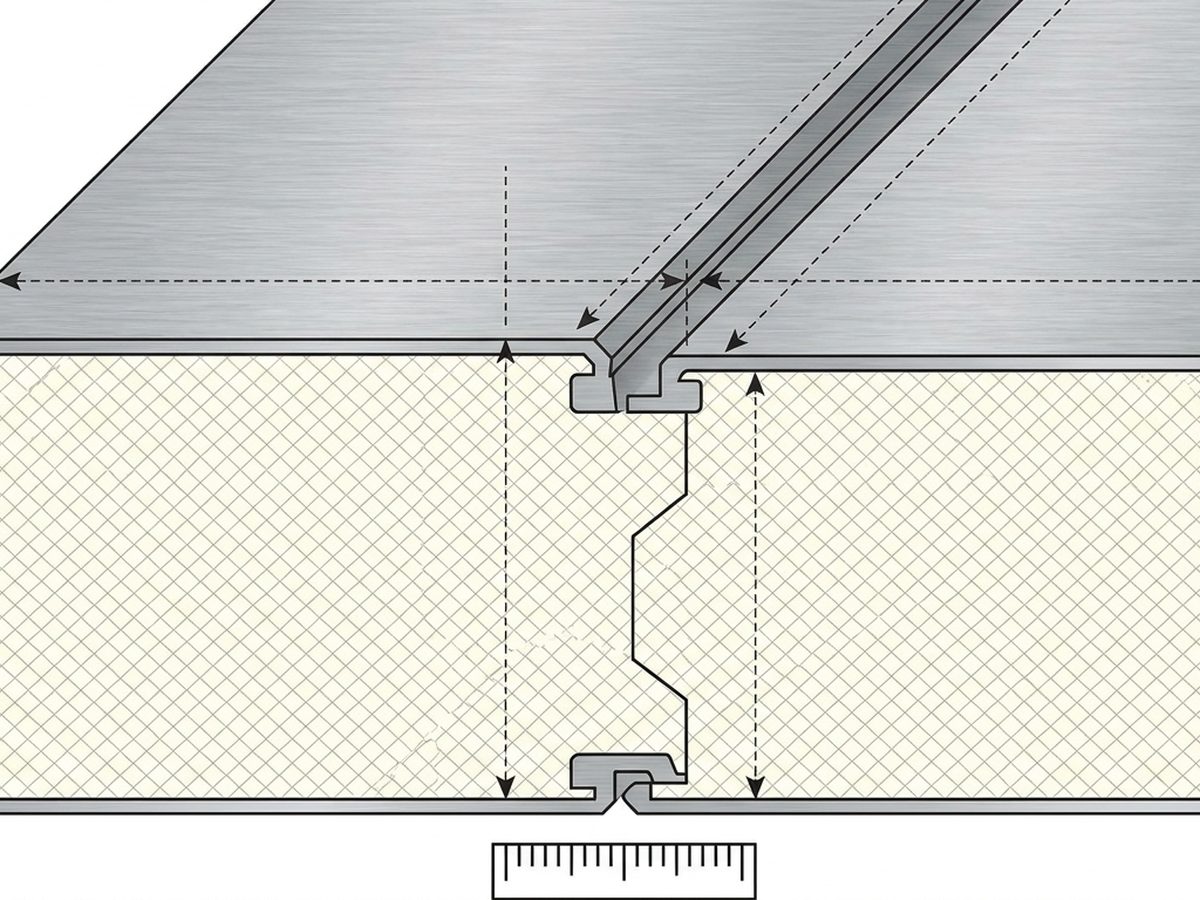
When building a food processing facility, wall material selection isn't just about appearance. Strict regulations determine which panels are permitted and which aren't. Food panels and regular sandwich panels look similar from the outside — both are composite panels with insulation cores — but the fundamental differences lie in the surface material, certifications, and ability to resist microbial growth.
The short answer: if your facility processes food, beverages, or pharmaceutical products for human consumption, you must upgrade to food grade. The core materials like PIR remain the same — the difference is in the coating and certifications. If your warehouse only stores sealed packaged goods or non-food materials, regular panels may still suffice. Let's break it down so you don't make the wrong investment.
Comparison Table: Food Panel vs Regular Sandwich Panel
| Aspect | Food Panel | Regular Sandwich Panel |
|---|---|---|
| Skin material | Galvanized steel with food-grade coating (PVC film 80-100 micron, or SS304 for wet areas) | Galvanized steel with standard PE/SMP coating 20-25 micron |
| Surface finish | Smooth, non-porous, non-absorbent, minimal joint gaps | Reasonably smooth but micro-pores exist; standard joint gaps |
| Antimicrobial properties | Built-in antibacterial treatment; does not support mold or bacterial growth (lab-verified) | No special antibacterial treatment |
| Corrosion resistance | High — resistant to organic acids (lactic, acetic) and chemical cleaning agents | Standard — prone to corrosion when exposed to aggressive cleaners routinely |
| Insulation (PIR/PUR core) | 50-150 mm thickness, thermal conductivity 0.018-0.024 W/m·K | Same thickness, same thermal performance — the difference isn't here |
| Certifications | GMP, HACCP-compliant, FDA indirect food contact ready; ISO 14644 optional | SNI structural, fire rating Class B/A — no food safety certification |
| Price range per m² | IDR 450,000 - 750,000 (varies by thickness and coating) | IDR 280,000 - 420,000 |
| Cleaning | Suitable for CIP (clean-in-place) with high-pressure water and disinfectant | Manual wipe-down; aggressive cleaning can damage the coating |
Advantages of Food Panels: Why This Investment Makes Sense
Food panels aren't just "expensive sandwich panels." They're a compliance solution for facilities regularly audited by health authorities or international HACCP auditors. Key advantages:
- Audit-ready at all times: Non-porous surface and seamless joint system meet GMP requirements — nowhere for contamination to hide. Compare also with cleanroom wall materials which have similar requirements.
- 20+ year lifespan in wet and acidic environments: 100-micron PVC coating or 304 stainless steel withstands daily cleaning cycles that destroy regular panels within months.
- Prevents product recalls: Cross-contamination from moldy walls can trigger mass recalls. The average recall cost for a small-to-medium food business runs $30,000-$150,000, while the panel upgrade premium for a 200 m² area is only around $2,500-$5,000.
- Operational efficiency: The smooth surface simplifies cleaning — sanitation crews can complete the same area in one-third the time compared to regular panels requiring detailed wiping.
Limitations: When Regular Panels Are Still Enough
Not every area in a food facility needs food panels. Over-spending is also a problem. Here's where regular sandwich panels still work:
- Dry raw material warehouses: Flour, sugar, dried spices in sealed bags. No water or high humidity. Regular PE-coated panels are sufficient since contamination risk is low.
- Machine rooms and utility areas: Compressors, chillers, electrical panels — areas that never contact open food products.
- Corridors and administrative rooms: Non-production areas physically separated from processing lines.
- Cold storage for sealed frozen products: If products are already in sealed primary packaging before entering the cold room, wall contamination risk is minimal. But ensure no excessive condensation.
Projects That Mandate Food Panels
These project scenarios make food panels non-negotiable:
- Meat, fish, and poultry processing: Cutting and processing rooms that remain wet continuously, with high risk of pathogenic bacteria (Salmonella, Listeria, E. coli). Walls must withstand pressure washing with chlorine-based disinfectants without damage.
- Dairy and milk processing: Lactic acid environment and daily CIP cleaning — regular panels will blister and delaminate within 6-12 months.
- Central kitchens and large-scale catering: Health regulations require wall surfaces that are easily cleanable, non-absorbent, and smooth without cracks.
- Fermentation rooms (tempeh, soy sauce, tape): Constant 80-95% RH humidity. Regular panels will develop mold. Food panels with seamless joints withstand airborne fungal spores.
- Food QC laboratories: Requires ISO 14644 class 7-8. Surfaces must be non-shedding — regular panels release micro-particles from PE coating over time.
Projects Where Regular Panels Still Work
- Dry packaged food logistics warehouses (snack packs, instant noodle cartons, canned biscuits)
- Cold storage for retail-packaged frozen products
- Fruit and vegetable sorting areas (pre-wash, dry zone)
- Loading docks and receiving areas
How to Identify Genuine Food Panels vs Counterfeits
Since food panels cost 50-70% more, some suppliers mislabel regular panels as "food grade." Here's your verification checklist:
- Coating thickness: Request an official spec sheet. Food panels must have at least 80-micron coating (PVC film) or use 304 stainless steel. Regular panel PE coating is only 20-25 microns.
- Certifications: Ask for a Certificate of Analysis (CoA) for antibacterial testing (ASTM E2180 or JIS Z 2801). Genuine food panels can show independent lab test results.
- Joint details: True food panels use gap-free joint systems — typically tongue-and-groove with food-grade EPDM gaskets, not exposed screws.
- Water test: Drop water on the surface. Food panel: water beads up without penetrating. Regular panel: water spreads and absorbs into micro-pores.
- CoA migration test: For indirect food contact applications, request migration test results per EU 10/2011 or FDA 21 CFR — verifying the coating doesn't release harmful substances into room air.
When Is the Right Time to Upgrade?
Three primary triggers indicating you need to replace regular panels with food panels:
- Audit findings: A HACCP or health authority auditor flags moldy, peeling, or hard-to-clean walls as a major finding. This threatens your certification.
- Factory expansion or relocation: Don't repeat old mistakes. If you're building a new facility or expanding wet production areas, specify food panels from the start.
- History of recalls or consumer complaints: If there's a contamination incident traced to the production facility, wall upgrades become part of the corrective action plan auditors will require.
FAQ: Food Panel vs Sandwich Panel Common Questions
Are the insulation cores of food panels and regular sandwich panels different?
The insulation core (PIR, PUR, or EPS) is essentially the same. The food panel difference isn't in the insulation but in the outer skin material (food-grade PVC coating or stainless steel) and the seamless joint system. Thermal performance is equivalent for the same thickness.
Are food panels mandatory for all food factories in Indonesia?
Not all areas. BPOM and health ministry regulations require food panels for open processing areas (wet production rooms). For dry ingredient storage or finished product warehouses, regular panels are still allowed. However, if you're pursuing international HACCP or GMP certification, all production areas will typically need food-grade materials.
What's the price difference for a 200 m² project?
Assuming food panels at IDR 550,000/m² vs regular panels at IDR 350,000/m², the premium for a 200 m² area is about IDR 40 million (roughly $2,500 USD). This equals the cost of one small-scale product recall or two major audit findings that could halt operations.
Can regular panels be repainted to become food grade?
No. Food-grade coating is not just paint — it's a specialized PVC film layer applied at the factory during coil coating under controlled temperature and pressure. Painting existing panels won't provide antibacterial protection and may peel, adding physical contamination risk.
How do you properly clean food panels?
Use low-to-medium pressure water (max 5 bar) with pH-neutral non-abrasive detergent. For disinfection, use 200 ppm quaternary ammonium solution or 100 ppm sodium hypochlorite — rinse with clean water afterward. Never use wire brushes, abrasive scouring pads, or strong acids that can scratch the surface.
Conclusion and Recommendations
The food panel vs regular sandwich panel decision comes down to one question: does this area have direct contact with open food products? If yes, food panels are a compliance investment that protects your business from audit risk, recalls, and loss of consumer trust. The upfront cost is 50-70% higher, but the longer lifespan in wet environments and avoiding even one recall incident pays back the difference many times over.
For support areas like dry warehouses, equipment rooms, and administrative spaces, regular sandwich panels remain economical and adequate. The key is zone-specific specification — not an all-or-nothing approach.
Need help calculating panel requirements for your food facility project? Contact our technical team for a free consultation — we'll help you determine which zones need food grade and which can use standard panels, complete with cost estimates.