

Why Choosing the Right LAF Is Critical
A Laminar Air Flow (LAF) cabinet is a cornerstone piece of equipment in microbiology labs, pharmaceutical facilities, and hospital cleanrooms. It creates a sterile work zone by directing HEPA-filtered air in a unidirectional, turbulence-free stream. Choosing the wrong LAF can lead to cross-contamination, failed ISO validation, and costly downtime.
The most common mistakes we see in the field: labs buying a horizontal LAF when they need vertical, HEPA specs that don't match the target ISO class, or a cabinet that's too small for daily throughput. This guide walks you through selecting the right LAF — from type and cleanliness class to a practical pre-purchase checklist.
LAF Types: Horizontal vs Vertical — Which One Do You Need?
The two main LAF types available in the Indonesian market are horizontal laminar flow and vertical laminar flow. The fundamental difference lies in airflow direction — and this determines the suitable application.
Horizontal Laminar Air Flow
HEPA-filtered air flows from the rear of the unit toward the front, parallel to the work surface. The advantage: direct airflow sweeps the work surface without obstruction, ideal for tasks that don't involve operator-hazardous materials. Well-suited for cell culture, media preparation, and handling sensitive electronic components. However, operator protection is minimal — materials you work with are blown toward your face.
Vertical Laminar Air Flow
Air flows top-down, creating an air curtain that protects the operator from aerosols or particulates. This model is mandatory for pharmaceutical work involving APIs (Active Pharmaceutical Ingredients), high-risk microbiology labs, and medical device sterilization areas. Benefits: simultaneous product and operator protection, plus lower cross-sample contamination risk.
Quick comparison:
- Horizontal: high product protection, low operator protection, best for cell culture and non-hazardous prep
- Vertical: high product protection, medium-high operator protection, best for pharma, microbiology, active ingredient handling
ISO Cleanroom Class: Matching Your Filter to Target Cleanliness
A LAF doesn't operate in isolation — it must be compatible with the ISO class of the cleanroom where it's installed. ISO 14644 classifies cleanrooms from Class 1 to 9 based on particle counts per cubic meter.
For pharmaceutical labs requiring ISO Class 5 (formerly Class 100), your LAF must be equipped with an H14 HEPA filter achieving ≥99.995% efficiency at 0.3 microns. For more stringent applications like semiconductor manufacturing (ISO Class 3-4), ULPA filters with 99.9995% efficiency at 0.12 microns become necessary.
Simple matching guide:
- ISO Class 5 (GMP Grade A): HEPA H14, air velocity 0.45 m/s ±20%
- ISO Class 7 (GMP Grade C): HEPA H13, background for non-critical sterile areas
- ISO Class 8 (GMP Grade D): HEPA H13, gowning and prep areas
LAF Sizing: Match Cabinet to Throughput and Room Constraints
A classic mistake: buying a single-user LAF for a lab with 3-4 technicians. Standard LAF sizes on the market:
- 2 feet (60 cm): for individual work, limited space
- 3 feet (90 cm): for 1-2 operators, moderate throughput
- 4 feet (120 cm): for 2 simultaneous operators, high-volume labs
- 6 feet (180 cm): for small-scale production, batch sterilization
Beyond working width, also consider unit height and depth. Make sure the LAF can fit through your room doorways — we've seen too many cases where a 6-foot LAF couldn't be installed because of narrow corridor access. Measure first, buy second.
Key Features Often Overlooked
Beyond basic specs, certain features separate a quality LAF from a barely-adequate one:
- UV-C germicidal lamp: for work surface sterilization before/after use. Not a HEPA replacement, but an added protection layer
- Differential pressure gauge (Magnehelic): monitors whether the HEPA filter is saturated or needs replacement
- VFD (Variable Frequency Drive): lets you adjust blower speed without replacing the motor
- DOP test port: essential for periodic HEPA filter integrity validation without disassembling the unit
- Construction material: minimum stainless steel 304 for the work area; 316L for pharma applications with corrosive chemical exposure
Pre-Purchase LAF Checklist
Use this checklist as your procurement guide:
- Have you determined the LAF type — horizontal or vertical — based on the materials you'll handle?
- Does the HEPA filter match your target ISO class for the cleanroom?
- Is the cabinet size appropriate for your operator count and daily throughput?
- Does the installation space have adequate corridor and doorway access for unit delivery?
- Does the unit include UV-C lamp, Magnehelic gauge, and DOP test port as minimum standard?
- Does the vendor provide IQ/OQ/PQ documentation (Installation, Operational, Performance Qualification) for audit needs?
- Minimum 1-year warranty on HEPA filter and blower with local technician support?
FAQ: Common Questions About LAF Selection
What's the difference between a LAF and a Biosafety Cabinet (BSC)?
A LAF provides product protection only (or product + operator protection on vertical models), while a Class II BSC provides simultaneous product, operator, and environmental protection. If you handle pathogens or infectious materials, a BSC is mandatory — not a LAF.
How long does a HEPA filter last in a LAF?
HEPA filters in LAF cabinets typically last 3-5 years with normal 8-hour/day usage. Replacement indicators: differential pressure exceeds 2x the initial reading, or DOP test reveals >0.01% leakage. Re-certification and calibration are scheduled every 6-12 months.
Can a LAF be installed in a regular room without a cleanroom?
Technically yes, but not recommended. LAF units rely on room air as intake — if the room air is dirty (ISO Class 8+), the HEPA filter clogs faster and performance drops dramatically. Ideally, LAF should be placed inside an ISO Class 7 cleanroom as the background environment.
What's the annual ownership cost of a LAF?
Beyond the purchase price (typically $1,500-$5,000 for a standard 3-4 foot unit), factor in: HEPA filter replacement every 3-5 years ($200-$500), blower electricity consumption (200-400W), annual calibration ($150-$300), and UV lamp replacement ($30-$60/year). Total 5-year TCO can reach 1.5-2x the purchase price.
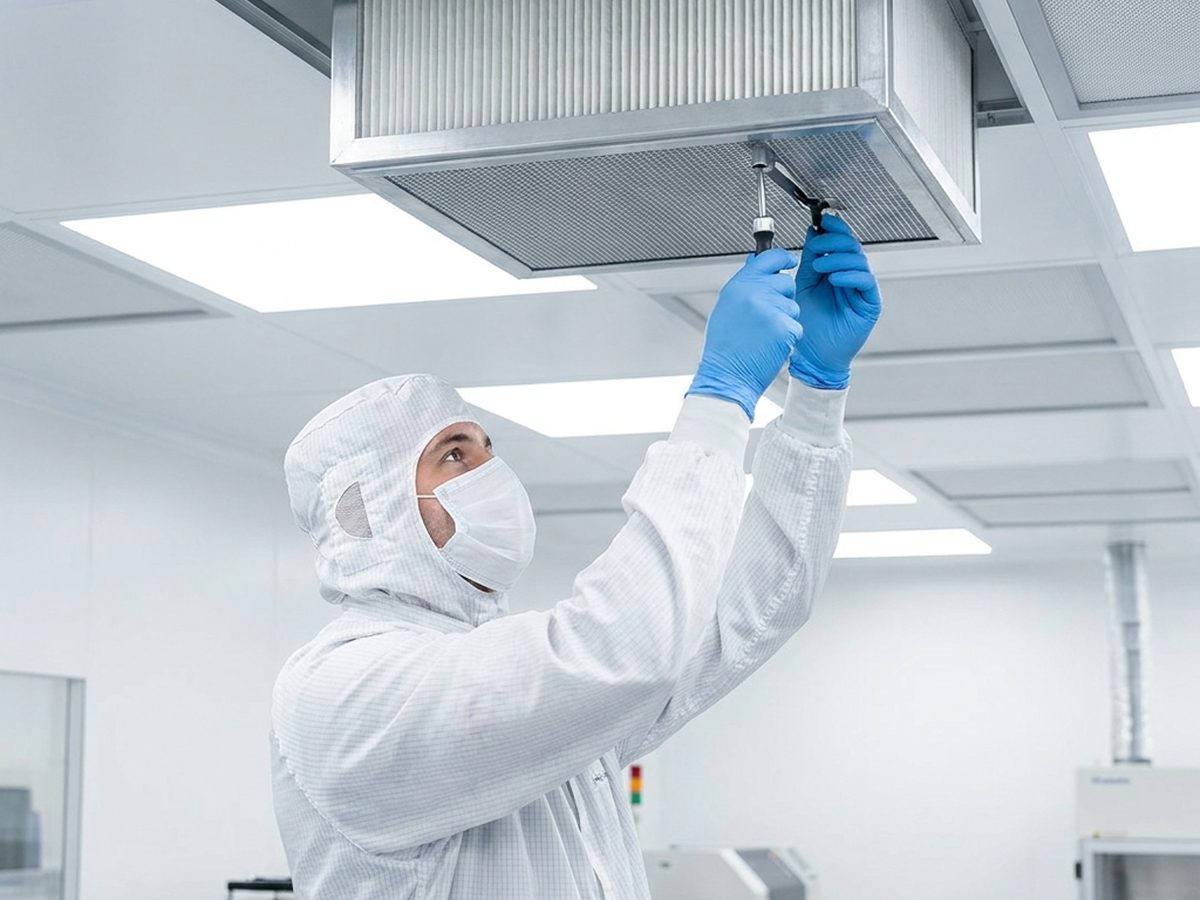
Beyond unit selection, don't overlook installation and environment factors. A LAF placed too close to a door or AC diffuser will experience airflow turbulence that reduces sterile zone effectiveness. Ideally, position the LAF at least 1.5 meters away from airflow disturbance sources. Consult with your cleanroom engineer on layout before finalizing the purchase.
For facilities with an established ISO 14644 cleanroom classification, ensure your LAF specifications don't degrade the room's overall cleanliness class. The right choice will strengthen your cleanroom validation during periodic audits.
Conclusion and Next Steps
Choosing the right LAF isn't just about comparing prices — you need to align type (horizontal/vertical), filter class (HEPA/ULPA), cabinet size, and supporting features with your lab or pharma facility's operational needs. Use the checklist above as a vendor evaluation guide.
Need further consultation on selecting a LAF that matches your facility specifications? Our team at sandwichpanels.id is ready to help — from technical recommendations to installation and validation. Contact us for a free consultation.