

Quick Answer: Should You Choose BFU or FFU?
If your cleanroom needs stronger static pressure, better tolerance when filters become dirty, or more dependable delivery through a tougher air path, BFU is usually the safer choice. If your priority is lower noise, better energy behavior, and modular ceiling coverage across many points, FFU is usually the more balanced option.
The confusion starts because both units are sold as filtered air delivery equipment, so buyers often assume the difference is minor. In practice, the gap shows up during commissioning, room balancing, and long operating hours. That is when one unit type may hold airflow steadily while the other struggles, or one may keep operators comfortable while the other becomes too loud.
This article is for procurement teams, consultants, contractors, and facility owners who need a practical buying view. The goal is not to repeat catalog language. The goal is to connect unit selection to pressure control, operator comfort, service effort, and the total cost of running a cleanroom day after day.
- BFU is stronger where the system has higher resistance and a tighter pressure margin.
- FFU is better for modular ceiling layouts that need quieter operation and flexible control.
- The right answer depends on cleanliness class, return-air design, plenum space, and operating pattern.
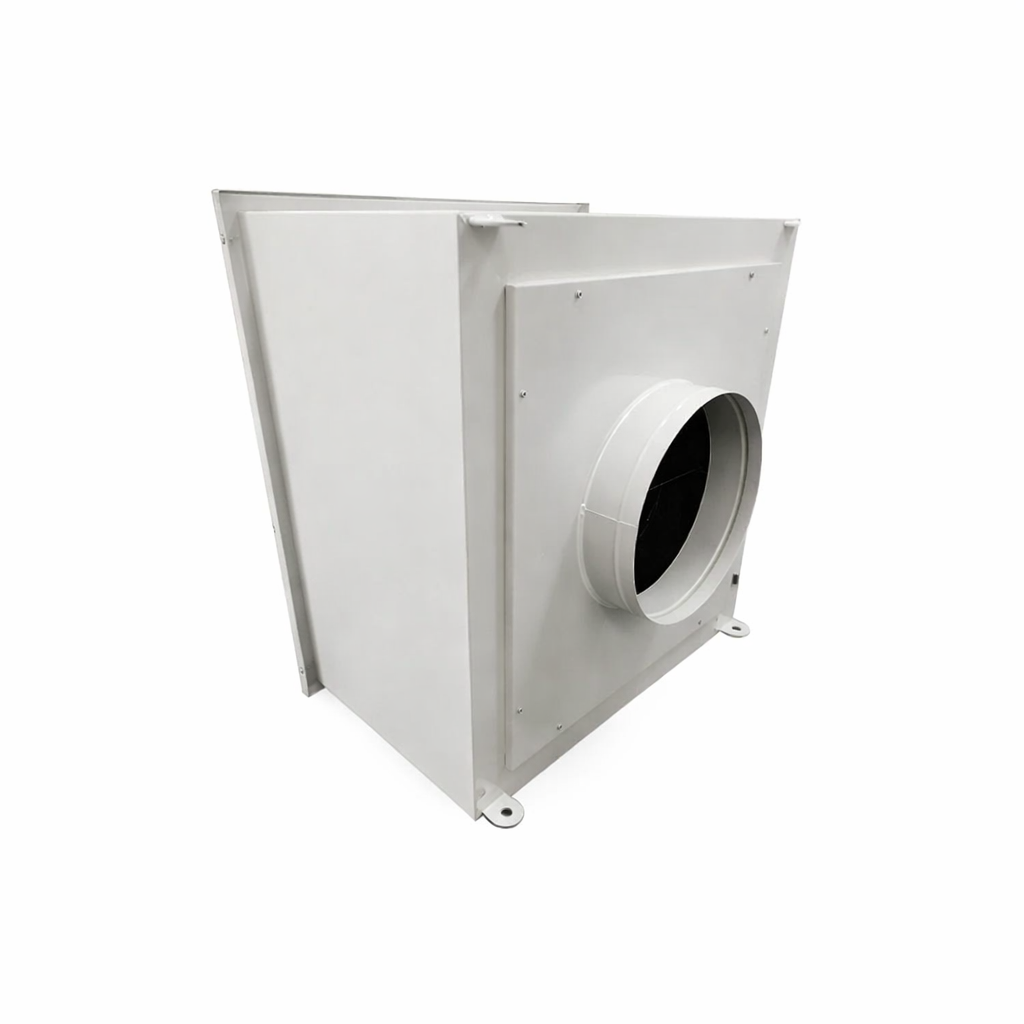
What Is the Real Difference Between BFU and FFU?
An FFU is a fan filter unit. It combines a fan and a final filter inside a compact ceiling module. The live catalog page for FFU Fan Filter Unit positions it for cleanrooms, laboratories, and process areas that need stable contamination control with modular installation and adjustable operation.
A BFU is a blower filter unit. In simple terms, it leans harder on blower performance and is usually associated with higher static pressure capability than a standard FFU. The public page for BFU HEPA Box highlights HEPA H13 to U15 filtration and airflow in the 500 to 2000 cubic meter per hour range, depending on model.
That technical difference matters when air must pass through a more demanding path, when filters age, or when room pressure must stay consistent between adjacent zones. On paper, both can look acceptable. In operation, one may provide more useful margin than the other.
That is why price alone is a weak decision tool. The cheaper unit at purchase can become the more expensive one after startup if the room needs constant rebalancing, if noise starts to disturb operators, or if filter loading changes the airflow more than expected.
The Buying Factors That Actually Change the Decision
Most projects do not fail because the team forgot a definition. They fail because key operating factors were treated as secondary during procurement. These are the issues that usually separate a good BFU decision from a good FFU decision.
- Static pressure. BFU usually has an advantage when the air path is heavier or the system needs more pressure reserve.
- Noise. FFU is often easier to live with in spaces where people work near the air supply for long periods.
- Energy use. With many units running around the clock, motor efficiency and controllability matter more than buyers expect.
- Plenum and layout fit. FFU often integrates more easily into repeated ceiling modules, while BFU needs more careful space review.
- Maintenance behavior. BFU may hold performance more steadily as filters load up, but access and replacement planning still matter.
- Project pattern. FFU fits repeated modular coverage. BFU fits heavier duty points that need stronger air delivery.
The current product pages underline that difference clearly. BFU emphasizes H13 to U15 HEPA filtration and stronger airflow capacity. FFU emphasizes staged regulation, grouped control, and common AC 110 or 220 volt options. One is centered on stronger delivery margin. The other is centered on modular operating flexibility.
If you want the broader FFU explanation, review the existing FFU cleanroom guide. This comparison article is narrower on purpose. It is meant to help a buyer choose between BFU and FFU without getting lost in a longer general guide.
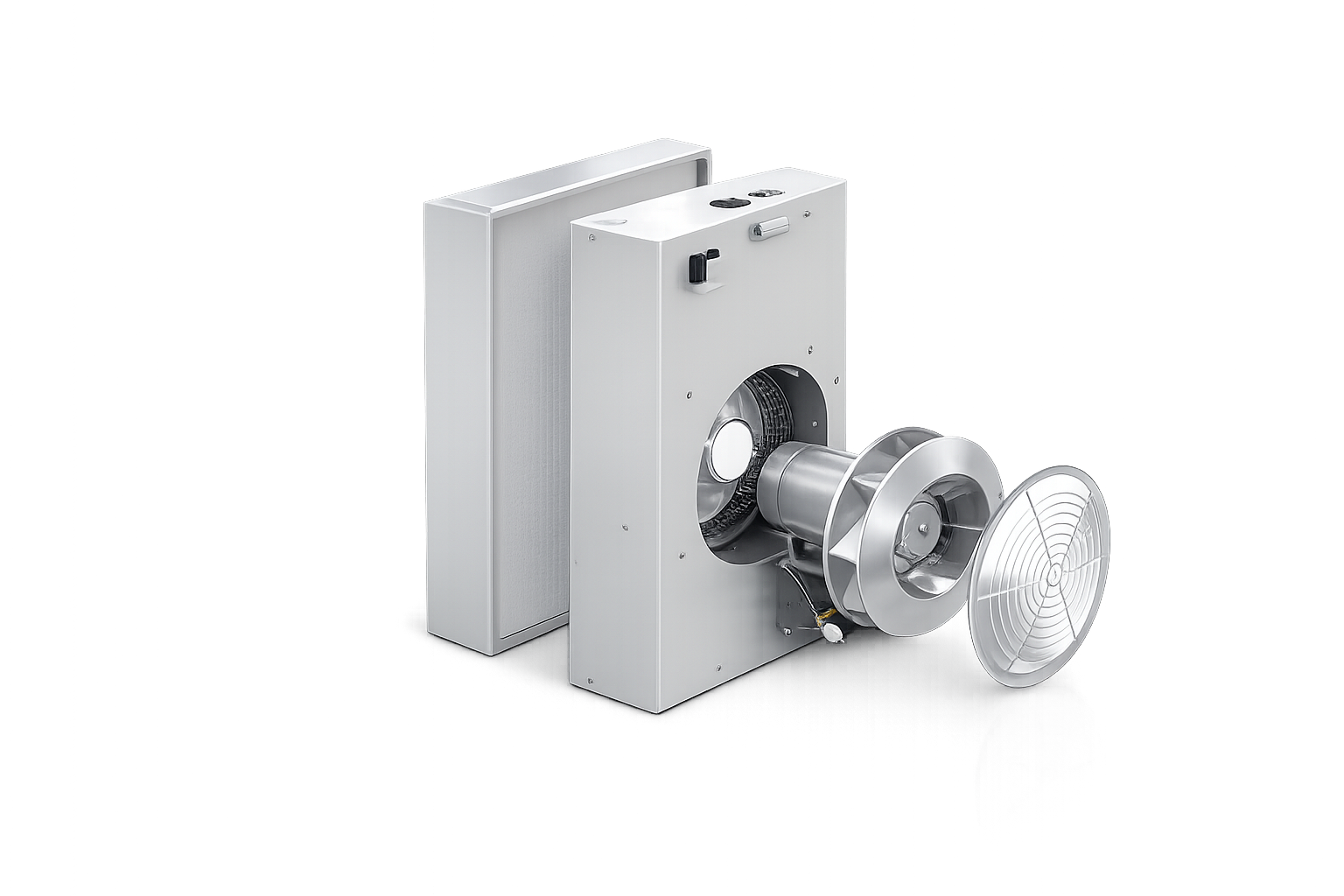
When BFU Makes More Sense
BFU deserves priority when the air path is not easy. That may mean higher system resistance, a stricter pressure relationship between rooms, or a need to maintain stable output even as filters accumulate load. In those cases, a stronger blower-driven unit gives the design team more useful safety margin.
BFU can also be the right answer when the room needs stronger supply performance at specific points, not just broad modular coverage across the full ceiling. In retrofit work, BFU often appears when the project cannot rebuild major ducting elements but still needs a critical zone to stay reliable under production conditions.
- Choose BFU when the room has tighter pressure margins and a small tolerance for drift.
- Choose BFU when filter resistance and operating duty are likely to challenge a lighter unit.
- Choose BFU when you have enough service space above the ceiling for blower and filter access.
- Choose BFU when the team accepts slightly higher sound in exchange for stronger operating reserve.
BFU is not automatically better. It is simply more appropriate when the cleanroom needs the character of a stronger blower package. If the project does not need that reserve, you may end up paying for capacity that never creates real value.
When FFU Delivers Better Value
FFU is usually the better fit for modular cleanrooms where many ceiling units work together to create stable clean airflow. If the room will be occupied for long shifts, if the ceiling grid is repetitive, and if flexibility is important, FFU tends to give a better balance between performance, comfort, and operating cost.
FFU is also attractive when the facility expects phased changes. Laboratories, pharmaceutical rooms, and electronics environments often evolve faster than general production spaces. A modular FFU layout is easier to tune, expand, or rearrange than a system that depends on heavier point-by-point equipment everywhere.
- Choose FFU when plenum depth is limited and the unit must integrate into standard ceiling modules.
- Choose FFU when operator comfort and lower sound levels matter every day.
- Choose FFU when the project may expand in phases without a major rebuild.
- Choose FFU when clean airflow is created by distributed supply points instead of heavy-duty delivery at isolated zones.
That is why FFU becomes the default answer in many new cleanrooms. Still, a common answer is not the same as the correct answer. The design should still be tested against pressure targets, ceiling coverage, return-air behavior, and real maintenance conditions.
Technical Checklist Before You Request a Quote
Before asking for BFU or FFU pricing, collect the minimum technical data that actually shapes the unit selection. Many quote requests are too generic at the start, which leads to slow revisions and apples-to-oranges comparisons later. The better your initial brief, the faster the supplier can point you toward a realistic option.
- Define the target cleanliness class and the room pressure relationship that must be maintained.
- Calculate airflow demand, ceiling coverage, and the return-air path, not just room area.
- Choose a realistic filter grade. A higher grade without a real need only raises resistance and operating burden.
- Confirm unit dimensions, electrical needs, and service access against the actual site layout.
- Ask for sound data at the expected operating point, not only at the quietest laboratory condition.
- Request performance curves, filter replacement planning, and spare-parts availability.
It also helps to review the wider cleanroom equipment category so the room is treated as a system. Once you consider related components such as air showers, pass boxes, and terminal filtration, the BFU versus FFU decision usually becomes much clearer.
One more practical step is worth the effort: ask for a normal-load scenario and a dirty-filter scenario. Many systems look acceptable on day one. The difference appears later, when filter resistance rises and the room still has to stay within target conditions.
FAQ: Common Questions Before Choosing BFU or FFU
Is BFU always better because it has higher pressure?
No. Higher pressure is only useful when the system truly needs it. If the room has a simpler air path, lower resistance, and stronger concern for sound and energy use, FFU may be the better long-term choice.
Can FFU handle an ISO 5 cleanroom?
Yes, it can, if the unit count, ceiling coverage, filter grade, air velocity, and return-air design are calculated properly. ISO 5 performance comes from system results during commissioning and particle testing, not from the product label alone.
What is the quickest way to estimate unit quantity?
There is no safe single rule for every project. You need to calculate target air change, airflow pattern, critical-area size, and room pressure margin. The correct quantity comes from system calculation, not from habit or a past project that looked similar.
Conclusion: Match the Unit to the System
BFU fits projects that need stronger static pressure and more performance reserve under heavier system load. FFU fits projects that need a quieter, more compact, and more flexible modular ceiling solution. The best choice is not the strongest unit or the most common unit. It is the one that matches the resistance, operating pattern, and maintenance reality of the cleanroom.
If you are deciding between both options for an active project, send your cleanliness target, room dimensions, and return-air concept to the technical team first. For a faster BFU versus FFU review, contact our technical team on WhatsApp so the specification path and quotation request start from the right assumptions.