

What Is an FFU and Why Is It a Key Cleanroom Component?
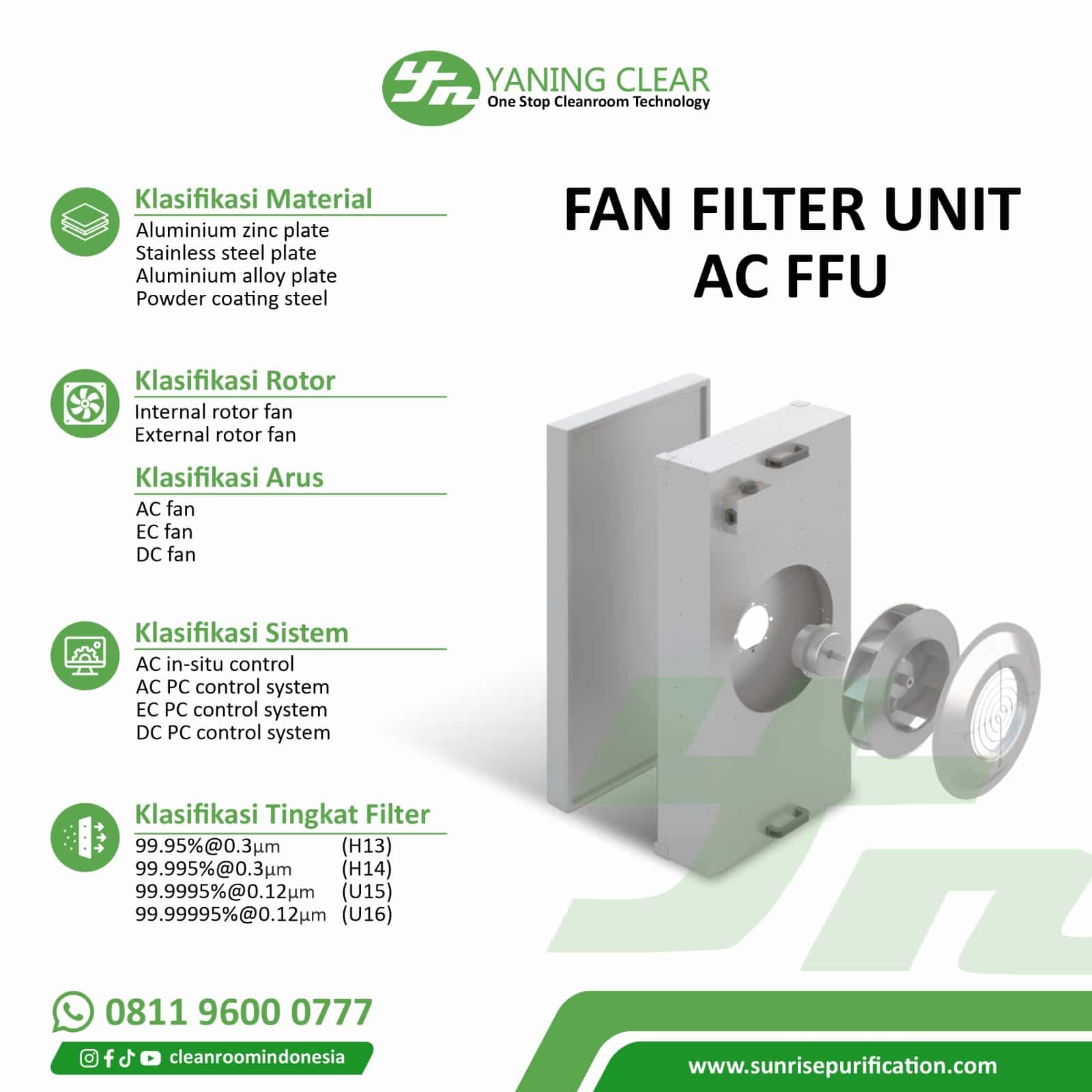
An FFU (Fan Filter Unit) is a self-contained unit that combines a fan motor and HEPA or ULPA filter in a single compact module, installed in the cleanroom ceiling to produce vertical downward clean airflow. If you are designing or upgrading a pharmaceutical, electronics, or laboratory cleanroom, understanding FFUs is not optional — it is essential.
The short answer: an FFU draws air from the plenum (space above the ceiling), filters it through a HEPA H13/H14 or ULPA U15/U16 filter, then pushes it down to the work area as laminar airflow. Filtration efficiency reaches 99.99% (HEPA H14) up to 99.9995% (ULPA U15) for particles at 0.12 microns.
Conventional HVAC systems supply clean air through centralized ductwork, but this approach has limitations in flexibility and filtration density. FFUs allow each ceiling point to have an independent clean air source, so ISO Class 5 or better can be achieved without complex ductwork to every location.
FFU vs BFU: Which One Fits Your Project?
In the cleanroom market, you will encounter two terms often used interchangeably despite having different characteristics: FFU (Fan Filter Unit) and BFU (Blower Filter Unit). Understanding the differences matters for correct selection.
FFU (Fan Filter Unit)
Uses axial or centrifugal EC (Electronically Commutated) fan motors. The main advantage of FFUs is low energy consumption and reduced noise levels, typically below 50 dB(A). A slim design (200-300mm thickness) makes them ideal for cleanrooms with limited plenum space. Modern FFUs include variable speed controls, so air velocity can be adjusted without replacing components.
BFU (Blower Filter Unit)
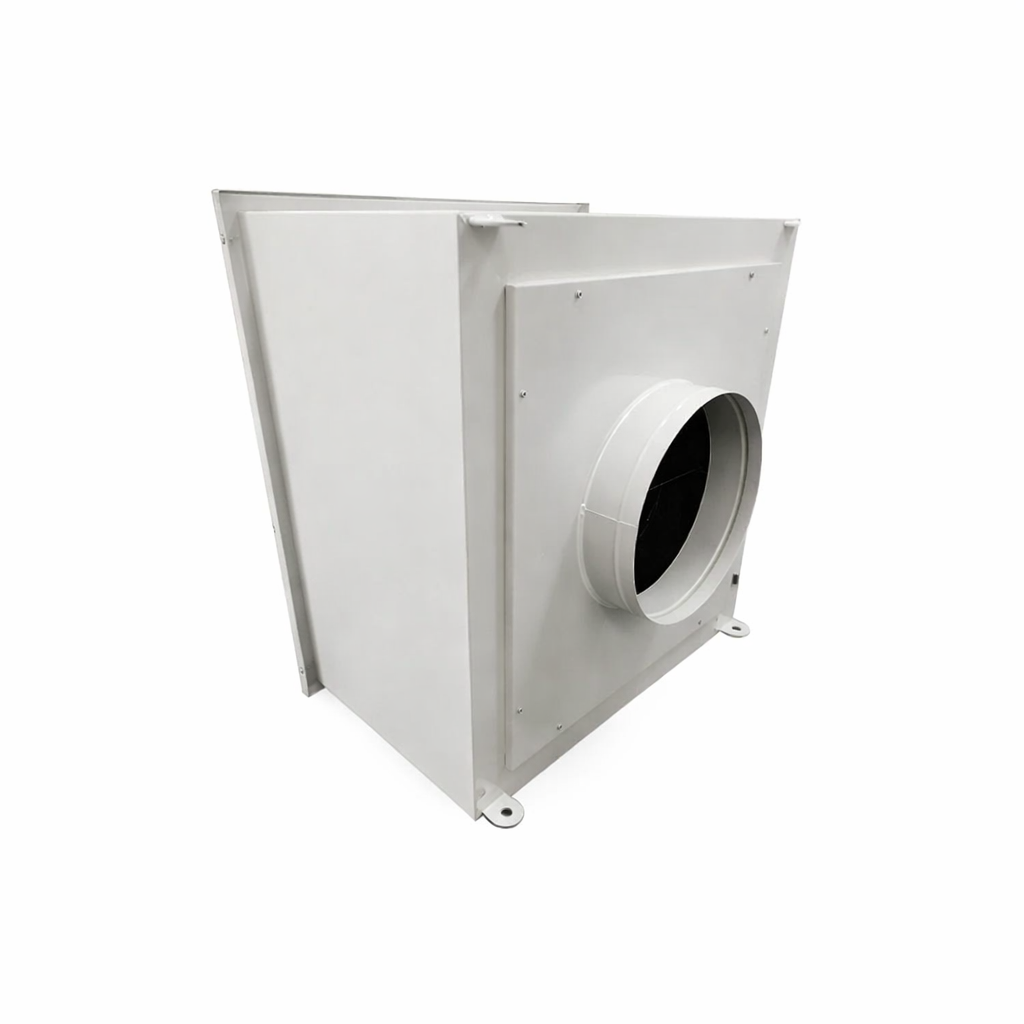
Uses centrifugal blowers with higher static pressure compared to standard FFUs. A BFU HEPA Box suits installations that require greater air pressure, such as when filters are starting to load or the air path has higher resistance. BFU operational noise tends to be louder, but the trade-off is more consistent performance as filters approach end-of-life.
- FFU: energy-efficient, low noise (<50 dB), ideal for production areas and labs requiring work comfort
- BFU: high static pressure, stable performance, suitable for systems with high air resistance
- Common choice: most pharmaceutical and electronics cleanrooms use FFUs; BFUs are chosen for specific cases
Technical Specifications You Must Understand Before Buying
When evaluating FFUs from various suppliers, do not just compare prices. Pay attention to these technical parameters that directly affect your cleanroom performance.
Filter Type: HEPA vs ULPA
HEPA H13 captures 99.95% of particles at 0.3 microns — sufficient for ISO 5-7. HEPA H14 improves to 99.995% — the standard for ISO 5. ULPA U15 captures 99.9995% of particles at 0.12 microns — mandatory for ISO 3-4 in semiconductor manufacturing. Select the filter grade matching your target cleanliness class, not assuming "higher is always better," since ULPA filters have significantly higher air resistance.
Air Velocity
ISO 14644 recommends 0.36-0.54 m/s air velocity at the filter face for unidirectional airflow. Velocity that is too low fails to maintain laminarity, while too high causes turbulence and increased energy consumption. A good FFU provides multi-step speed control for on-site fine-tuning.
Noise Level
For production areas with extended working hours, FFU noise should stay below 55 dB(A) at normal operating speed. Some premium FFUs achieve 45 dB(A). Note that noise specifications are often measured under specific conditions — request measurement data at the speed you will actually use, not just at minimum speed.
Power Consumption and Motor Type
EC (Electronically Commutated) motors consume 30-50% less energy than conventional AC motors. For cleanrooms with 50+ FFU units, this energy saving becomes operationally significant. EC motors also last longer with a lifespan of 50,000-70,000 hours. The initial investment is higher, but ROI arrives within 2-3 years through electricity savings.
Standard Sizes and FFU Installation Configurations
FFUs are available in several standard sizes that follow the cleanroom ceiling grid. Choosing the right size ensures compatibility with the ceiling structure and optimizes airflow coverage.
The most common sizes are 1200x600mm and 600x600mm (following the standard T-bar grid), and 1220x610mm (imperial standard 4'x2'). For areas requiring full coverage, FFUs are installed adjacently until they cover 60-100% of the ceiling area depending on the target cleanliness class.
Common installation configurations include ceiling-mounted (attached to the ceiling with brackets) and ceiling-recessed (integrated into the ceiling grid). The recessed method provides a cleaner look and allows filter replacement from the plenum side without disturbing the work area below.
- ISO 5: FFU coverage 60-80% of ceiling area
- ISO 6: FFU coverage 25-40%
- ISO 7: FFU coverage 10-20% or using centralized recirculation air
- ISO 8: typically adequate with centralized HVAC without individual FFUs
Mistakes to Avoid When Selecting FFUs
First, ignoring external static pressure. Every installation has different air resistance depending on air path length, number of bends, and pre-filter condition. An FFU that looks great on paper can underperform if the available static pressure cannot overcome the system resistance. Request pressure-flow curve data (P-Q curve) and match it against your system resistance calculations.
Second, not accounting for filter replacement costs. HEPA H14 filters on standard-size FFUs need replacement every 3-5 years. For a cleanroom with 100 FFU units, filter replacement can become the largest component of operating costs. Ask the supplier about replacement filter availability and pricing before committing to an FFU brand.
Third, choosing AC motors to save on upfront costs. AC motors waste energy, lack precise speed control, and have shorter lifespans. For long-term projects, EC motors always win on total cost of ownership even though the unit price is higher initially.
Fourth, installing FFUs without considering room air balance. Air pushed down by FFUs needs adequate exit paths through return air grilles in the lower walls or raised floor. Air imbalance causes turbulence that spreads particles instead of directing them out.
FAQ: Common Questions About Cleanroom FFUs
How long does an FFU last before needing replacement?
A quality FFU motor lasts 50,000-70,000 operating hours (approximately 6-8 years with 24/7 usage). The HEPA filter needs more frequent replacement, typically every 3-5 years depending on intake air quality and pre-filter replacement schedule. The FFU unit overall can last 10-15 years with proper maintenance.
Can FFUs be installed in an existing cleanroom?
Yes, one key advantage of FFUs over centralized ducted systems is retrofit flexibility. FFUs can be added to existing cleanrooms without major ductwork modifications. Key considerations include the ceiling structure's capacity to support FFU weight (typically 20-35 kg per unit) and available plenum space above the ceiling for air circulation.
How do you know when an FFU filter needs replacement?
The primary indicator is increased pressure drop across the filter. Every FFU should include a differential pressure gauge or alarm. When the pressure drop exceeds the manufacturer's specified limit (typically 2x the initial pressure drop), the filter must be replaced immediately. A particle counter can also verify that the output air still meets the cleanliness class specification.
Conclusion: Next Steps for Your Cleanroom Project
FFUs form the backbone of the clean air system in modern cleanrooms. Correct selection — from motor type and filter grade to size and installation configuration — directly determines whether your cleanroom operates at target or becomes an expensive problem to fix.
Prioritize three things: EC motors for long-term efficiency, filter grade matched (not excessive) to target cleanliness class, and confirm FFU coverage calculations before ordering. If you are unsure between a standard FFU or a stainless steel BFU, consult with the technical team first.
For consultation about the right FFU/BFU requirements for your cleanroom project, contact our technical team via WhatsApp to receive recommendations and competitive pricing.