

Sign #1: Unstable Temperature Fluctuations
Cold storage is designed to maintain a constant temperature within a specific range — for example, -18°C for frozen storage or 2–4°C for chilling rooms. If you notice temperature swings exceeding ±2°C from the setpoint without obvious reasons (door not frequently opened, normal stock levels), this is an early warning sign.
Common causes: faulty temperature sensors, malfunctioning defrost timers, or declining compressor capacity. Left unchecked, these fluctuations will compromise product quality — especially pharmaceutical raw materials, frozen meat, or dairy products that are sensitive to temperature changes.
What to check: Sensor calibration, evaporator fan condition, and defrost cycle settings. If fluctuations consistently occur at the same time each day, the defrost heater or timer is likely the culprit.
Sign #2: Excessive Condensation on Walls or Ceiling
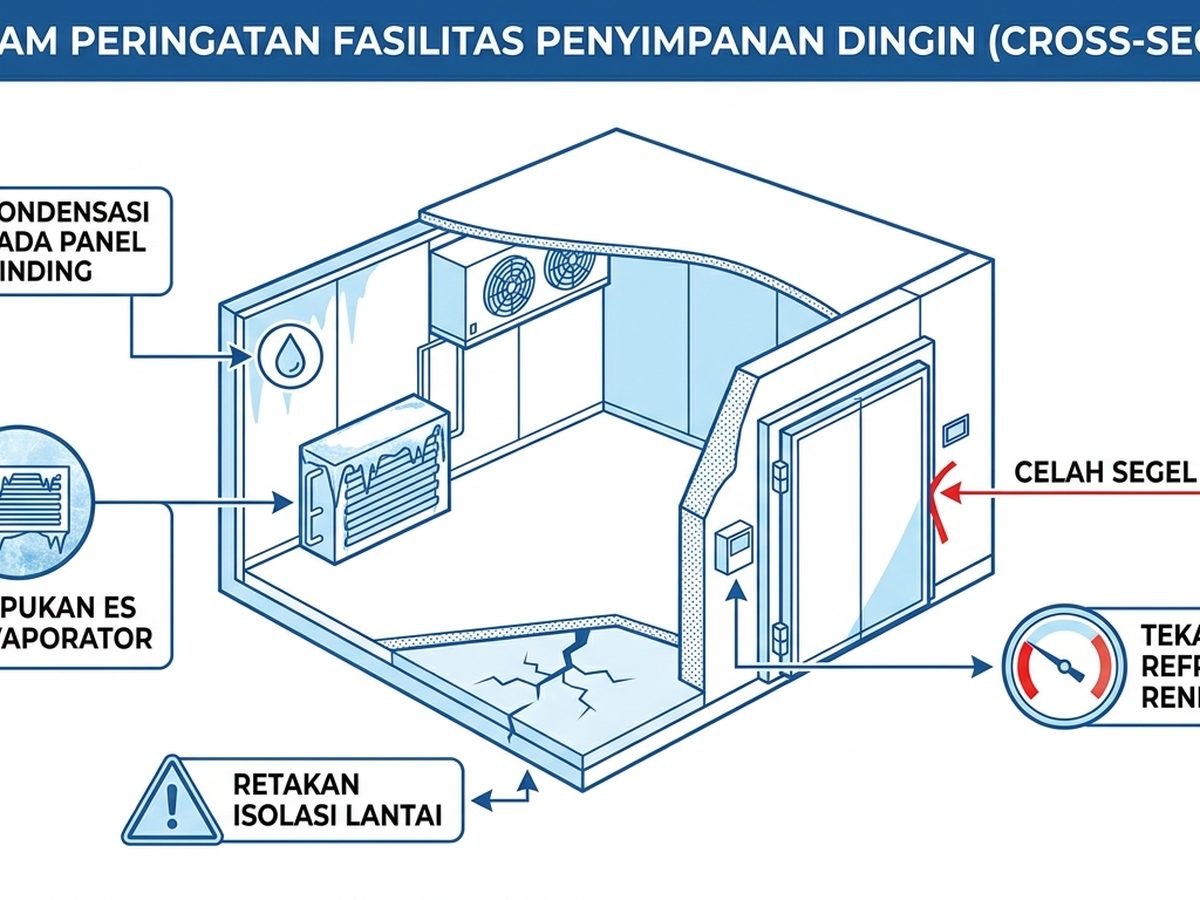
Water droplets or moisture on cold room walls and ceilings is not just a cosmetic issue — it signals that your sandwich panel insulation is starting to fail. Condensation occurs when the panel surface temperature drops below the room's dew point.
The root cause is typically damaged vapour seals or loose panel joints, allowing external moisture to penetrate the panel and condense. If ignored, this leads to:
- Mold and bacteria growth inside the panels
- Dramatic decrease in insulation R-value
- Ice buildup on the evaporator, overloading the compressor
- Structural damage to panel connections
What to check: Visual inspection of all panel joints, especially door areas and ceiling joints. Check flashing and sealant — if cracked or detached, repair immediately before water penetrates deeper.
Sign #3: Significant Spike in Electricity Bills
Cold storage is the largest electricity consumer in many facilities. If your electricity bill increases by 15–25% without tariff changes or additional production load, your refrigeration system is working harder than it should — and something is wrong.
The most common causes of electricity consumption spikes:
- Dirty condenser coils — reducing heat rejection efficiency
- Refrigerant leak — compressor runs longer to reach setpoint
- Deteriorating panel insulation — external heat gain increases
- Worn door gaskets — cold air leaking continuously
What to check: Compare this month's bill with the same month last year. Conduct a simple energy audit: record daily compressor runtime and compare with the normal baseline. Have a technician check refrigerant pressure and condenser condition.
Sign #4: Unusual Noises from the Refrigeration Unit
A healthy cold storage system operates with consistent, predictable sound. If you start hearing squealing, loud vibrating, or knocking sounds, a mechanical component is wearing out or about to fail.
Sound types and likely causes:
- High-pitched squeal: Worn compressor belt or pulley misalignment
- Knocking/banging: Piston compressor issues or liquid slugging
- Loud vibration: Loose mounting brackets or unbalanced fan blades
- Hissing sound: Refrigerant leak — this is urgent
What to check: Perform a daily walk-around inspection before operations begin. Record sounds if needed for comparison over time. Don't delay calling a technician — a small compressor issue can lead to complete unit replacement costing tens of thousands of dollars.
Sign #5: Abnormal Ice Buildup on the Evaporator
A light frost on evaporator coils is normal. But if you see thick ice covering the entire coil or ice forming in unusual areas like the evaporator casing or drain lines, your defrost system is failing.
Severe ice buildup causes:
- Blocked airflow — room temperature cannot reach setpoint
- Compressor running continuously because the thermostat is never satisfied
- Evaporator fan motor burnout from high amp draw
- Water pooling on the floor when defrost fails to drain meltwater
What to check: Whether the defrost heater is working, whether drain lines are clogged, and defrost timer settings. Also ensure no doors are left open too long, allowing excessive humidity into the cold room.
Sign #6: Cold Storage Door Not Sealing Properly
A cold storage door that doesn't close tightly or is difficult to open is an often-overlooked problem with significant consequences. Worn gaskets, loose hinges, or misaligned door frames can cause 24/7 cold air leakage.
Every 3mm gap in a cold storage door can cause cold air loss equivalent to one household's daily electricity consumption. Additionally, incoming warm air carries moisture that accelerates ice buildup.
What to check: Visual test with a flashlight from outside while the light is on inside — if light passes through, there's a gap. Also perform the paper test: clamp a sheet of paper in the door, close it, then pull. If the paper slides out easily, the gasket needs replacement.
Sign #7: Cracked or Heaving Cold Room Floor
A cold storage floor that is cracking or heaving is the most serious warning sign. It indicates that floor insulation has failed and frost heave is taking hold — the ground beneath the cold room is freezing and expanding, pushing the floor upward. At this stage, you're facing major structural repairs that may require a total cold storage shutdown.
Causes of floor insulation failure:
- Damaged or improperly installed vapour barrier beneath the floor
- Sub-floor ventilation system not functioning
- Poor drainage around the building — groundwater rising beneath the cold room
- Excessive forklift or racking loads damaging the floor finish
What to check: Inspect floors every 3 months. Look for fine cracks, raised areas, or discoloration. If your cold storage building is over 10 years old, consider a thermal imaging inspection to detect cold spots in the floor that indicate damaged sub-floor insulation.
Solution: Repair vs. Full Replacement — When to Choose What?
After identifying the warning signs above, the next question: when is repair sufficient, and when is a full replacement needed? Here's a practical guide:
| Condition | Repair | Full Replacement |
|---|---|---|
| Worn sensors/parts | ✅ Replace component | ❌ |
| Minor refrigerant leak | ✅ Patch + recharge | ❌ |
| Panel insulation >30% damaged | ⚠️ Repairable | ✅ More cost-effective long-term |
| Compressor >10 years old, failed | ❌ Not worth it | ✅ Replace unit |
| Floor frost heave | ❌ Temporary fix only | ✅ Floor rebuild |
| Electricity bill up >30% | ⚠️ Audit first | ✅ If insulation is the cause |
Recommended Preventive Inspection Schedule
Prevention is always cheaper than repair. Here's our recommended inspection schedule for commercial and industrial cold storage:
- Daily: Check temperature display, listen for unusual sounds, visual inspection of door and seals
- Weekly: Clean condenser coils, check drain lines, inspect door gaskets
- Monthly: Check defrost cycle, calibrate sensors, inspect wall panel joints
- Quarterly: Floor inspection, refrigerant pressure check, wall thermal scan
- Annually: Full system audit by a professional HVAC/R technician, including electrical and structural checks
See also: Cold Storage Wall Panels: Specs & Installation Guide 2026
FAQ: Cold Storage Repair Questions
How much does cold storage repair cost?
Repair costs vary by damage level. Minor repairs like door gasket replacement range from (–350. Major repairs like compressor replacement can reach ,500–10,000. We provide free consultations for accurate cost estimates.
How long does a cold storage unit last?
With regular maintenance, a quality cold storage system can last 15–20 years. Components like compressors and door gaskets typically need replacement every 5–8 years. Regular inspections are key to extending your cold storage lifespan.
Can cold storage sandwich panels be partially replaced?
Yes, damaged panels can be replaced individually without dismantling the entire cold room. However, if more than 30% of panels have insulation damage, we recommend full replacement as it is more cost-effective long-term.
Need Help? Free Cold Storage Consultation
Cold storage is a major investment — don't wait until it completely breaks down. If you've identified any of these 7 warning signs in your cold storage facility, our technical team is ready to help. We provide consultation, inspection, and repair services with over 10 years of experience in Indonesia's refrigeration industry.
We also supply PIR sandwich panels specifically for cold storage with best-in-class insulation values — resistant to condensation, mold, and extreme temperature changes. Suitable for cold rooms, blast freezers, and industrial-scale refrigerated warehouses.
Contact us now for a FREE assessment of your cold storage condition:
- 📞 Phone/WhatsApp: Contact via WhatsApp
- 📧 Email: sales@sandwichpanels.id
- 🌐 Website: sandwichpanels.id/contact