

Introduction: Why Fire Rating Matters for Sandwich Panels?
Fire poses a serious threat to every commercial and industrial building. Data from the Jakarta Fire and Rescue Department (Damkar) records an average of 2,000 fires per year with losses reaching billions of rupiah. In this context, selecting fire-resistant construction materials becomes crucial — including fire-rated sandwich panels used for walls and roofs.
This article is intended for contractors, architects, project owners, and HSE officers who need to understand sandwich panel fire rating standards. We will discuss the differences between EI60, EI120, and EI240, and when each rating is required according to Indonesian regulations.
What is Fire Rating and EI Classification?
Fire rating is a measure of a material's or building structure's ability to withstand fire for a specific period. The most common classification system used in Indonesia and Europe is EI (Integrity-Insulation):
- E (Integrity): The ability to prevent fire and hot gases from penetrating
- I (Insulation): The ability to keep surface temperatures below safe limits (usually average 140°C, maximum point 180°C)
The number after EI indicates duration in minutes. The higher the number, the longer the panel can withstand fire.
Sandwich Panel Fire Rating Comparison Table
| Rating | Duration | Common Applications | Core Material |
|---|---|---|---|
| EI30 | 30 minutes | Light warehouses, small shops | EPS with special treatment |
| EI60 | 60 minutes | Factories, logistics warehouses, offices | Rockwool, PIR |
| EI120 | 120 minutes | Cold storage, pharmaceutical, data centers | Thick Rockwool, Ceramic wool |
| EI240 | 240 minutes | High-risk facilities, oil & gas | Rockwool + additional protection |
EI60: Minimum Standard for Industrial Buildings
EI60 is the most common fire rating used for industrial and commercial buildings in Indonesia. With the ability to withstand fire for 60 minutes, this rating provides sufficient evacuation time and helps firefighters control the fire before it spreads.
EI60 Sandwich Panel Characteristics
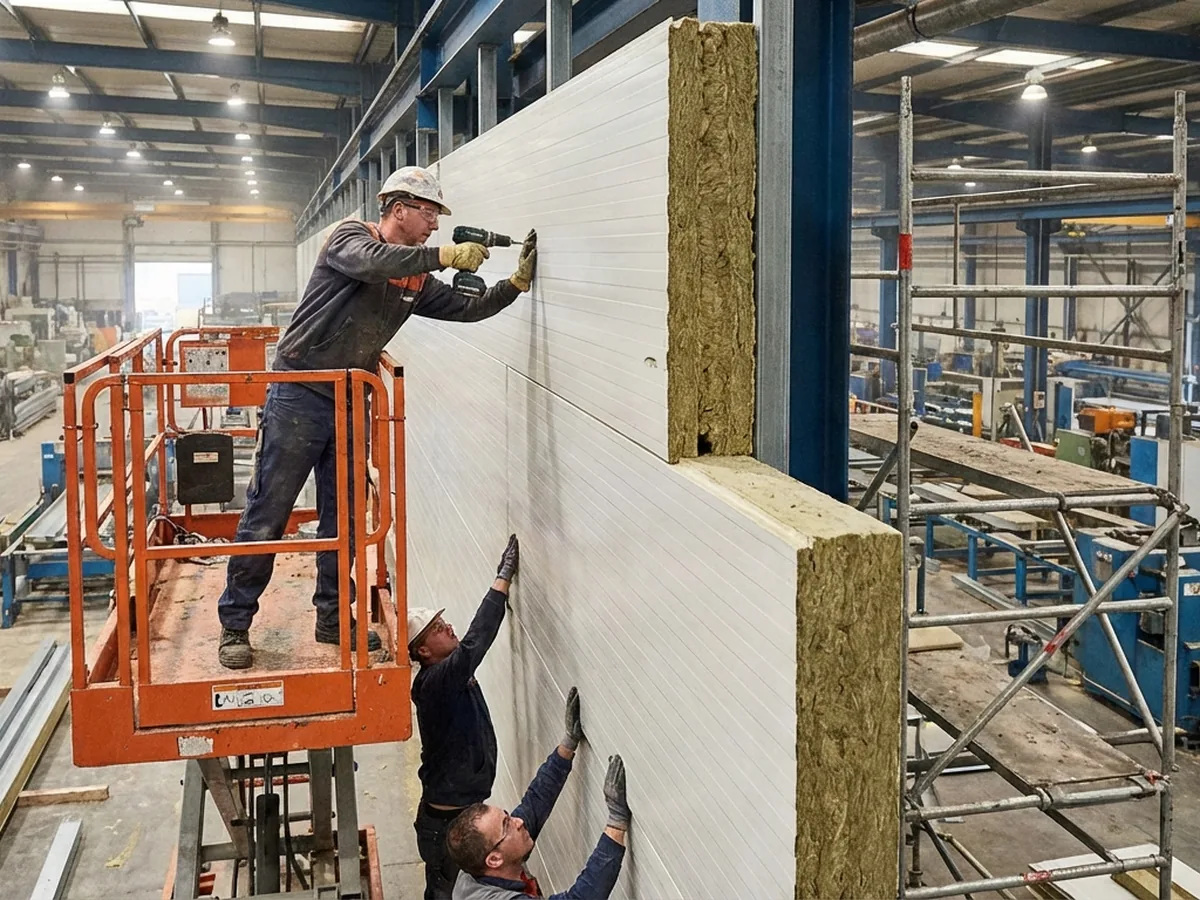
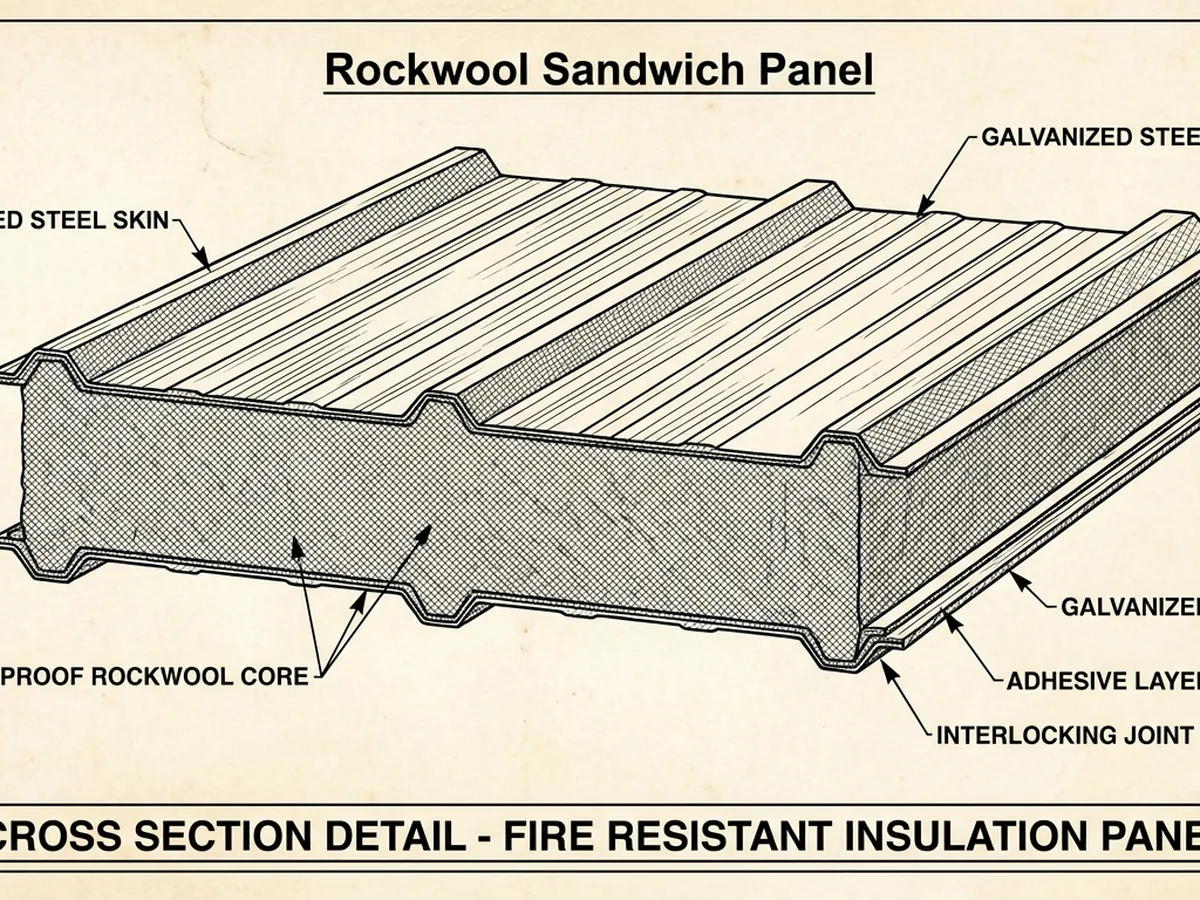
Sandwich panels with EI60 fire rating generally use Rockwool core (mineral wool) with a thickness of 50-100mm. Rockwool has a melting point above 1,000°C, enabling it to maintain structural integrity during a fire.
EI60 Technical Specifications:
- Core thickness: 50mm - 100mm Rockwool
- Density: 100-140 kg/m³
- Steel skin thickness: 0.4mm - 0.6mm
- Certification process: Testing at KAN-accredited laboratory
EI60 Applications
EI60 fire rating is suitable for:
- Logistics and distribution warehouses
- Light manufacturing factories
- Office buildings in industrial areas
- Workshops and service centers
- Vehicle showrooms
EI120: Double Protection for Critical Facilities
EI120 offers 120 minutes of protection — twice that of EI60. This rating becomes a mandatory requirement for facilities storing high-value materials or vulnerable to heat damage.
Why Does Cold Storage Need EI120?
Cold storage and refrigeration rooms require extra protection because:
- Room contents (frozen products, pharmaceuticals) are extremely valuable
- Refrigeration systems use refrigerants that can worsen fires
- Financial losses from downtime are enormous
- Many cold storage facilities store pharmaceutical materials that must maintain temperature
EI60 vs EI120 Differences:
| Aspect | EI60 | EI120 |
|---|---|---|
| Fire resistance duration | 60 minutes | 120 minutes |
| Core thickness | 50-100mm | 100-150mm |
| Panel weight | Lighter | Heavier by 30-50% |
| Price | Standard | Premium (+20-30%) |
| Frame construction | Light | Requires reinforcement |
EI240: Maximum Protection for High-Risk Facilities
EI240 is the highest fire rating commonly used, providing 4 hours of fire protection. This rating is rarely required for standard commercial buildings but becomes mandatory for:
- Oil & gas facilities
- Petrochemical plants
- Tier 3-4 data centers
- National archives
- Military and defense facilities
Sandwich panel EI240 uses a combination of high-density Rockwool (160+ kg/m³) with thickness of 150-200mm, often with additional external protection layers like fire-resistant coating.
Standards and Regulations in Indonesia
In Indonesia, building fire rating requirements are regulated by several regulations:
1. Minister of PUPR Regulation No. 3/2023
Regulates building fire classification and construction material requirements. Class A and B commercial buildings are required to use materials with minimum EI60 fire rating for fire partitions.
2. SNI 1729:2020 (Fire Resistance Planning Procedures)
This standard regulates how to calculate and plan building structure fire resistance. SNI adopts the EI concept from European standards (EN 1363).
3. Local Damkar Requirements
Each region has additional requirements from the local Fire Department. For example, Jakarta Damkar requires fire rating test certificates from KAN-accredited laboratories for every project above 5,000 m².
How to Choose the Right Fire Rating
Fire rating selection cannot be arbitrary — it must be based on risk analysis and applicable regulations. Here is the selection framework:
Step 1: Identify Building Class
Based on PUPR Regulations, buildings are classified by:
- Building height
- Floor area
- Number of occupants
- Building function
Step 2: Fire Risk Analysis
Consider:
- Materials stored/produced
- Potential ignition sources
- Occupant density
- Value of protected assets
Step 3: Consult with Local Damkar
Always confirm specific requirements with the local Fire Department before finalizing design. Requirements may vary between cities.
Maintenance and Periodic Inspection
Sandwich panel fire rating is only effective if properly installed and maintained. A periodic inspection program should include:
- Visual inspection of sealant and joints
- Verification of protective layer integrity
- Inspection of penetration systems (cables, pipes)
- Re-certification every 5 years (recommended)
FAQ: Common Questions About Fire Rating
Are all rockwool sandwich panels automatically EI120?
No. While Rockwool is indeed fire-resistant material, fire rating depends on thickness, density, and installation system. 50mm Rockwool panels may be EI60, while 100mm+ may be EI120. Always check test certificates.
What is the price difference between EI120 and EI60 sandwich panels?
Generally, EI120 panels are 20-30% more expensive than EI60 due to greater material thickness. However, this investment is comparable to the additional protection provided, especially for critical facilities.
Can fire rating be reduced after installation?
Yes. Modifications such as adding ventilation holes, unsealed cable penetrations, or mechanical equipment additions can reduce fire rating. Any modifications must be consulted with fire protection engineers.
What is the difference between EI and REI?
EI only measures Integrity and Insulation, while REI adds R (Resistance/Load-bearing). REI is used for load-bearing structures, while EI is sufficient for non-structural partition walls.
Conclusion and Recommendations
Selecting the right sandwich panel fire rating is a safety investment that cannot be negotiated. In summary:
- EI60: Minimum standard for factories and warehouses
- EI120: Mandatory for cold storage, pharmaceutical, and critical facilities
- EI240: For high-risk facilities and special applications
Always ensure the panels you purchase have fire rating test certificates from KAN-accredited laboratories. Don't just rely on "fire-resistant" claims without supporting documents.
Need help choosing the right fire rating for your project? Consult for free with our expert team at sandwichpanels.id. We are ready to help analyze your needs and provide the best fire rating panel prices for your building.