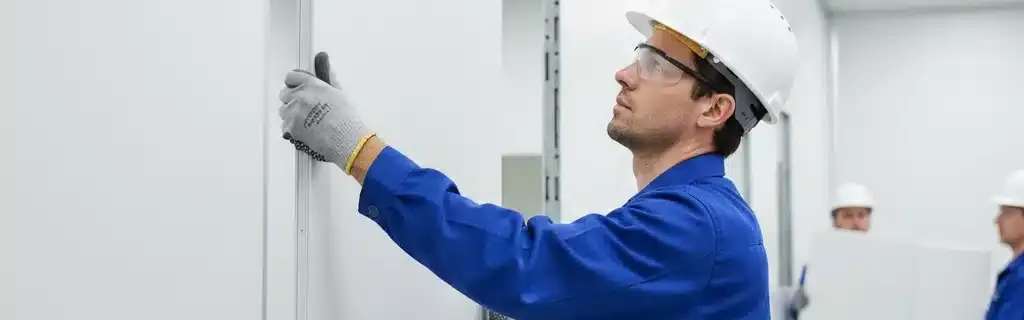

Why Choosing the Wrong Cleanroom Wall Material Can Cost Your Pharma Business
Pharmaceutical cleanrooms are among the most stringently regulated environments in manufacturing. A single specification mistake in wall panel selection can trigger GMP audit failure, product recall, or worse — patient safety risks. Sandwich panels have become the industry standard for pharma cleanroom walls, but not all panels are created equal.
This article covers the critical standards and specifications your pharmaceutical cleanroom sandwich panels must meet, from ISO classification requirements to chemical resistance and fire safety — so you can make an informed decision for your facility.
Indonesia's pharmaceutical sector is experiencing rapid growth, with over 200 national drug manufacturers now required to comply with the latest CPOB (Indonesian GMP) guidelines. This regulatory push has created strong demand for high-quality cleanroom materials, particularly sandwich panels that combine insulation, hygiene, and fast installation in one solution. See also our guide on cleanroom wall materials for a broader material overview.
GMP & ISO Standards for Pharma Cleanroom Walls
Pharmaceutical facilities in Indonesia must comply with multiple overlapping regulations. Here are the key standards driving sandwich panel specifications:
1. ISO 14644-1 Cleanliness Classification
ISO 14644-1 classifies cleanrooms by maximum allowable particle counts per cubic meter of air. For pharmaceutical manufacturing, common classes include ISO 7 (Grade C) and ISO 8 (Grade D) for non-sterile production areas, and ISO 5 (Grade A) for aseptic filling zones. Sandwich panel surfaces must be non-shedding, non-porous, and capable of withstanding frequent chemical cleaning without degradation.
2. GMP / EU Annex 1 — Smooth, Impervious Surfaces
GMP guidelines mandate that walls in production areas have smooth, impervious surfaces free from cracks and open joints. Galvanized steel or stainless steel sandwich panels with food-grade coating provide the ideal solution. All joints must be flush-fitted and sealed with antimicrobial, cleanroom-grade sealant to prevent microbial harborage.
3. Chemical Resistance Requirements
Pharma cleanroom sanitation protocols use aggressive disinfectants — hydrogen peroxide vapor (VHP), 70% isopropyl alcohol, and chlorine-based solutions. Panel skins must resist corrosion from these chemicals over repeated exposure. PVDF (Polyvinylidene Fluoride) or Plastisol coatings offer substantially better chemical protection than standard polyester finishes.
These standards are not optional — BPOM auditors inspect every joint, corner, and wall surface during facility inspections. Wall surfaces that fail to meet specifications can trigger major audit findings, resulting in product registration delays or outright rejection.
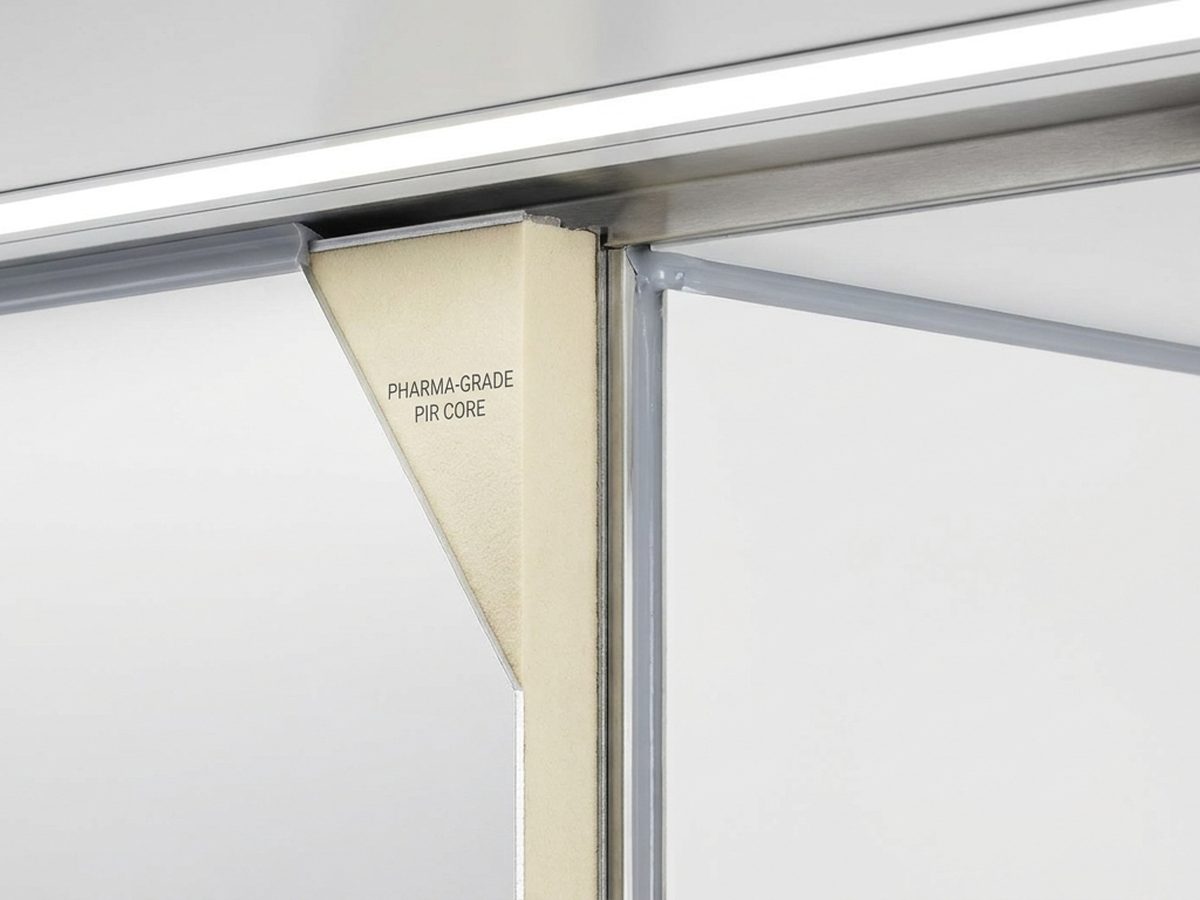
Core Material Options for Pharma Cleanroom Panels
The insulation core directly affects fire safety, hygiene, and thermal performance. Each type has unique characteristics that determine suitability:
PIR (Polyisocyanurate) offers the best fire rating in its class (Class 0/B1), combined with low thermal conductivity and virtually zero water absorption. This makes it the preferred choice for temperature-controlled production areas and vaccine storage facilities where both thermal performance and fire safety are critical.
Mineral Wool / Rockwool is genuinely non-combustible (Class A) and provides excellent acoustic insulation. It is essential for areas storing flammable raw materials or solvent-handling laboratories where a 2-hour fire-rated wall assembly may be required by local fire codes.
PUR (Polyurethane) delivers good thermal performance at a more economical price point than PIR. However, its fire rating sits below both PIR and rockwool. It is generally only recommended for non-critical ancillary areas such as corridors and administration spaces within the facility.
EPS (Expanded Polystyrene) is not recommended for any pharmaceutical cleanroom application. The material is flammable, absorbs moisture over time, and lacks the surface smoothness required by GMP standards — all characteristics that conflict with cleanroom requirements.
Technical Specifications Checklist
When specifying sandwich panels for a pharmaceutical project, verify these critical details:
- Panel thickness: 50 mm, 75 mm, or 100 mm. Vaccine storage and cold chain areas require minimum 100 mm thickness with PIR insulation core.
- Skin material: G550 galvanized steel with ≥25 micron coating, or SUS304/SUS316 stainless steel for Grade A/B sterile zones. Standard industry skin thickness ranges from 0.5 mm to 0.7 mm.
- Joint system: Tongue-and-groove or cam-lock profiles ensure gap-free, precision installation. Avoid exposed screw fasteners inside the cleanroom as they create dust accumulation points.
- Coving radius: Wall-to-floor and wall-to-ceiling junctions must include coving with a minimum 25 mm radius for effective cleaning and to prevent dirt buildup.
- Sealant specification: Neutral-cure silicone sealant that is food-grade, fungistatic, and VHP-compatible. Avoid acidic-cure sealants which can react with metal skins and cause corrosion.
Common Mistakes When Selecting Cleanroom Panels
Drawing from our experience with pharmaceutical cleanroom projects across Indonesia, here are the most frequent mistakes and how to avoid them:
- Choosing EPS panels to save cost — EPS does not meet GMP cleanroom standards. The apparent savings vanish when audit failures and remediation costs stack up, not to mention potential production shutdowns ordered by BPOM.
- Neglecting joint details — Even a 1 mm gap becomes a contamination and microbial trap. Insist on precision-engineered joint systems and qualified installation teams with pharmaceutical project experience.
- Overlooking cantilever load — Cleanroom walls often support HVAC ducting, HEPA filter housings, or equipment racks. Verify the panel's structural load capacity — minimum 50 kg per attachment point is a safe baseline.
- Using the wrong sealant — Standard construction sealants degrade under repeated VHP and chlorine exposure within months. Always specify cleanroom-grade, chemically compatible sealants with pharmaceutical application certification.
FAQ: Pharma Cleanroom Sandwich Panels
Are PIR sandwich panels sufficient for Grade A (ISO 5) cleanrooms?
Yes, PIR panels with SUS304/SUS316 stainless steel skins meet Grade A requirements when properly installed with sealed joints and correct coving radius. For areas with elevated fire risk, consider rockwool panels or combine PIR panels with automatic sprinkler systems.
What is the cost of pharma cleanroom sandwich panels per square meter?
Pricing varies by core material and skin type. PIR panels with PVDF-coated galvanized steel skin range from approximately IDR 450,000–650,000/m2 (50 mm thickness). Stainless steel SUS304 skin panels can reach IDR 1,200,000–1,800,000/m2. Prices include standard joint systems and accessories. Contact our team for a current project-specific quotation.
Can sandwich panels withstand repeated VHP sterilization cycles?
Yes, provided you use chemically resistant skins (PVDF-coated or stainless steel) and VHP-compatible sealants. Both PIR and rockwool core materials are resistant to hydrogen peroxide vapor exposure without significant degradation over time.
How long does cleanroom panel installation typically take?
For a 100 m2 cleanroom with an experienced 4-6 person crew, wall and ceiling panel installation typically takes 5–7 working days. Cam-lock joint systems can reduce installation time by up to 40% compared to traditional screw-fixed methods, while also delivering a cleaner finish.
Conclusion
Selecting the right sandwich panel for a pharmaceutical cleanroom goes far beyond comparing prices. GMP compliance, material chemical resistance, and installation quality determine whether your facility passes audit and operates safely. PIR core panels with PVDF-coated galvanized steel or stainless steel skins offer the best balance of performance, fire safety, and total cost of ownership.
Don't risk your product registration on the wrong wall material. Planning a pharmaceutical cleanroom project? Our technical team can recommend panel specifications tailored to your facility's classification and regulatory requirements. Contact us today for a free site survey and project estimate.