

Introduction: The Challenges of Modern Warehouse Construction
In the fast-paced Industry 4.0 era, building modern warehouses demands construction solutions that are not only fast but also energy-efficient and cost-saving without sacrificing structural quality. Warehouse sandwich panels are an innovative answer that has significantly changed the commercial construction paradigm in Indonesia. By using these materials, business owners can save construction time by up to 50% compared to conventional methods such as brick walls or standard corrugated roofs.
This article is intended for business owners, contractors, and property developers looking for wall and roof solutions with minimal work time but maximum performance. We will discuss in depth why sandwich panels have become the new standard in building industrial warehouses, logistics centers, and large-scale cold storage facilities.
What are Sandwich Panels for Warehouses?
Sandwich panels are three-layer composite materials specifically designed to meet both insulation and structural strength needs simultaneously. These panels consist of two layers of steel plates (outer and inner skin)—usually using high-quality painted galvanized or galvalume steel—as structural retainers with an insulation core in between. This core can be Expanded Polystyrene (EPS), Polyurethane (PU), Polyisocyanurate (PIR), or Rockwool.
This 'sandwich' construction creates a panel with high mechanical strength but relatively light weight. Its thermal and acoustic insulation capabilities are far superior to other conventional building materials. For warehouse applications, these panels serve a dual purpose: as aesthetic exterior wall elements, flexible internal partitions, or perfectly integrated roof covers.
Advantages of Sandwich Panels for Warehouse Construction
1. Unmatched Installation Speed
One of the primary reasons many developers are switching to sandwich panels is time efficiency. Panel installation is done using a precise modular system. Each panel is equipped with a tongue-and-groove interlock system that allows panels to lock together very tightly and quickly. For technical comparison, a 1,000 square meter warehouse that usually takes 2 to 3 months for wall construction using the brick method can be completed in less than 2 weeks using the sandwich panel system.
2. Energy Efficiency Reducing Operational Costs
Warehouses built with sandwich panel systems have an extraordinary ability to maintain temperature stability inside the room. This is crucial, especially for food logistics warehouses, pharmaceutical facilities, or electronic component storage sensitive to temperature fluctuations. Insulation cores like Polyurethane (PU) or Polyisocyanurate (PIR) have very low thermal conductivity values. Using these panels can effectively reduce the workload of air conditioning (AC) systems and save monthly electricity costs by 30% to 40%.
3. Lightweight Yet Strong
Despite their large dimensions, sandwich panels are relatively lightweight compared to brick or concrete walls. This lightweight characteristic provides significant financial benefits because it reduces the total static load on the building's main steel structure. With lighter loads, you can optimize foundation and steel frame designs, which ultimately will reduce the total investment cost of your warehouse construction.
Technical Specifications: Choosing the Right Core Type
Every warehouse project has unique needs, and choosing the right insulation core type greatly determines your building's long-term performance. Here are the specification details:
- EPS (Expanded Polystyrene): This is the most economical solution. EPS panels are very light and easy to install. Highly suitable for general storage warehouses that do not require extremely strict temperature control but still need a clean environment.
- PU (Polyurethane): The best thermal insulation material in its class. PU panels are a mandatory standard for cold storage facility construction due to their ability to withstand extreme temperatures below zero degrees Celsius.
- PIR (Polyisocyanurate): An advancement of PU technology, PIR panels offer much better fire resistance without reducing their thermal insulation capabilities. Highly recommended for warehouses storing flammable materials.
- Rockwool: If fire safety is your number one priority, Rockwool is the choice. These panels have a very high fire rating and do not propagate fire, besides also having the best sound dampening capabilities.
Sandwich Panel Applications in Various Warehouse Types
The flexibility of sandwich panels allows their use in various types of industrial warehouses:
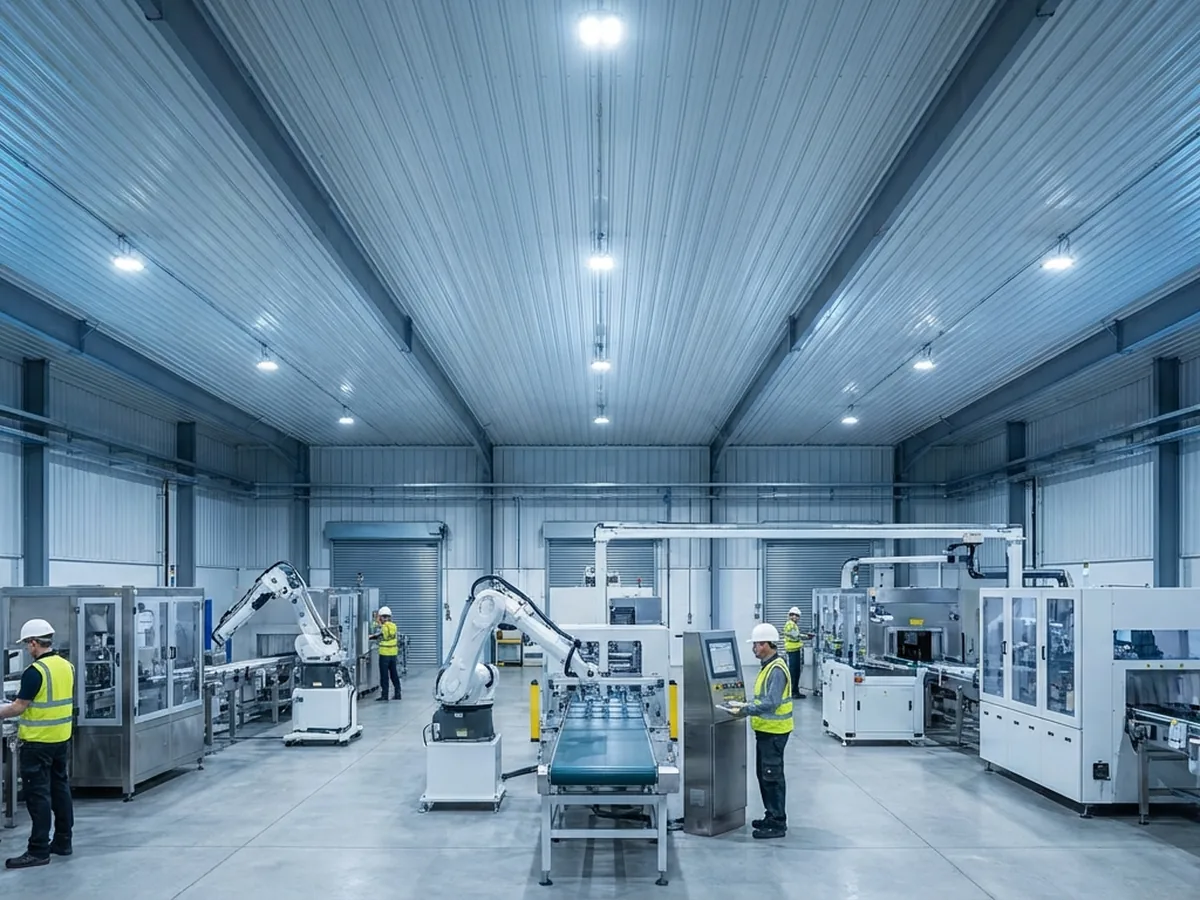
- E-commerce Logistics Warehouses: Require large spaces with lighting systems and comfortable temperatures for workers.
- Pharmaceutical Warehouses (GMP Standard): Require hygienic walls that are easy to clean and have very precise temperature control.
- Chemical Warehouses: Require Fire Rated panels to prevent fire spread in case of an incident.
- Employee Mess & Field Offices: Besides the main warehouse, sandwich panels are often used to build supporting facilities around the warehouse area very quickly.
Warehouse Sandwich Panel Maintenance Guide
To ensure your sandwich panels maintain optimal performance and longevity, routine maintenance is highly recommended. Although maintenance is minimal, the following steps will help extend the material's life:
- Routine Cleaning: Clean the outer surface of the panels from dust and dirt using clean water and mild detergent periodically, at least once every 6 months.
- Sealant Inspection: Check the condition of the sealant at each panel joint to ensure there are no air or water leaks, especially after the rainy season or extreme weather.
- Physical Damage Inspection: If a heavy impact from a forklift occurs that damages the steel coating, immediately repaint the scratched part to prevent rust from forming.
FAQ - Frequently Asked Questions
Are sandwich panels secure enough against potential theft?
Yes, sandwich panels are installed with a fastening system using special screws that go directly into the building's steel frame. Additionally, many warehouse owners combine the bottom part of the wall (about 1-2 meters from the floor) with brick or concrete as an 'impact wall' and extra security, while the upper part uses sandwich panels.
How long is the lifespan of sandwich panels for permanent warehouses?
Sandwich panels are designed for long-term permanent building use. With the right quality steel and core and proper maintenance, sandwich panels can functionally last up to 25 to 30 years or more.
Conclusion: A Future Investment for Your Warehouse
Integrating sandwich panels into your warehouse construction project is a strategic investment. You not only benefit from construction speed allowing businesses to operate earlier but also significant energy efficiency gains during the building's operational life. Sandwich panels offer a perfect balance of cost, performance, and durability.
If you plan to build or renovate a warehouse in the near future, do not hesitate to consult with our expert team at sandwichpanels.id. We are ready to provide the best technical solutions, from specification selection to the most efficient cost estimates for your specific needs. Get the best price quote today and build your business's future on the right foundation.