

Sandwich panels represent a long-term investment for industrial buildings, cold storage facilities, cleanrooms, and warehouses. But like any construction material, their performance and service life depend heavily on routine maintenance. Without proper care, sandwich panels can suffer from degraded insulation performance, corrosion, delamination, and even structural failure — putting your business operations at risk.
This guide covers everything you need to know about sandwich panel maintenance — from inspection schedules and cleaning techniques to troubleshooting common issues. Whether you manage a factory, cold storage facility, or cleanroom, this guide will help extend panel lifespan and protect your investment. For more technical guides, visit our blog.
Why Sandwich Panel Maintenance Matters
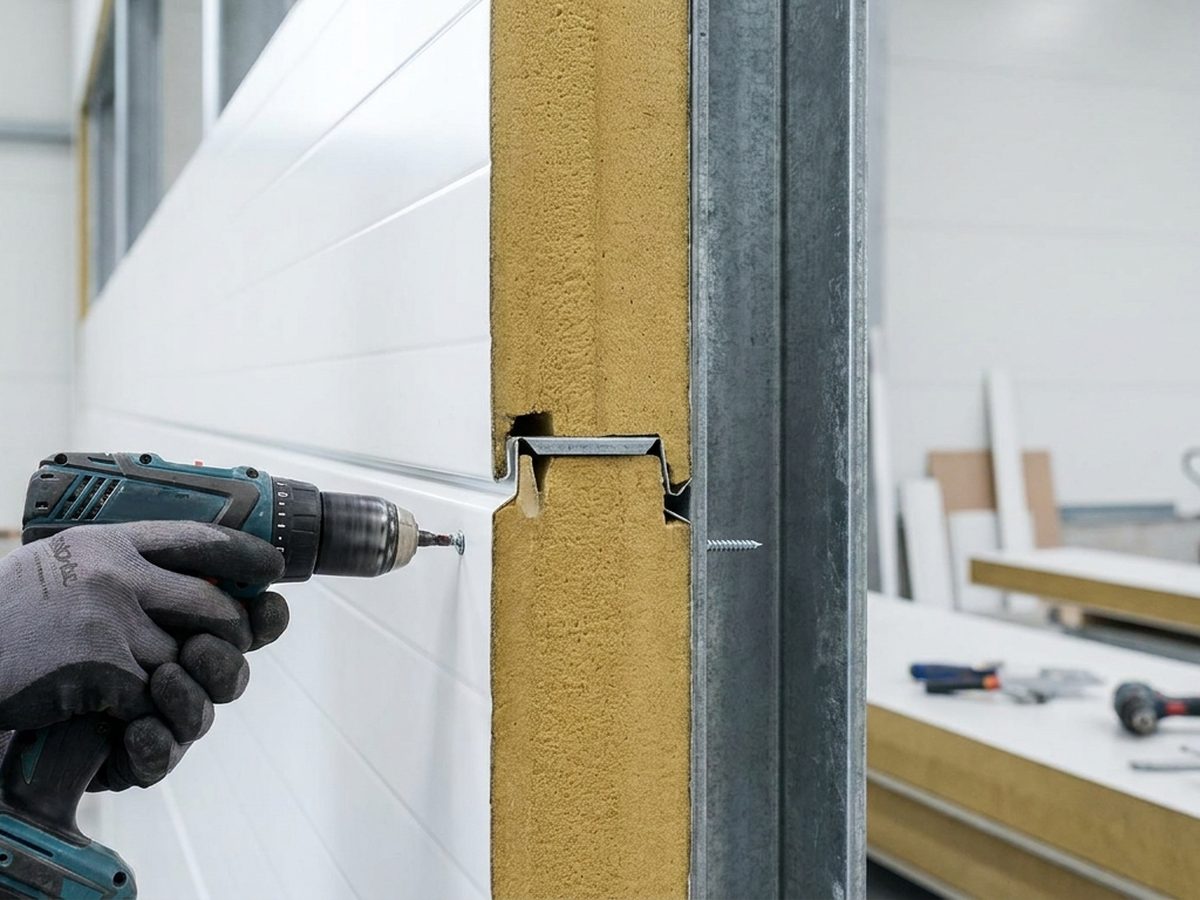
Many building owners neglect sandwich panel maintenance, assuming these panels are maintenance-free. This assumption is incorrect. While sandwich panels are engineered for high durability, exposure to harsh industrial environments — high humidity, extreme temperature swings, chemicals, and mechanical loads — can cause gradual degradation.
Three key consequences of neglected maintenance:
- **Insulation performance decline** — The insulation core (PIR, PUR, EPS, or mineral wool) can absorb moisture if seals or joints fail, significantly reducing the panel's R-value. Cold storage with compromised insulation = skyrocketing electricity bills.
- **Corrosion and structural damage** — Galvanized or stainless steel skins can rust if the protective coating is scratched or damaged. In coastal or chemical plant environments, corrosion can occur 3-5x faster.
- **Cleanroom contamination risk** — For pharmaceutical, electronics, or food facilities, dirty or moldy panels can cause product contamination, failed ISO 14644 / GMP audits, and major financial losses.
With a consistent maintenance schedule, you can prevent these issues before they become crises.
Routine Maintenance Schedule for Sandwich Panels
Sandwich panel maintenance divides into three frequencies: daily/weekly, monthly, and annual.
Daily / Weekly Inspection (Quick Visual Check)
- **Visual surface check** — Look for new scratches, dents, or discolored areas. Deep scratches that penetrate the paint or galvanized layer must be addressed immediately.
- **Inspect joints and seams** — Are sealants cracking? Any gaps between panels? Small gaps can become entry points for water and air.
- **Check roof drainage** — For roof panels, ensure gutters and downspouts are clear. Standing water on roof panels accelerates corrosion.
- **Monitor indoor temperature** — For cold storage: log daily temperatures. An unusual temperature rise may indicate insulation leakage or seal damage.
Monthly Inspection
- **Comprehensive joint and sealant inspection** — Use a flashlight to check hard-to-reach areas. Hardened or cracked silicone/PU sealant must be replaced.
- **Check fasteners and screws** — Tighten loose screws. Rusted screws should be replaced with appropriate stainless steel or coated steel fasteners.
- **Clean panel surfaces** — Cleaning method depends on environment (see "Cleaning Techniques" section below). Industrial dust, chemical residues, and grime must be systematically removed.
- **Inspect flashing and trim** — Roof flashing and wall corner trim are common water entry points. Ensure they are tightly secured and sealant remains elastic.
- **Check doors and windows mounted in panels** — Ensure weatherstrips are functional, hinges are rust-free, and glass is intact.
Annual Inspection and Maintenance
- **Full structural inspection** — Check all building areas: walls, roof, corners, and areas with additional loads (outdoor AC units, pipes, cable trays attached to panels).
- **Sealant integrity test** — Conduct a water spray test at critical joint areas to detect micro-leaks.
- **Insulation performance evaluation** — For cold storage: perform thermographic inspection (thermal camera) to detect hot spots or cold bridges. This identifies damaged insulation without removing panels.
- **Coating touch-up** — Scratched panels or areas with light rust can be touched up with zinc-rich primer or epoxy paint compatible with the panel finish.
- **Documentation and recommendations** — Record all findings, repairs made, and recommendations for the next maintenance cycle. This documentation is important for warranty claims and budget planning.
Cleaning Techniques by Environment
Not all sandwich panels should be cleaned the same way. Cleaning methods must match the environment and panel skin material.
Cleaning Panels in General Industrial Environments (Factories, Warehouses)
- **Frequency**: Every 1-2 months, or as dust levels require
- **Tools**: Soft brush, microfiber mop, low-pressure washer (max 50 bar, min 1 meter distance)
- **Cleaning agents**: Warm water + mild detergent (pH neutral 6-8)
- **PROHIBITED**: Wire brushes, abrasive pads, strong acids, aggressive solvents, or chlorine bleach — these damage the coating and accelerate corrosion
- **Procedure**:
- Remove dry dust with soft brush or vacuum
- Apply cleaning solution from bottom to top (to avoid streaks)
- Rinse from top to bottom with clean water
- Dry with microfiber cloth to prevent water spots
Cleaning Cold Storage Panels
- **Frequency**: Every 1-3 months (more frequent if storing residue-producing products)
- **Special challenges**: Low temperatures, condensation, potential ice buildup at joints
- **Cleaning agents**: Food-grade detergent (for food cold storage), or diluted isopropyl alcohol 70% for non-food areas
- **Procedure**:
- Defrost areas to be cleaned if ice buildup exists
- Use warm water to prevent rapid freezing
- Clean with gentle motions — avoid scrubbing hard at sealant areas
- Ensure panels are completely dry before restoring operational temperature to prevent new ice formation
Cleaning Cleanroom Panels (Pharmaceutical, Electronics, Food)
- **Frequency**: Daily to weekly according to ISO cleanroom class protocols
- **Cleaning agents**: IPA 70%, dilute H₂O₂ (for sterilization), or GMP-grade cleaning agents
- **Tools**: Cleanroom-grade wipers (polyester knit, non-linting), dedicated cleanroom mops
- **Procedure**:
- Use "cleanest to dirtiest" technique
- Change wipers regularly — do not use same wiper for large areas
- Pay attention to corner and joint sealants — these areas accumulate the most residue
- After chemical cleaning, ensure no residue remains on panel surfaces
- Log cleaning in GMP/cleanroom documentation
Troubleshooting Common Sandwich Panel Issues
Issue 1: Rust or Corrosion Stains
- Light rust: Fine-sand the rusted area → clean → apply zinc-rich primer → touch-up paint
- Moderate rust (visible pitting): Consult a contractor — partial panel replacement may be needed
- Prevention: Routine inspection and immediate scratch treatment before it spreads
Cause: Scratches penetrating the galvanized/paint layer, continuous water exposure, corrosive environment. Solution:
Issue 2: Cracked or Detached Sealant
- Remove old sealant completely with a plastic scraper (never metal — can scratch panels)
- Clean area with IPA 70%
- Apply new sealant (PU sealant for exterior, silicone sealant for interior/cleanroom)
- Allow 24-hour curing before area is exposed to water
Cause: UV degradation (exterior panels), thermal expansion/contraction, sealant age. Solution:
Issue 3: Delamination (Skin Separation from Core)
Cause: Trapped moisture, adhesive failure, excessive mechanical load, or manufacturing defect. Signs: Blistered panel areas, different sound when tapped, inconsistent surface temperature. Solution: Delamination is a serious issue. Delaminated panels must be replaced — they cannot be repaired with additional sealant or screws. Contact a contractor immediately for inspection.
Issue 4: Leaks at Roof Panel Joints
- Identify the leak source (may be far from visible water — water can travel along panels)
- Repair or replace damaged flashing
- Replace rusted screws with new coated self-drilling screws
- Re-seal the entire affected area
- After repair, conduct a water spray test to confirm
Cause: Worn sealant, loose screws, damaged flashing. Solution:
Issue 5: Thermal Bridging
- For new construction: ensure panels with thermal break joint systems are used
- For existing buildings: identify thermal bridge points with thermal camera, then apply external insulation or thermal break retrofit
- In cold storage: thermal bridging can cause ice buildup that damages panels — address immediately
Cause: Discontinuous insulation, metal fasteners penetrating insulation, or panel joints without thermal break. Signs: Hot/cold spots on walls, localized condensation in specific areas. Solution:
Tips to Extend Sandwich Panel Service Life
- **Use the right materials from the start** — PIR panels offer better fire resistance; stainless steel skins for corrosive environments; PVDF coating for high-UV exterior exposure.
- **Install correctly** — Most maintenance issues originate from poor installation. Use experienced contractors who understand sandwich panel technical specifications.
- **Minimize post-installation modifications** — Every additional hole (for pipes, cables, brackets) is a potential water entry point. If modification is necessary, seal properly afterward.
- **Maintain optimal drainage** — Ensure ground grading slopes away from the building. Standing water at panel bases is the number one enemy.
- **Document all maintenance** — Keep a simple log: date, area checked, findings, actions taken. This helps track damage patterns and budget planning.
When to Call a Professional
- Delamination area exceeding 1 m²
- Deep structural corrosion (beyond surface rust)
- Repeated leaks in the same area after 2 DIY repairs
- Suspected internal insulation damage (thermal camera test recommended)
- Panels older than 10 years that have never been thoroughly inspected
Certain situations require professional inspection and repair:
Conclusion
Sandwich panel maintenance is more than just surface cleaning. It is a systematic program encompassing routine inspection, environment-appropriate cleaning, early troubleshooting, and proactive repair. With a consistent maintenance schedule, you can extend panel service life to 15-25 years, maintain optimal insulation performance, and avoid costly major repairs down the line. Contact our team via contact page for professional consultation.
For further consultation on sandwich panel maintenance for your facility, or if you need professional inspection services, contact our team via WhatsApp or visit the sandwichpanels.id contact page.
FAQ: Sandwich Panel Maintenance
Do sandwich panels require routine maintenance?
Yes, sandwich panels require routine maintenance to preserve insulation performance, prevent corrosion, and extend service life. Without maintenance, panels can degrade within 5-10 years.
What is the ideal cleaning frequency for sandwich panels?
For general industrial environments, clean every 1-2 months. Cold storage every 1-3 months. Cleanrooms may require daily to weekly cleaning depending on ISO class.
What should I do if my sandwich panel is rusting?
Light rust can be touched up with fine sanding, zinc-rich primer, and repainting. Deep corrosion or areas exceeding 1 m² should be handled by a professional.
Should sandwich panel sealant be replaced?
Cracked or hardened sealant must be replaced. Use PU sealant for exterior applications and silicone sealant for interior/cleanroom use. Replace sealant older than 5 years.