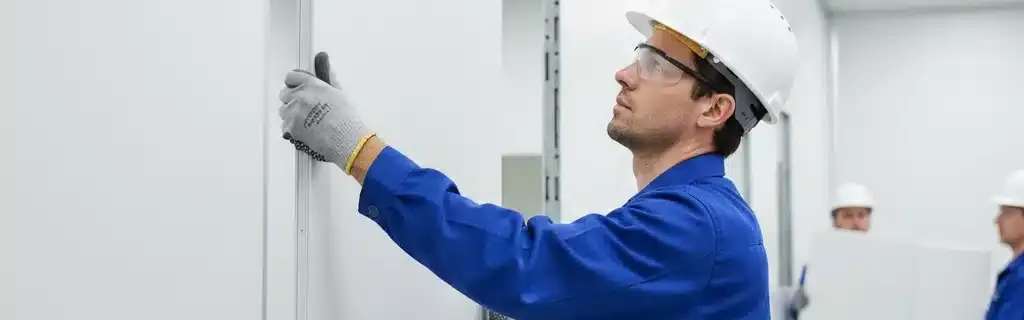

Why Choosing a Sandwich Panel Contractor Is Critical
Installing sandwich panels is not just about joining panels together. This material requires specialized handling — from selecting the right core specification (PUR, PIR, EPS, rockwool) and steel layer thickness, to technical details like overlapping joints and locking systems. Inexperienced contractors often make fatal mistakes: imprecise panel cutting, handling that damages the coating layer, or leaky flashing installation.
Installation errors can lead to thermal leakage, water infiltration, and even structural failure that jeopardizes factory operations. For cold storage or cleanroom projects, the margin for error is nearly zero because any gap can compromise temperature control and room cleanliness.
In Indonesia, the sandwich panel contractor market is still relatively specialized. Not all general construction contractors understand the technical standards for installing insulated panels. Here is a checklist to help you filter for truly competent contractors.

7 Essential Checklist Before Choosing a Contractor
1. Specific Experience in Sandwich Panel Projects
Ask how many sandwich panel projects they have completed — not general construction projects. An experienced contractor will have a portfolio covering cold storage, factories, refrigerated warehouses, or cleanrooms. Request photo documentation and client references you can contact directly.
2. Understanding of Materials and Technical Specifications
A good contractor should be able to explain the differences between PUR, PIR, EPS, and rockwool — and recommend the right type for your application. They should understand steel thickness (0.4 mm vs 0.5 mm), coating types (PVDF vs PE vs Plastisol), and joint systems (cam-lock, tongue-groove, hidden screw).
3. Transparent Pricing and Work Breakdown
Request a quotation with clear details: material cost per square meter, accessories cost (flashing, trim, screws), daily installation fees, equipment mobilization costs, and taxes. A professional contractor will not offer a lump-sum price without a breakdown because each project has different complexity levels.
4. Clear Installation Warranty
Installation warranty differs from the factory material warranty. Ensure the contractor provides a written warranty for installation quality — at minimum covering water leaks, coating damage from handling, and joint failure. A warranty of 1-2 years is a reasonable standard.
5. Portfolio Review and Site Visit
Don't just rely on photos — request a visit to a completed project, ideally one that has been operating for 1-2 years. There you can assess long-term installation quality: any rust signs at joints, panels warping from thermal expansion, or flashing beginning to detach.
6. Safety Standards and Insurance
Panel installation at heights or in confined areas carries significant work risks. Ensure the contractor has clear OHS procedures, a team using complete PPE, and carries workplace accident insurance. Also ask whether they hold certifications from construction associations or relevant bodies.
7. After-Sales Service and Responsiveness
After installation is complete, minor issues can arise — thermal expansion causing noise, loose screws, or sealant needing replacement. A good contractor provides after-sales service, at least for the warranty period, with fast response. Ask about their SLA (Service Level Agreement): how many hours to respond to an issue report, and how many days to arrive on-site.
Common Mistakes When Choosing a Sandwich Panel Contractor
Several mistakes that project owners frequently make when selecting a contractor:
- Choosing based on lowest price. Low prices often mean substandard materials, untrained labor, or no warranty. In the long run, repair costs end up being higher.
- Not verifying the portfolio. Portfolio photos can be taken from someone else's project. Always verify through a site visit or by contacting references.
- Ignoring a written contract. Verbal agreements have no legal standing. Ensure all material specifications, timelines, and warranties are documented in a written contract.
- Not checking equipment availability. Installing sandwich panels at height requires equipment like scissor lifts or small cranes. A contractor renting equipment per project may be less efficient than one owning their own tools.
- Overlooking accessory details. Flashing, trim, sealant, and screws are small components often ignored but they critically determine the final installation quality.
Questions to Ask Potential Contractors
Before signing the contract, ask the following questions:
- How many sandwich panel projects have you completed in the last 2 years?
- Do you have a permanent installation team or do you use daily contract labor?
- Which sandwich panel material suppliers do you typically use, and do you have an official partnership?
- How do you handle panel joints in leak-prone areas (corners, roof-wall junctions, ventilation openings)?
- How long will it take to complete a project of [your area size] square meters?
- Do you provide shop drawings before installation begins?
- What is your procedure if a panel is damaged during installation?
- Do you offer a written warranty, and what does it cover?
- What is your response time for post-installation complaints?
- Can you provide a supplier support letter (SDS) from the panel manufacturer?
FAQ About Choosing a Sandwich Panel Contractor
What is the cost range for sandwich panel installation per square meter?
Sandwich panel installation costs in Indonesia range from approximately USD 5 to USD 10 per square meter, depending on project complexity, building height, location, and panel type. This price excludes the panel material itself. Difficult areas such as high roofs or buildings with many openings may cost more.
Does the contractor need official certification?
There is no specific "sandwich panel contractor" certification in Indonesia yet. However, contractors should ideally hold an SBU (Business Entity Certificate) from LPJK or a construction association, along with verifiable specific experience. Some major sandwich panel manufacturers also issue "authorized installer" certificates for trained contractors.
How long does it take to install sandwich panels for a 500 m² building?
With an experienced team of 4-6 people, wall and roof sandwich panel installation for a 500 m² building typically takes 7-14 working days, depending on building height, number of openings (doors, windows, ventilation), and site accessibility. Weather can also be a delaying factor for roof installation.
What should I do if the installation results don't meet expectations?
Document all discrepancies with photos and written notes. Communicate formally with the contractor, referencing the contract and agreed specifications. Provide a clear deadline for corrections. If the contractor is unresponsive, you can use the performance bond if one exists, or pursue legal action based on the signed contract.
Choosing the right sandwich panel contractor is a long-term investment. With this checklist, you can avoid costly mistakes and ensure your factory, cold storage, or cleanroom building is constructed to quality standards that meet technical specifications. Contact us for trusted contractor recommendations with direct factory material support.