
Why Food Industry Cleanrooms Fail — And How to Get It Right
A cleanroom is far more than a clean space with white walls and bright lights. In the food industry, it's the last defensive barrier between your product and contamination that can destroy a business reputation overnight. A single dust particle, a speck of mold at a wall joint, or unbalanced air pressure — any of these can trigger a product recall costing billions of rupiah.
Unfortunately, based on our experience handling dozens of cleanroom projects across Indonesia, many companies launch projects with limited knowledge. The results are predictable: construction costs balloon 30-50% over budget, schedules slip by months, and most critically — they fail BPOM audits or HACCP certification. Products are recalled, distribution licenses face revocation, and consumer trust evaporates.
This article dissects the 7 most fatal mistakes we repeatedly encounter in the field — and provides concrete solutions you can implement immediately.
1. Not Determining ISO Classification Correctly from the Start
This is the most fundamental yet most common mistake: building a cleanroom without specifically establishing the target ISO 14644 classification. Many factory owners simply say "I want a clean room" without understanding there are 9 ISO classes with vastly different requirements.
For the food industry, applicable standards are generally:
- ISO Class 8 (GMP Grade D): Maximum 3,520,000 particles ≥0.5μm per m³. Suitable for non-critical raw material preparation areas, packaging material storage, and connecting corridors. Lowest construction cost.
- ISO Class 7 (GMP Grade C): Maximum 352,000 particles ≥0.5μm per m³. Ideal for general food processing areas, dry product filling rooms, and primary packaging zones. The most common standard for medium-to-large food factories in Indonesia.
- ISO Class 5 (GMP Grade A/B): Maximum 3,520 particles ≥0.5μm per m³. Required for sterile products such as infant formula, medical foods, or starter cultures. Requires 100% HEPA filter coverage and unidirectional airflow.
Without clear classification from the start, you risk building the wrong specification. An over-spec ISO 5 cleanroom will consume 3-5 times more electricity than ISO 7 — wasting millions of rupiah monthly. Conversely, an under-spec cleanroom will fail audits because particle counts don't meet regulatory limits.
Practical solution: Before starting any project, answer three questions: (1) What product will be manufactured? (2) Which regulations apply — BPOM, HACCP, FSSC 22000, or export standards? (3) Is there a product expansion plan within 5 years requiring higher classification? Involve a certified cleanroom consultant at the feasibility study stage, not after design is complete.
2. Choosing Non-Food-Grade Wall Materials
Food cleanroom walls have requirements far stricter than standard commercial building walls. Materials must meet these criteria: non-porous (bacteria cannot nest), resistant to sanitation chemicals like chlorine, quaternary ammonium, and hydrogen peroxide, zero particle shedding, capable of withstanding daily wet cleaning cycles without degradation, and featuring seamless surfaces with minimal joints.
Common mistakes we encounter in the field:
- Using gypsum board with epoxy paint — looks glossy and clean in the first month, but after 6-12 months joints begin cracking, paint peels, and mold colonies develop beneath the surface layer.
- Using sandwich panels with exposed EPS core at joints — EPS is porous, absorbs moisture, and cannot be effectively cleaned. A BPOM auditor will immediately flag this as a major finding.
- Using standard silicone sealant that isn't food-grade — after exposure to cleaning chemicals, sealant yellows, cracks, and becomes an ideal site for bacterial biofilm growth.
Practical solution: Use sandwich panels with 304 stainless steel facing (minimum 0.5mm) or food-grade PVC coating with minimum 200μm thickness. Ensure the installation system uses precision interlocking with food-grade sealant at every joint. For wall-to-floor corners, install 50mm radius stainless steel cove bases to eliminate 90° corners that are difficult to clean. Verify materials carry FDA 21 CFR certification for indirect food contact.
3. Inadequate HVAC Design — The Most Expensive Problem
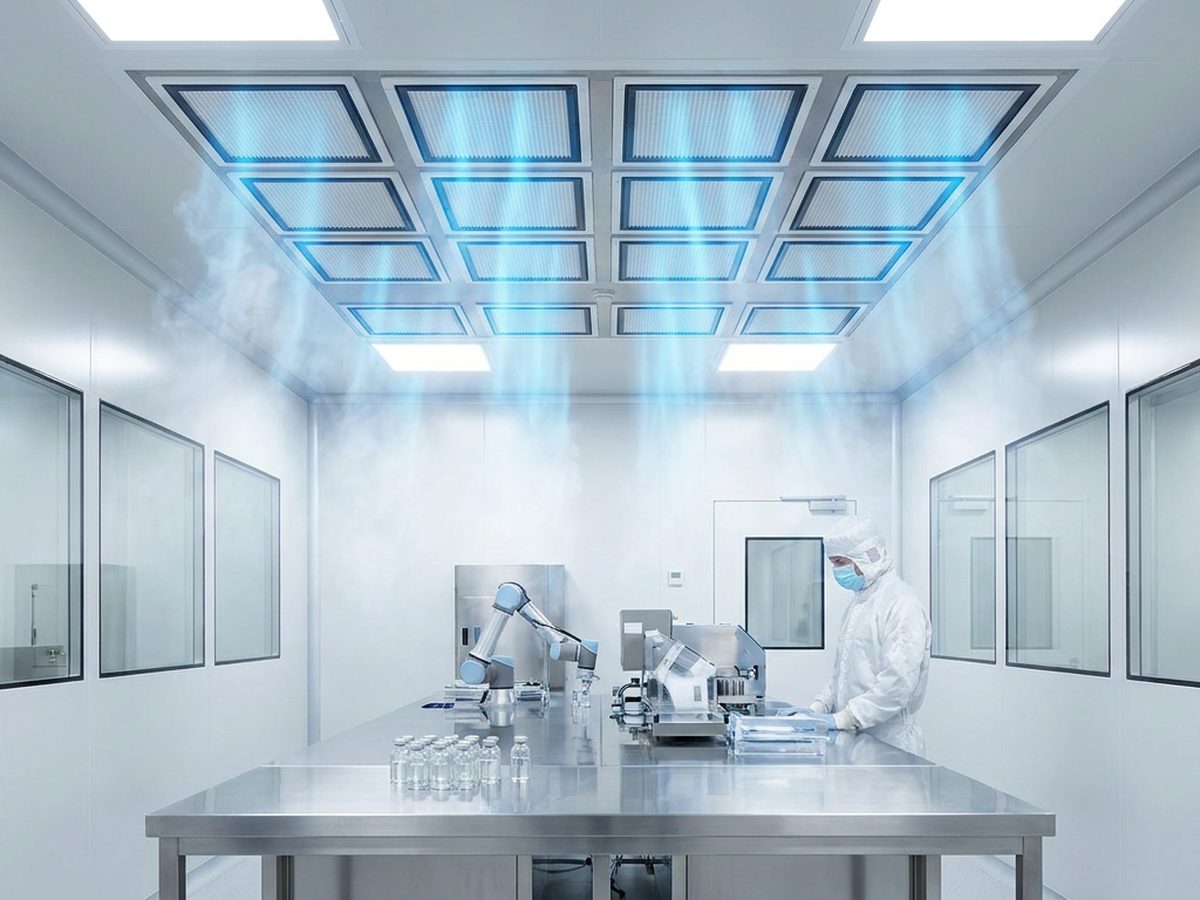
A food cleanroom HVAC system is not standard air conditioning. It's a life-support system that must handle four critical functions simultaneously: particle filtration via HEPA/ULPA filters (99.97% efficiency for 0.3μm particles), temperature control (typically 18-22°C for production areas), relative humidity control (RH 45-55% — too low causes static electricity, too high triggers microbial growth), and air pressure management to create a pressure cascade between zones.
The most common HVAC mistakes we see and their impacts:
- Wrong Air Changes Per Hour (ACH) calculation: ISO 7 requires minimum 30 ACH, ISO 8 needs 20 ACH. Many general HVAC contractors calculate like office spaces (6-10 ACH). Result: particles aren't exhausted, cleanroom fails certification. Retrofit costs can reach 40% of the original project budget.
- Positive pressure not maintained: Cleanrooms require tiered positive pressure — ISO 5 > ISO 7 > ISO 8 > corridor > outside. Without proper differential pressure (minimum 10-15 Pa between zones), dirty air flows inward every time a door opens.
- Wrong ducting material: Standard galvanized ducting rusts within 2-3 years due to humidity and cleaning chemicals. Use 304 stainless steel or pre-insulated ducting (PID) with food-grade aluminum foil inner lining.
- No monitoring system: Relying on operators to manually record temperature 3 times daily is insufficient. Fluctuations can occur between recording times and only get discovered after product contamination.
Practical solution: Involve a cleanroom-specialist HVAC engineer — not standard commercial HVAC — from the design phase. Ensure cooling load calculations account for heat gain from production equipment, lighting, operator count, and door opening frequency. Install a BMS (Building Management System) with real-time monitoring and automatic alarms for temperature, humidity, and differential pressure deviations. Integrate with smartphone notifications for production managers.
4. Neglecting Drainage and Sanitation Systems — Problems Only Visible During Audits
If HVAC is the "lungs" of a cleanroom, the drainage system is its "waste disposal." The food industry generates large volumes of liquid waste — from raw material washing, equipment cleaning (CIP/Cleaning-in-Place), to daily floor sanitation. Improperly designed drainage becomes a contamination time bomb.
The most common drainage problems we find:
- Floor drains without water seal traps — sewer gas and odors rise into production areas, carrying coliform bacteria and other pathogens.
- Inconsistent floor slope — water pooling creates bacterial breeding grounds, especially in room corners and under rarely accessed equipment.
- Non-stainless steel drain materials — cast iron or PVC degrades from cleaning chemicals and hot water temperatures during sanitation.
- Production drainage lines merging with office toilet drainage — cross-contamination that immediately triggers critical findings during audits.
- No floor sink with strainer basket — solid particles enter drainage and cause blockages.
Practical solution: Design floors with consistent 1-2% slope toward drains. Use 304/316L stainless steel for all drainage components — floor drain body, grate cover, and strainer basket. Install water seal traps with minimum 50mm depth. Separate drainage lines for production, preparation, and non-production areas. For wet cleaning areas, consider hygienic-type trench drains with internal radius for easy cleaning. Verify design with a plumbing engineer experienced in food-grade projects.
5. Not Planning Personnel and Material Flow — Contamination from Within
A fact that often surprises factory owners: the largest contamination source in food cleanrooms isn't outdoor air or machinery — it's people. A single operator releases an average of 100,000 particles per minute at rest, and up to 2,000,000 particles during active movement. Add bacteria from skin, hair, and respiratory droplets — this is a very real contamination threat.
Without strict personnel flow planning, cross-contamination is inevitable. Classic problems we find:
- No separation of entry and exit paths — operators from dirty areas (raw material receiving) enter production directly without passing through gowning rooms.
- Inadequate gowning rooms — no areas for sequential shoe changing, hand washing, and PPE donning (no step-over bench, no hand sanitizer).
- Unplanned material flow — dirty raw materials enter through the same path as sterilized finished products.
- No air shower or pass box — all inter-zone transfers occur through the same door, eliminating pressure cascade.
- Simultaneous door openings — no interlock system, so two doors in different zones can open at the same time, allowing dirty air directly into clean zones.
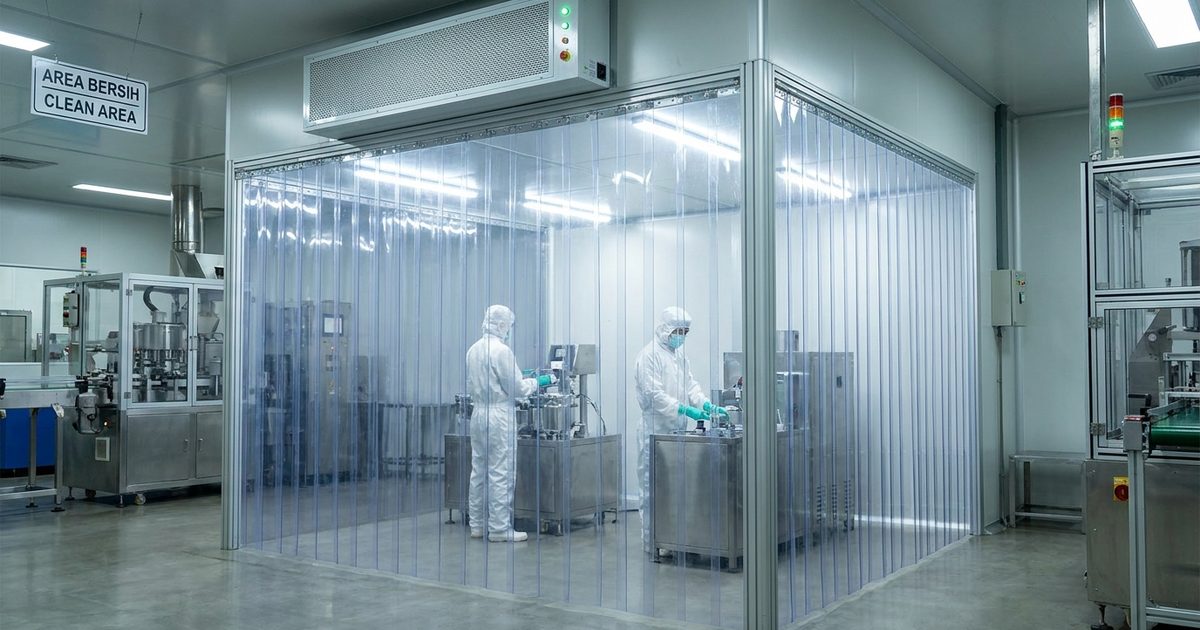
Practical solution: Implement three-zone segregation: Black Zone (outside — goods receiving, raw material storage, offices), Gray Zone (transition — gowning room with step-over bench, hand wash station, hand sanitizer dispensing, full-body mirror for self-inspection), and White Zone (sterile production area). Separate entrance and exit corridors. Install air showers at every Gray-to-White Zone crossing with minimum 20-second duration and 25-30 m/s air velocity. Use electromechanical or magnetic interlock door systems.
6. Neglecting Ongoing Calibration, Monitoring, and Validation
A completed cleanroom that passed initial certification is by no means "finished." It's a living system requiring continuous monitoring and periodic validation. Without this, you won't know when cleanroom performance begins degrading — until it's too late.
Monitoring components frequently neglected:
- Particle count monitoring: Essential to verify ISO classification is maintained. Many factories only perform particle counting during initial certification, then never again until the next audit 2-3 years later. Meanwhile, HEPA filters can leak, door seals can degrade, and particle counts can rise unnoticed.
- Differential pressure monitoring: Uncalibrated analog pressure gauges often give incorrect readings. A 5 Pa pressure drop may be visually imperceptible but sufficient to reverse airflow direction.
- Temperature & humidity monitoring: Uncalibrated sensors can be off by 2-3°C, enough to keep the room outside specification without anyone noticing.
- Microbiological monitoring: Settle plates, contact plates, and air sampling must be done routinely — not just when problems arise. Microbiological trend data is the strongest evidence that contamination control systems are functioning.
- Filter integrity testing: HEPA/ULPA filters must undergo DOP (Dispersed Oil Particulate) testing every 6-12 months. A single leaking filter can distribute contaminants throughout the entire cleanroom via the HVAC system.
Practical solution: Install real-time monitoring systems including online particle counters, digital differential pressure transmitters, and temperature/humidity sensors connected to BMS. Establish a 6-month calibration schedule for all sensors. Perform full ISO recertification every 12 months. Create a digital logbook recording all monitoring data, deviation incidents, and corrective actions. Schedule HEPA filter DOP testing every 6 months and replace leaking filters within 24 hours.
7. Hiring Contractors Without Cleanroom Experience — The Costliest Mistake
This is the trap that most frequently ensnares project owners: selecting contractors based on lowest price without verifying specific cleanroom experience. General commercial or industrial building contractors may be highly competent at building factories, warehouses, or offices — but cleanrooms are a fundamentally different discipline.
Critical differences between general and cleanroom-specialist contractors:
- Construction details: General contractors are accustomed to millimeter tolerances. Cleanrooms require micron tolerances — a 2mm uneven wall joint becomes an air leakage path and contaminant accumulation site.
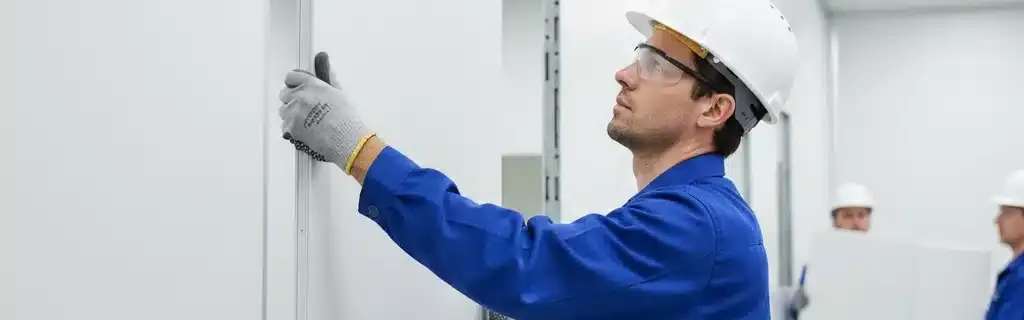
- Material handling: Cleanroom panels must be handled with clean gloves, stored in dust-protected areas, and installed under controlled conditions. General contractors often store materials in open construction areas.
- Construction sequencing: Cleanrooms must be built in a specific sequence — from cleanest to dirtiest areas, not vice versa. Inexperienced contractors build like standard projects — outside to inside, carrying contaminants into what should be sterile zones.
- Commissioning: Cleanroom commissioning involves HVAC balancing, particle count testing, filter integrity testing, pressure cascade verification, temperature mapping, and airflow visualization testing. This is not simply "turn on the AC and check if it's cold."
- Documentation: GMP regulations require complete documentation — material certificates, Installation Qualification (IQ), Operational Qualification (OQ), and Performance Qualification (PQ). General contractors are rarely familiar with pharmaceutical/food-grade documentation standards.
Practical solution: Select contractors with a portfolio of minimum 5 cleanroom projects for food, beverage, or pharmaceutical industries within the last 3 years. Request client references and visit their operational projects. Verify the project team includes personnel certified in cleanroom HVAC, NEBB (National Environmental Balancing Bureau), or equivalent certifications. Request sample IQ/OQ/PQ documentation from previous projects. Don't fall for the lowest price — a 15-20% difference in contractor pricing can mean the difference between a cleanroom passing audits for 5 consecutive years and one requiring complete rebuild within 2 years.
Brief Case Study: Lessons from an Indonesian Food Cleanroom Project
We once handled a case where a meat processing plant in West Java built a cleanroom using a general building contractor. Initial budget: IDR 2.8 billion. The cleanroom was completed in 4 months, but during particle count testing for ISO 7 certification — it failed completely. Particle counts were 3 times above maximum limits. Root causes: imprecise panel joints (3-5mm gaps at multiple points), under-designed HVAC system (only 15 ACH of the required 30 ACH), and non-functioning pressure cascade.
Repair costs incurred: IDR 1.4 billion — including partial wall demolition, AHU unit upgrade, increasing HEPA filter coverage, and recommissioning. Final total cost: IDR 4.2 billion — 50% more expensive than using a specialist cleanroom contractor from the start (estimated IDR 3-3.5 billion). Most painful of all: factory operations were delayed by 8 months.
Conclusion: Cleanrooms Are Investments, Not Costs
Building a cleanroom for the food industry is one of the most critical investment decisions for your company. Small planning-stage mistakes — wrong classification, improper materials, under-designed HVAC — can be fatal: massive product recalls, BPOM audit failures, distribution license revocation, and worst of all: permanent loss of consumer trust.
All seven mistakes detailed above are avoidable with proper planning and experienced partner selection. Remember this simple principle: the cost of building correctly is always cheaper than the cost of fixing mistakes.
If you're planning to build or upgrade a cleanroom for your food production facility, our team is ready to assist from the earliest stage — feasibility study, design, food-grade sandwich panel material selection, cleanroom HVAC systems, through installation, commissioning, and validation.
Consult Your Cleanroom Project NowFAQ: Food Industry Cleanroom Construction
How much does it cost to build a food industry cleanroom?
Cleanroom construction costs vary based on ISO classification, area size, and HVAC system complexity. For ISO Class 7 with 100-200 m² area, estimated costs range from USD 500-950 per m² including materials, installation, and commissioning. Contact our team for a specific quotation tailored to your project requirements.
Is food-grade sandwich panel material mandatory?
Yes, absolutely. Food cleanroom walls must use sandwich panels with facing that meets FDA 21 CFR standards for indirect food contact. Non-food-grade materials like gypsum or exposed EPS panels will result in major findings during audits and risk product contamination. See our food-grade sandwich panel specifications for more details.
How long does it take to build a food cleanroom?
Typical timeline for an ISO 7 food cleanroom project of 100-300 m² is 3-5 months, covering design, construction, HVAC installation, and commissioning. Factors affecting duration include material availability, design complexity, and validation processes. We recommend starting planning at least 6 months before the operational target. Consult your project timeline here.