

The Core Problem: Wrong HVAC Ducting Drains Factory Efficiency
HVAC ducting is the backbone of air distribution in modern factories. When ducts are poorly designed or installed, cooling and ventilation performance drops sharply — compressors work harder, electricity bills climb, and production floor operator comfort suffers.
Many factory managers and contractors overlook duct material selection, assuming all ductwork is interchangeable. In reality, the wrong material can cause up to 30% air leakage, premature corrosion, and a severely shortened service life. In food and pharmaceutical sectors, non-hygienic ducting can even trigger audit findings and certification rejections.
This guide covers everything you need to know about selecting the right HVAC duct material for factory environments, plus correct installation methods to ensure optimal ventilation performance and long-term durability.
Types of HVAC Ducting Materials for Factories
Material selection depends on industry type, operating temperature, air pressure, and cleanliness requirements. Here are the four primary materials used in Indonesia's industrial sector:
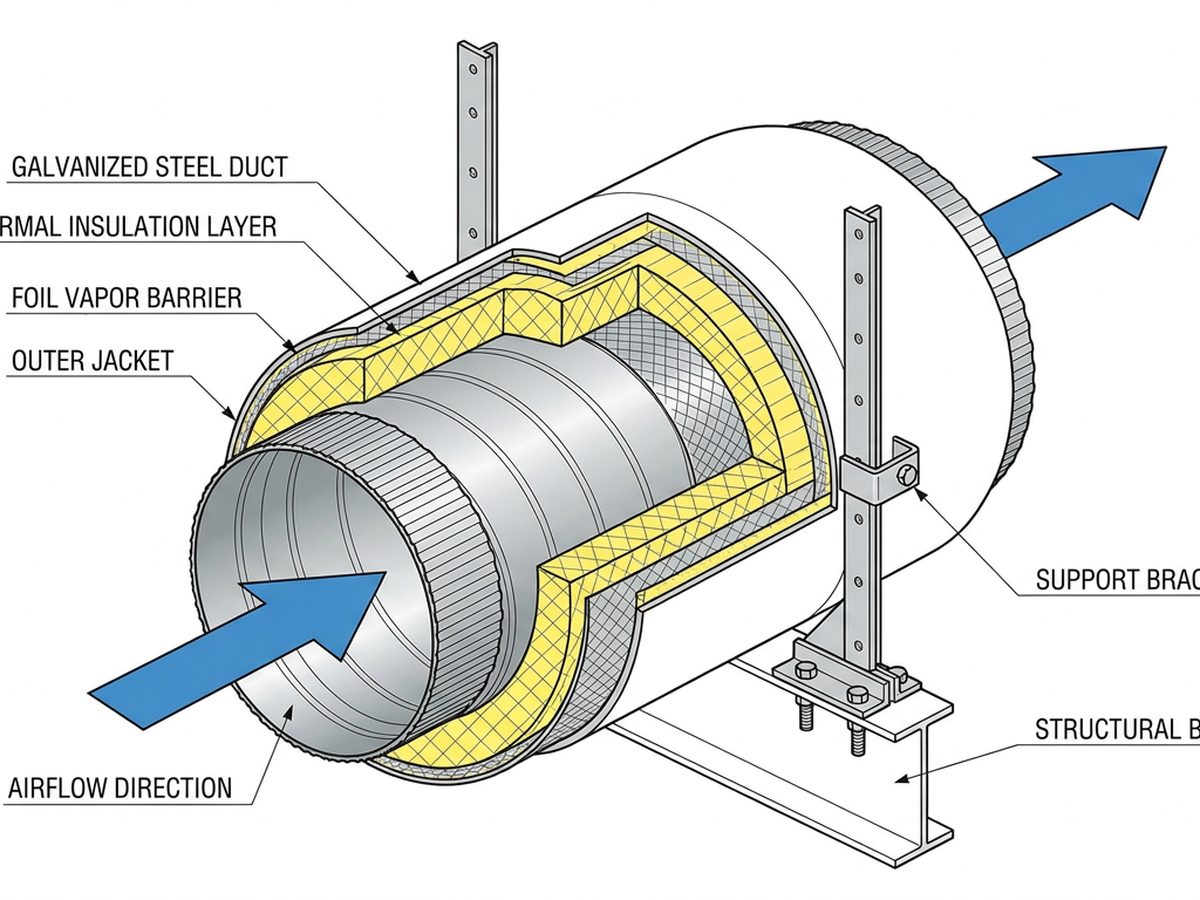
1. Galvanized Steel (BJLS) Duct
The most common ducting material for general factories. Zinc coating on carbon steel provides corrosion resistance at an affordable price point. Suitable for general manufacturing plants, warehouses, and standard production areas. Available in thicknesses from 0.5 mm to 1.2 mm per ASHRAE standards.
The main drawback: limited lifespan in high-humidity or chemical-exposure environments. In food processing facilities with wet washdown areas, galvanized steel can begin rusting within 2-3 years.
2. Stainless Steel Duct
Stainless steel ducting (SS304 or SS316) is mandatory for pharmaceutical, food and beverage, and cleanroom facilities implementing GMP and HACCP standards. The smooth, non-porous surface prevents dust accumulation and microbial growth while resisting CIP (Clean-in-Place) processes.
Stainless steel costs 3-4 times more than galvanized steel, but its service life reaches 15-20 years with minimal maintenance. For ISO Class 5-8 cleanrooms, stainless steel ductwork is the de facto standard.
3. Aluminium Duct
Sixty percent lighter than steel, aluminium is ideal for installations in tight-access areas or buildings with structural load limitations. It offers natural corrosion resistance without additional coatings. Commonly used for exhaust ducts and fresh air intakes in electronics factories and server rooms.
Drawbacks: lower mechanical strength, unsuitable for high-pressure ducting, and prone to denting during handling and installation.
4. PIR Sandwich Panel Duct — Integrated Insulation
For cold storage and climate-controlled cleanroom applications, PIR (Polyisocyanurate) panels with metal skins double as pre-insulated air ducts. No additional insulation wrapping is needed, saving space and installation time. With extremely low thermal conductivity (0.022 W/m·K), PIR ducts maintain stable internal air temperatures.
PIR panels also achieve fire ratings up to B1 (class 0 BS476) and are CFC/HCFC-free, meeting international environmental and fire safety standards.
Common Causes of Factory Ducting Problems
Before diving into installation guidelines, understand the root causes of recurring issues:
- Undersized ducts: Excessive air velocity, noise levels above 45 dBA, and high pressure drop overloading the fan.
- Joint leakage: Improper sealant or loose flange connections causing 15-30% air leakage. Every 10% leakage equals 5-8% wasted energy.
- Inadequate insulation: Without proper insulation, cold air inside the duct condenses on the outer surface, causing dripping water and potential mold growth.
- Insufficient support brackets: Excessive support spacing causes duct sagging, disrupting airflow patterns and stressing connections.
- Wrong material for environment: Galvanized steel used in wet areas, or stainless steel wasted on non-critical exhaust (cost overrun).
Recommended Products for Factory HVAC Ducting
Based on factory type and requirements, here are material recommendations from SandwichPanels.id:
- General factories & warehouses: Galvanized steel duct + 25-50 mm glasswool insulation
- Food & beverage plants: SS304 stainless steel duct, welded joints, pitched toward drain
- Pharmaceutical & cleanroom facilities: SS316L stainless steel + PIR panel duct for ISO Class 5-7 areas
- Electronics factories: Aluminium duct for fresh air + stainless steel for exhaust
- Cold storage & freezers: PIR sandwich panel duct at 75-150 mm thickness
- Factory Ventilation: Sandwich Panel & HVAC Solutions — Read more about factory ventilation.
- What Are Sandwich Panels? Types, Benefits & Uses — Fundamentals of sandwich panel materials.
Critical Mistakes to Avoid During Duct Installation
Based on field project experience, here are five fatal errors commonly encountered:
- Ignoring static pressure calculations: Fans selected without accounting for total pressure drop along the duct path result in actual CFM far below design specifications.
- Ducts installed without slope: Horizontal runs without a 0.5-1% pitch cause condensate accumulation, leading to rust and mold growth.
- Excessive flexible duct use: Flexible duct (aluflex) is intended only for short final connections (max 1.5 m). Using it for main runs creates 3x the pressure drop of rigid duct.
- No access doors: Long duct runs without inspection access make cleaning and maintenance difficult. Install access doors every 6-8 meters.
- Imperfect welding: For stainless ductwork, rough or uneven weld beads become particle and microbe collection points in cleanroom environments.
FAQ: Factory HVAC Ducting Installation
What is the minimum thickness standard for galvanized steel factory ducting?
Per SMACNA (Sheet Metal and Air Conditioning Contractors' National Association) standards: for rectangular ducts with the longest side 300-750 mm, minimum thickness is 0.6 mm (gauge 24). For sides 750-1500 mm, minimum 0.8 mm (gauge 22). Above 1500 mm, use 1.0 mm or add reinforcement.
What does HVAC ducting installation cost per meter?
Costs vary significantly based on material and complexity. Rough estimates: galvanized steel duct IDR 350,000-600,000/m² (material + installation), stainless steel IDR 1,200,000-2,000,000/m², PIR panel duct IDR 800,000-1,500,000/m². Prices exclude insulation, supports, dampers, and diffusers.
Is HVAC ducting insulation mandatory?
Yes, for ducts carrying cold air (supply air), insulation is essential to prevent condensation and maintain thermal efficiency. Minimum 25 mm glasswool insulation at 24-32 kg/m³ density for standard AC ductwork. For cold storage (-18°C), use 75-100 mm PIR insulation.
How do you test duct leakage after installation?
Use a duct leakage test per SMACNA standards. Pressurize the duct to 250-500 Pa and measure leakage rate. For Class A (general) ductwork, the maximum allowable leakage is 0.027 L/s per m² of duct surface area at 250 Pa test pressure.
What is the service life of factory HVAC ducting?
Galvanized steel duct with proper insulation: 10-15 years. Stainless steel: 20-25 years. PIR panel duct: 15-20 years. Factors reducing lifespan: high humidity, chemical exposure, machinery vibration, poor maintenance, and substandard initial installation.
Conclusion
Proper HVAC ducting installation starts with selecting the right material for your industry and factory environment. Don't be tempted by the cheapest option — calculate total cost of ownership including energy, maintenance, and service life. Ducting designed and installed to SMACNA standards saves 15-25% on energy costs and lasts twice as long as haphazard installations.
Consult our technical team for your factory's HVAC ducting requirements. We supply galvanized steel, stainless steel, aluminium, and PIR sandwich panel ducts with fabrication to your project specifications.