

Why Your Food Factory Walls Need to Be Food-Grade
Have you ever faced a failed BPOM audit or HACCP certification because of inadequate production room wall conditions? Or worse — product contamination leading to costly recalls and significant financial losses? These problems often trace back to one seemingly minor decision: choosing the wrong wall material.
In food processing facilities, walls are not just room dividers. They serve as the first line of defense against bacterial contamination, mold growth, and foreign particles. Conventional wall materials like plastered brick or exposed concrete harbor many vulnerabilities — pores that trap moisture, micro-cracks where microorganisms thrive, and rough surfaces that resist thorough cleaning.
Food panels — or food-grade wall panels — are the engineered solution to these challenges. This article covers the technical definition of food panels, the standards they must meet, material specifications, and how to select the right type for your facility.
What Is a Food Panel?
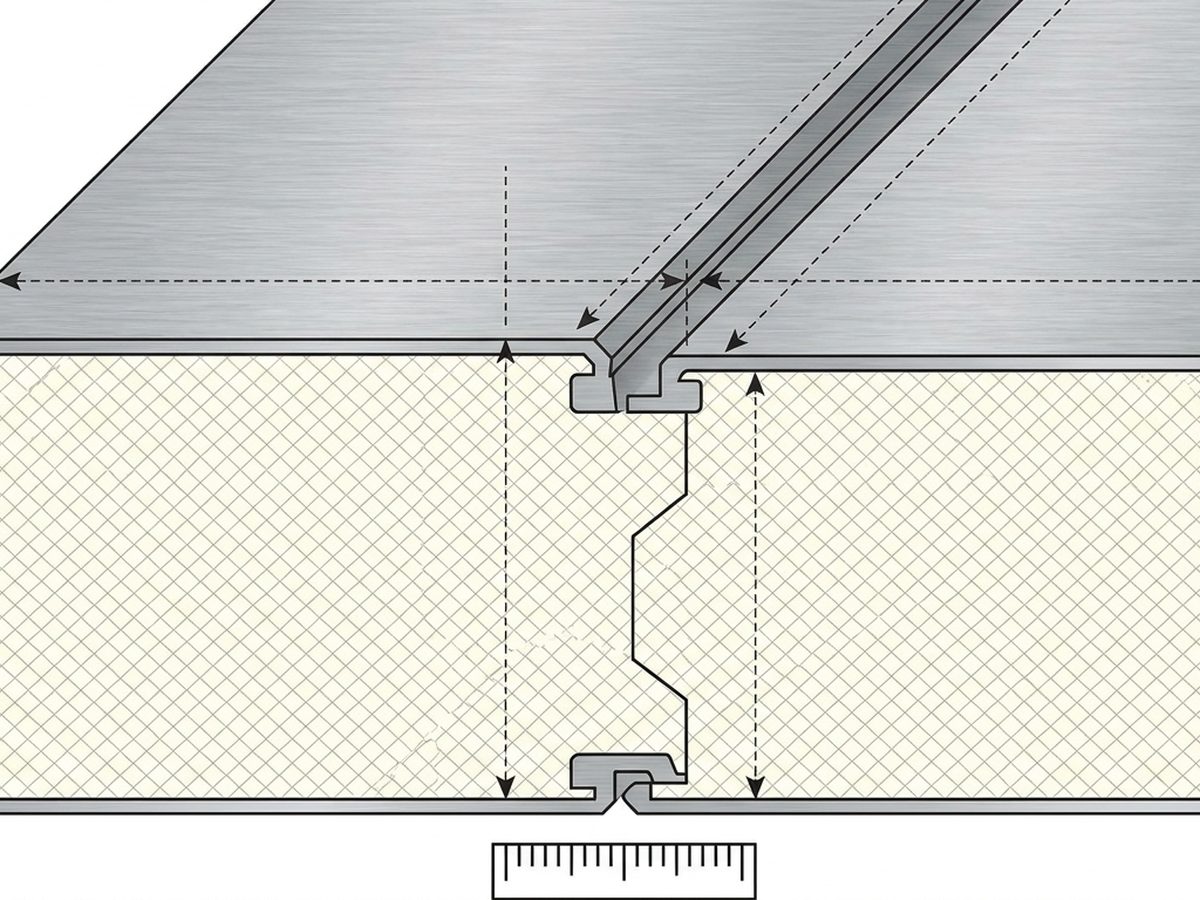
A food panel is a composite sandwich panel specifically engineered for wall and partition applications in food, beverage, and pharmaceutical processing facilities. It consists of two outer metal skins bonded to an insulating core — all designed to meet food safety standards.
What sets food panels apart from standard sandwich panels is surface specification: flat, non-porous, moisture-resistant, tolerant to detergents and chemical cleaning agents, and incapable of supporting microbial growth. These panels are designed to comply with stringent requirements of regulations such as HACCP, ISO 22000, GMP (Good Manufacturing Practice), and BPOM standards.
Key Problems with Conventional Food Factory Walls
Many food factories in Indonesia still use plastered brick walls or standard metal panels in production areas. Here are the structural problems that result from those choices:
- Porous surfaces and micro-cracks. Cement plaster is highly porous, absorbing moisture from daily washdown procedures. This creates an ideal environment for mold and pathogenic bacteria such as Listeria and Salmonella to proliferate.
- Cleaning difficulties and CIP incompatibility. Conventional walls are not compatible with standard Clean-in-Place procedures — wall-floor junctions without coving become dirt traps that high-pressure cleaning equipment cannot reach.
- Long-term material degradation. Repeated exposure to alkaline detergents, acid sanitizers, and steam cleaning causes paint peeling and plaster deterioration within 2–3 years.
- Thermal bridging and condensation. In cold processing areas such as chilling rooms and blast freezers, uninsulated walls cause condensation that drips onto the production floor — a serious cross-contamination source.
Standards and Certifications for Food Panels
Not all sandwich panels qualify as food panels. Here are the minimum standards required:
1. Skin Material: Stainless Steel or Food-Grade Coated Steel
The outer skin material of food panels must meet food-contact surface criteria. Two primary options exist:
- Stainless Steel SUS304 (minimum grade) — Corrosion-resistant, non-reactive to food acids, and the gold standard for direct product contact areas (high-care zones). Minimum thickness of 0.5 mm.
- Coated steel with food-grade finish — Galvanized steel with PVC film or PET laminate food-grade coating. A cost-effective option for medium-care zones and non-contact areas, provided the coating carries FDA-compliant certification.
2. Insulation Core: PIR or Food-Grade Mineral Wool
The core material affects thermal and fire safety performance:
- PIR (Polyisocyanurate) — Low thermal conductivity (0.022 W/mK), B1 fire rating (self-extinguishing), and closed-cell structure that resists water absorption. Ideal for cold rooms and temperature-controlled processing areas.
- Mineral Wool — Class A fire rating (non-combustible), superior acoustic insulation. Used in high fire-risk areas such as industrial kitchens and fryer rooms.
3. Sanitary Design Features
Food panels must support comprehensive sanitary design:
- Flush joint system — Panel-to-panel joints must be flush and sealed with food-grade silicone sanitary sealant. Maximum joint gap of 2 mm.
- Coving at wall-floor junctions — A coving radius of 30–50 mm prevents dirt accumulation in corners and facilitates floor cleaning.
- No exposed fasteners — Exposed screws or rivets become contamination points. Use hidden clip systems or adhesive bonding for installation.
Food Panel Applications by Production Zone
Not all factory areas require the same specification. Food panel selection should be matched to contamination risk zones:
- High-Care Zones (filling rooms, sterile packaging): Stainless steel skin SUS304, sanitary sealant joints, full coving. Panels must withstand disinfectant fogging procedures and daily high-pressure washdown.
- Medium-Care Zones (preparation rooms, cooking): Food-grade coated steel, flush joints with sanitary sealant. Surfaces must resist hot steam and oil exposure.
- Low-Care Zones (dry raw material warehouses, corridors): Standard PU panels with anti-corrosion coating. Focus on periodic cleaning and pest control.
Common Mistakes When Selecting Food Panels
Based on field experience, these are the most frequent errors made when factory owners choose food panels:
- Using standard wall panels in high-care zones. Standard PU panels with plain galvanized steel skin will rust within 6–12 months in intensive wet cleaning environments.
- Overlooking sealant and accessory specifications. Even the best panels are wasted if joints are filled with standard silicone sealant containing fungicides — these substances can contaminate food products.
- Choosing uninsulated panels for cold rooms. The result: massive condensation, slippery floors, and risk of Listeria monocytogenes contamination, which is extremely hazardous.
- Not accounting for thermal expansion. Metal panels expand with temperature changes. Without proper expansion joints, panels can warp and open joint gaps.
Food Panel FAQ
What is the price of food panels per square meter?
Food panel pricing varies based on skin and core specifications. Panels with SUS304 stainless steel skin and PIR core range from USD 55–95 per m2. Panels with food-grade coated steel skin are more economical at approximately USD 30–50 per m2. Prices exclude accessories (coving, sealant, trim) and installation costs.
Are food panels mandatory for all food factories?
For production areas that come into direct contact with products (high-care and medium-care zones), food-grade panel specifications are strongly recommended — and effectively become a de facto requirement for passing HACCP and BPOM audits. For administrative areas and non-food warehouses, standard sandwich panels suffice.
How do you clean food panels?
Food panels are designed for compatibility with standard food industry cleaning procedures: wash with mild alkaline detergent (pH 9–11), rinse with clean pressurized water, then spray sanitizer based on quaternary ammonium or peracetic acid. Avoid wire brushes or abrasive pads that can scratch stainless steel surfaces.
What is the lifespan of food panels?
With proper specifications and regular maintenance, food panels have a technical lifespan of 15–20 years. Stainless steel food-grade panels tend to outlast coated steel panels as they do not experience coating delamination.
Conclusion
Food panels represent a long-term investment in food safety and regulatory compliance. Choosing the right wall material is not just about aesthetics — it is about protecting your products from contamination, shielding your business from recall risks, and ensuring your facility is audit-ready at all times.
PT. Ruida Grup Indonesia provides food panels in various specifications — from economical food-grade coated steel to premium SUS304 stainless steel. Consult our team to get specification recommendations tailored to your production scale and budget.
Read also: PIR Panel: Best Insulation for Cold Storage and Cleanroom Wall Materials: Complete Guide.
Contact us for a site survey and food panel quotation. Or WhatsApp us directly for a free technical consultation.