

When planning food production or pharmaceutical facility construction in Indonesia, understanding what a food panel actually is and how it differs from standard sandwich panels is critical. A food panel is not just a premium variant — it is a specifically engineered building material that meets stringent hygiene regulations and is designed to protect food products from environmental contamination throughout the production cycle.
What Is a Food Panel? Complete Definition
A food panel is a specialized sandwich panel type whose core material and surface layers have been certified safe for indirect food contact. Unlike standard sandwich panels used for warehouse walls or general industrial buildings, food panels must comply with rigorous requirements from HACCP (Hazard Analysis Critical Control Point), GMP (Good Manufacturing Practice), and national food safety agencies like BPOM in Indonesia.
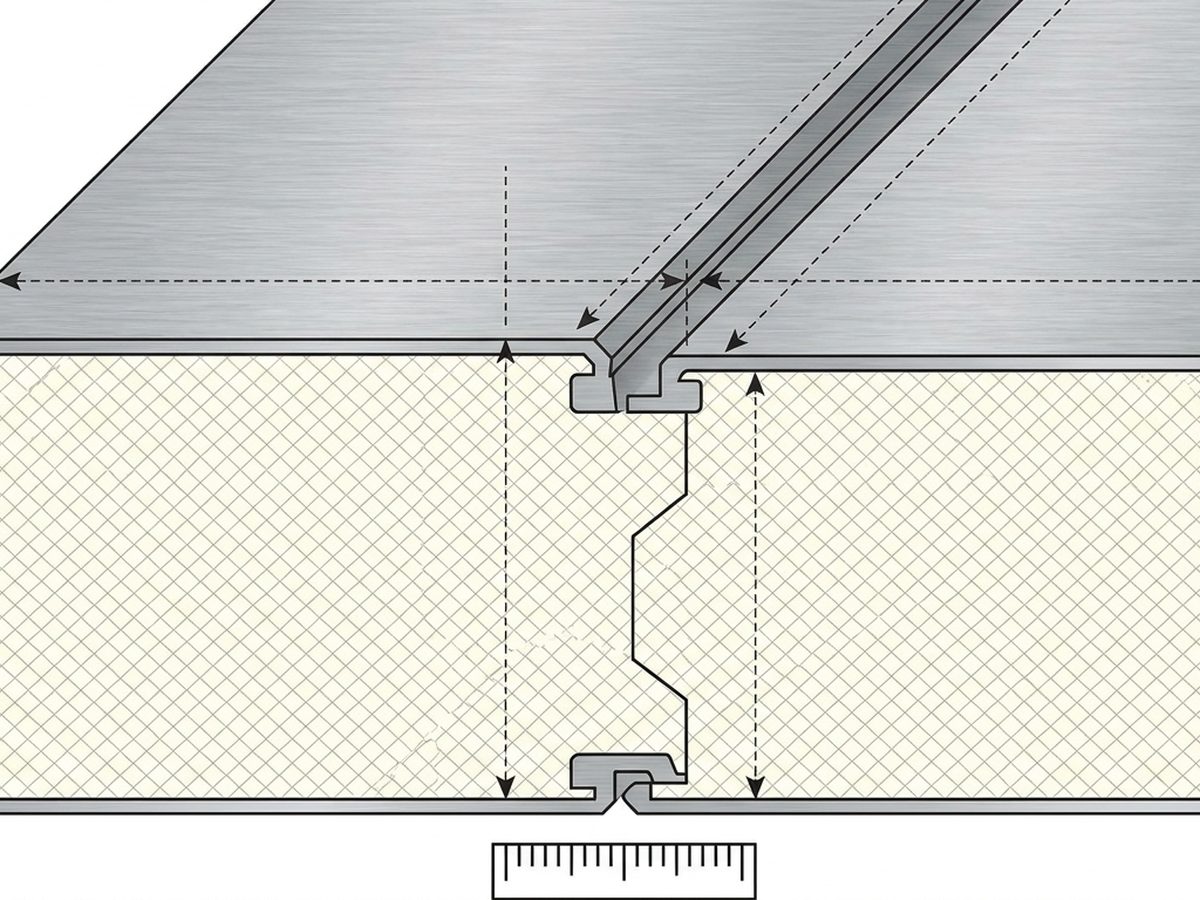
Structurally, a food panel consists of two metal skins — typically stainless steel (SUS304/SUS316) or pre-painted galvanized steel with food-grade coating — sandwiching a PIR (Polyisocyanurate) or PU (Polyurethane) insulation core formulated without CFCs/HCFCs and with minimal VOC emissions. The panels use a hidden fastener joint system with food-grade gaskets and silicone sealants to eliminate crevices where bacteria could accumulate, ensuring compliance with HACCP surface requirements.
What truly distinguishes food panels from standard sandwich panels is not just the materials, but the manufacturing process and certification chain. Food panel manufacturers must operate certified production facilities that undergo regular audits by accredited bodies, maintaining full material traceability from raw material to final installation.
Key Characteristics of Food Panels
Understanding the essential characteristics helps you select the right product for your specific project needs. Here are the five critical features every food panel must possess:
- Anti-bacterial surface: The metal skin coating incorporates antimicrobial additives that actively inhibit the growth of bacteria, mold, and other microorganisms on the panel surface. Premium food panels carry ISO 22196 certification, which quantifies antibacterial activity on non-porous surfaces — a standard increasingly required for export-oriented food processing facilities.
- Hygienic, crevice-free joints: The panel-to-panel connection system uses food-grade EPDM gaskets and specialized silicone sealants designed to prevent water, vapor, and contaminant infiltration. No exposed fasteners or open seams exist that could trap organic matter — a direct requirement for HACCP compliance in food production zones.
- Chemical cleaning resistance: Food factory walls and ceilings undergo daily washing with industrial disinfectants, alkaline detergents, and occasionally acidic descalers. The food panel coating must withstand repeated exposure to these aggressive chemicals without degradation, discoloration, or delamination over years of service.
- Superior thermal insulation: The PIR core with a density of 38–42 kg/m³ delivers excellent insulation performance (U-values as low as 0.20 W/m²K for 100 mm thickness). This is critical for cold storage and temperature-controlled processing areas in food and pharmaceutical facilities, directly reducing operational energy costs.
- Low VOC emissions: Both the insulation core and surface coatings must demonstrate minimal volatile organic compound emissions. This is essential because food products — especially fats and oils — can absorb airborne contaminants, potentially affecting product taste, odor, and safety compliance with antibacterial food-grade standards.
Food Panel Certifications and Standards
Food panels used in Indonesia and for export-oriented facilities must satisfy several overlapping certification frameworks. Understanding this hierarchy helps you verify product quality before procurement:
HACCP (Hazard Analysis Critical Control Point)
HACCP is the internationally recognized food safety management system. Wall panels in food production areas must support HACCP implementation — meaning the material must be easily cleanable, non-absorbent, and incapable of becoming a source of physical, chemical, or biological hazards. Food panels with smooth, non-porous surfaces and sealed joints directly enable HACCP compliance at the facility design level.
GMP (Good Manufacturing Practice)
GMP regulations, enforced by BPOM in Indonesia, specify facility construction requirements. Walls in food production rooms must be constructed from materials that are waterproof, flat, smooth, crack-free, easily cleanable, and light-colored. Food panels with glossy white food-grade finishes satisfy all these criteria — and are often specified precisely because conventional wall materials cannot meet them all simultaneously.
FDA 21 CFR Compliance (Export to US)
For facilities exporting to the United States, food panels must comply with FDA 21 CFR regulations concerning materials with indirect food contact. The coatings, sealants, and gaskets used must be listed in FDA's inventory of approved substances, and the panel must not transfer any substance to food that could affect safety or quality.
EU Food Contact Materials Regulation
Facilities exporting to the European Union must comply with EU Regulation 1935/2004 and EU 10/2011 for plastic materials in food contact. Food panels bearing this certification have undergone rigorous migration testing and are verified safe for use in food production environments across all EU member states.
Food Panel vs Standard Sandwich Panel: Key Differences
A common question from contractors and project owners is whether food panels are fundamentally different from standard sandwich panels. The answer is yes — and the differences affect both compliance and long-term operational costs:
- Skin material: Standard sandwich panels use basic pre-painted galvanized steel with 15–25 micron coating. Food panels use either stainless steel SUS304/SUS316 or pre-painted steel with specialized food-grade antimicrobial coating (minimum 25 microns thick).
- Joint system: Standard panels typically use exposed screw fasteners with visible screw heads. Food panels employ hidden fastener or tongue-and-groove systems with food-grade gaskets, producing a seamless, crevice-free surface that prevents bacteria harborage.
- Insulation core: Standard panels may use EPS (Expanded Polystyrene) as a cost-saving measure. Food panels must use PIR or PU with CFC/HCFC-free formulations and documented low-VOC emissions. EPS is unsuitable because its porous structure can harbor microorganisms.
- Certification documentation: Standard panels typically carry only physical property certifications (compressive strength, density). Food panels must include independent food-grade certification plus full material traceability documentation from raw material to finished product.
- Minimum thickness: For food-grade applications, the recommended minimum panel thickness is 50 mm (compared to 40 mm for standard warehouse panels), ensuring structural integrity and thermal performance during frequent high-temperature washdown cycles.
Industrial Applications of Food Panels
Food panels are deployed across multiple sectors requiring controlled hygienic environments. Here are the primary application areas:
Food processing plants: Production room partitions, packaging areas, and raw material storage rooms. Panels must withstand daily wet cleaning procedures using high-pressure water jets and industrial sanitizers without deterioration.
Cold storage and cold rooms: Walls and ceilings for chilled and frozen storage of meat, seafood, vegetables, and dairy products. Food-grade cold storage panels combine premium thermal insulation with hygienic surface standards for temperature-controlled food handling.
Pharmaceutical facilities: Drug production rooms, QC laboratories, and API (Active Pharmaceutical Ingredient) storage areas require panels meeting even stricter cleanliness standards — often equivalent to ISO Class 7 or 8 cleanroom requirements.
Abattoirs and meat processing: High-humidity environments with exposure to blood and animal proteins demand panels with maximum corrosion resistance. Stainless steel SUS316 is frequently specified for slaughter and cutting floor areas.
Commercial kitchens and central kitchens: Large-scale kitchens for catering, restaurant chains, and hotels require walls resistant to hot steam
Food panels with anti-grease coating formulations are ideal for these demanding environments, cooking oils, and intensive cleaning. Food panels with anti-grease coating formulations are ideal for these demanding environments.
Frequently Asked Questions
Can food panels be used for exterior walls?
Yes, food panels can be used for exterior walls with appropriate coating specifications (PVDF or HDP for UV resistance). However, food panels are predominantly used for interior walls in production areas. For exterior applications, ensure you select panels with weather-resistant topcoats designed for outdoor exposure.
What is the price range for food panels per square meter?
Food panel pricing varies by thickness, skin material, and certification level. As a general guideline, food panels with stainless steel skins cost approximately 30–50% more than standard PIR sandwich panels. For project-specific estimates, we recommend consulting our technical team with your detailed requirements.
Is stainless steel mandatory for food panels?
Not always. For areas without direct food contact (such as corridors, dry storage rooms, and administrative zones adjacent to production), pre-painted steel with food-grade coating is sufficient. Stainless steel is recommended for wet processing areas, cutting rooms, and zones with high chemical exposure from cleaning agents.
How should food panels be cleaned?
Use pH-neutral detergents with water at 40–60°C. Avoid abrasive brushes that could scratch the surface coating. For disinfection, apply quaternary ammonium-based or sodium hypochlorite solutions at recommended concentrations (typically 200–400 ppm). Always rinse thoroughly with clean water after disinfection to prevent chemical residue buildup.
Are food panels resistant to pests and rodents?
Yes. The dual metal skin construction makes food panels impenetrable to rodents, and the PIR/PU core does not serve as a food source for termites or other insects. The tight, gasketed panel joints also prevent rodent entry through wall seams — a significant advantage over conventional masonry or framed wall systems.
Conclusion
A food panel is a purpose-engineered wall solution specifically designed for food and pharmaceutical production environments — not merely a sandwich panel with a different label. The fundamental differences lie in the skin material, joint system, insulation core formulation, and most critically, the accompanying certifications: HACCP, GMP, FDA, and EU food contact standards. Selecting the right food panel means ensuring your facility passes food safety audits and consistently protects your products from contamination risk throughout their shelf life.
Consult our technical team for your project's food panel requirements. Contact us via WhatsApp for technical specifications and cost estimates tailored to your project scale.