

Condensation Problems in Cold Storage: The Hidden Threat That Destroys
Cold storage or refrigeration rooms are critical investments for food, pharmaceutical, and logistics businesses. However, condensation often becomes an invisible enemy that erodes efficiency and safety of your facility. When warm air meets cold surfaces, water vapor condenses into droplets that cling to walls, ceilings, and even stored products.
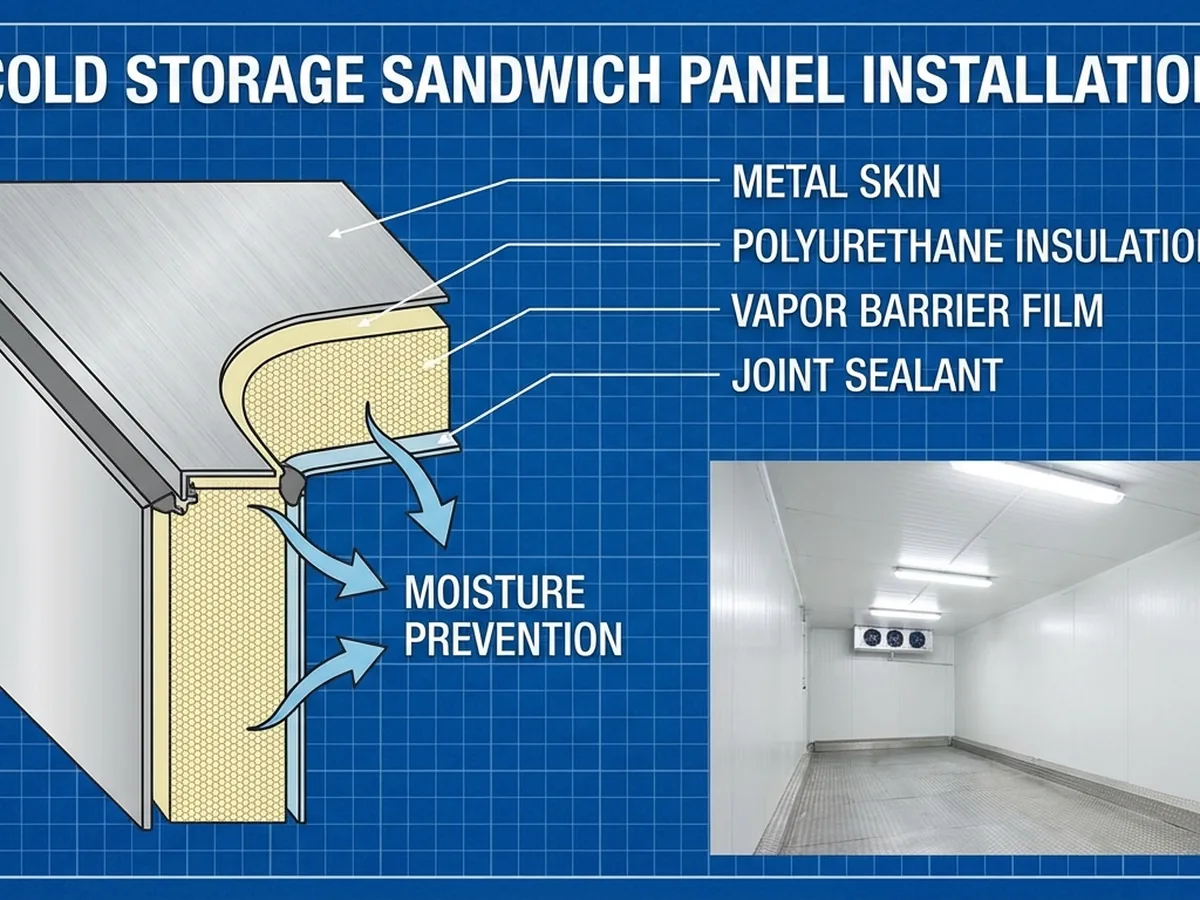
Main Causes of Condensation in Cold Storage
Condensation occurs due to several key factors:
1. Extreme Temperature Differences
Temperature inside cold storage can reach -25°C, while outdoor temperature in Indonesia averages 30°C. This 55°C difference creates very high water vapor pressure.
2. Inadequate Insulation
Conventional insulation materials like styrofoam or glasswool often have low R-values (thermal resistance) and installation gaps that become pathways for moisture ingress.
3. Vapor Leakage
Water vapor from outside can seep through panel joints, screws, or construction gaps that aren't properly sealed.
Negative Impacts of Uncontrolled Condensation
Condensation isn't just an aesthetic issue—it's a serious threat:
- Mold and Bacterial Growth: High humidity becomes ideal medium for dangerous microorganisms
- Structural Corrosion: Condensed water corrodes steel frames and other metal components
- Increased Energy Costs: Cooling systems must work extra hard to compensate for heat entering through wet walls
- Product Damage: Frozen foods develop freezer burn, medications lose potency, chemicals get contaminated
- Safety Risks: Slippery floors from water droplets increase workplace accident risks
Effective Solution: Sandwich Panels with Integrated Vapor Barrier
Modern sandwich panels are specifically designed to address condensation problems through several key features:
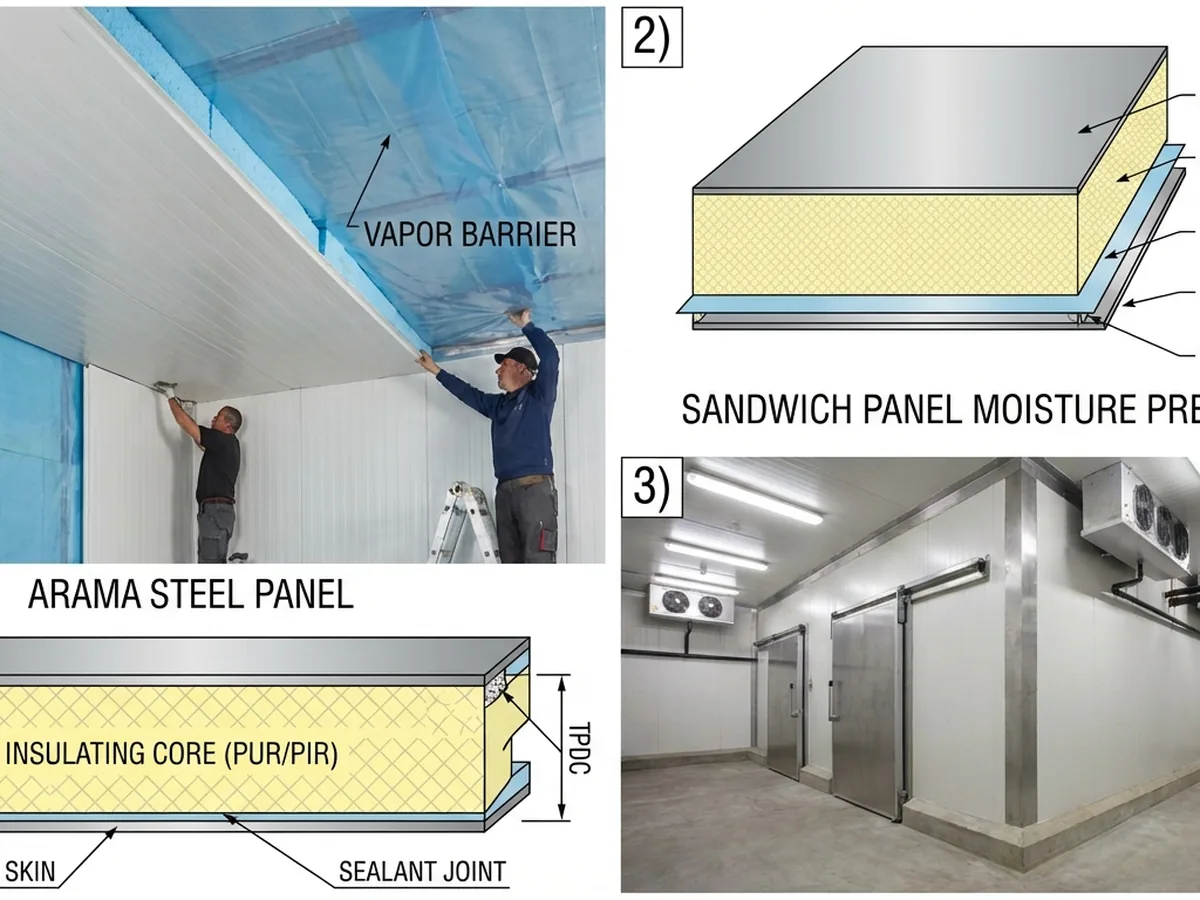
1. Double-Layer Vapor Barrier
Cold storage sandwich panels feature vapor barrier layers on both sides of the insulation core. These layers are typically made of aluminum foil or special polymer films with very low water vapor permeability (<0.1 perm).
2. Hermetic Locking System
Panel joints use tongue-and-groove systems with special sealants that create air-tight and vapor-tight seals. This system prevents leakage at joint points—the main source of condensation problems.
3. Tightly Sealed Insulation Core
Core materials like PIR (Polyisocyanurate) or PU (Polyurethane) have closed-cell structures that don't absorb moisture, unlike conventional insulation materials that are hygroscopic.
Case Study: Frozen Food Distribution Cold Storage in Surabaya
A frozen food distributor in Surabaya experienced severe condensation problems in a 500m³ cold storage. Analysis revealed:
- Condensation reaching 2 liters of water per day dripping from the ceiling
- Electricity costs increased 40% over 6 months
- 20% of products developed freezer burn and had to be discarded
Solution implemented:
- Replaced all walls with 100mm PIR sandwich panels with aluminum vapor barrier
- Installed joint systems with PU sealant specifically for cold storage
- Added dehumidifier for active humidity control
Results after 3 months:
- Condensation reduced by 95%
- Energy savings of 35%
- Zero product loss due to condensation
- ROI achieved within 14 months
Guide to Choosing Sandwich Panels for Cold Storage
Here are important criteria when selecting anti-condensation sandwich panels:
| Parameter | Minimum Specification | Optimal Recommendation | Reason |
|---|---|---|---|
| Panel Thickness | 80mm | 100-120mm | Greater thickness provides higher thermal resistance and reduces thermal bridging at joints |
| U-Value (W/m²K) | <0.25 | <0.18 | Lower U-value means better insulation, reducing temperature differences that trigger condensation |
| Water Vapor Permeability | <1.0 perm | <0.1 perm | Low permeability prevents water vapor from seeping through material |
| Joint System | Tongue-and-groove | Tongue-and-groove with PU sealant | PU sealant fills microscopic gaps invisible to the eye |
| Core Material | EPS | PIR or PU | Closed-cell structure of PIR/PU doesn't absorb moisture, unlike hygroscopic EPS |
| Fire Rating | EI30 | EI60 or higher | Cold storage often stores high-value materials, higher fire rating protects investment |
| Surface Coating | Standard polyester | PVDF or plastisol | Special coatings have better resistance to moisture and chemical cleaning |
| Manufacturer Warranty | 10 years | 15-20 years | Long warranty shows manufacturer's confidence in product quality |
Quality Verification Tips On-Site
Before deciding, perform these checks:
- Request Samples: Ask for small panel samples to test with water or in humid conditions
- Check Certifications: Ensure panels have certifications from independent bodies like DIN, ISO, or SNI
- Visit Reference Projects: Ask to see similar installations that have been operational for at least 2 years
- Test Permeability: Perform simple tests by placing panels between two spaces with different humidity levels
- Review Installation: Ensure contractor provides detailed installation drawings including critical joint points
FAQ: Common Questions About Condensation and Sandwich Panels
1. Can sandwich panels completely eliminate condensation?
Sandwich panels with integrated vapor barriers can reduce condensation by 95-98%. The remaining 2-5% typically comes from door opening/closing activities and can be managed with additional dehumidifiers. It's important to understand that the main goal is controlling condensation, not achieving 100% elimination which is physically impossible due to operational activities.
2. How long do sandwich panels last against moisture?
Quality sandwich panels with aluminum vapor barriers have a service life of 25-30 years without degradation of anti-condensation performance, provided installation is done correctly. Panels with PVDF coating can last even longer in high-humidity environments with regular chemical cleaning.
3. Are sandwich panels more expensive than conventional insulation?
In terms of initial investment, sandwich panels are indeed 20-30% more expensive. However, considering total cost of ownership (including energy savings, maintenance, and product damage prevention), sandwich panels are 40-60% more economical within the first 5 years. ROI calculations typically show break-even point within 14-18 months for commercial cold storage.
4. How to ensure proper installation?
Ensure the contractor has experience in cold storage installation and uses special sealants for joints. Conduct pressure tests after installation to ensure no air or vapor leakage. Documentation including progress photos and test reports is crucial for warranty claims.
5. What routine maintenance do anti-condensation sandwich panels require?
Minimal maintenance: clean surfaces with water and neutral soap every 6 months, check sealant condition at joints annually, and monitor for signs of moisture at specific points. No special maintenance is needed for vapor barriers as they're integrated into the panel structure.
6. Can sandwich panels be installed in existing cold storage?
Yes, sandwich panels can be installed as an additional layer inside existing cold storage. This method is called "retrofit insulation" and effectively reduces condensation without needing to dismantle existing structures. However, special calculations are needed to ensure no cold bridges remain.
7. What about condensation on cold storage floors?
Floor condensation is typically addressed with special floor insulation and floor heating systems that maintain floor temperature slightly above dew point. Wall and ceiling sandwich panels must integrate with floor insulation systems for optimal results.
Conclusion: Investing in Condensation Prevention
Condensation problems in cold storage aren't minor inconveniences—they're threats to product safety, energy efficiency, and business sustainability. Sandwich panels with integrated vapor barriers offer comprehensive solutions that pay for themselves through energy savings and product loss prevention.
Need solutions for your cold storage? The expert team at sandwichpanels.id is ready to help analyze your needs and provide specific recommendations for your facility. Contact us for free consultation and best price quotes for anti-condensation sandwich panels.
Also read our guides on Sandwich Panel Cold Storage: Specifications & Latest Prices 2026 and PIR Material: Properties and Sandwich Panel Applications for more comprehensive information.