

Introduction: The Condensation Challenge in Cold Storage
Condensation in cold storage facilities is a serious issue that can lead to product damage, mold growth, and reduced energy efficiency. For businesses relying on cold storage such as food warehouses, pharmaceutical facilities, or agricultural product storage, condensation is not merely a minor inconvenience—it is a threat to operations and profitability. Sandwich panels, with their advanced insulation design, offer a comprehensive solution to this challenge. This article will delve deeply into the causes of condensation, how sandwich panels prevent it, proper installation techniques, and case studies across various industries.
Main Causes of Condensation in Cold Storage
Condensation occurs when moist air comes into contact with a surface colder than its dew point. In cold storage environments, several primary factors contribute to condensation:
1. Extreme Temperature Differences
The temperature differential between cold storage interiors (typically -20°C to +4°C) and external environments (often 25-35°C in Indonesia) creates significant thermal gradients. Without adequate insulation, atmospheric moisture will condense on cold surfaces.
2. Air Infiltration
Improperly sealed panel joints, gaps around doors, or imprecise installation allow moist external air to enter the cold storage system. Even small leaks can become starting points for condensation.
3. Operational Activities
Frequent door openings, forklift traffic, and loading/unloading processes introduce moist air into the space. These activities increase relative humidity levels inside cold storage.
4. Inadequate Ventilation Design
Poorly designed ventilation systems can create pockets of stagnant air where moisture accumulates and eventually condenses.
How Sandwich Panels Prevent Condensation
Sandwich panels are specifically designed to address condensation issues through several key mechanisms:
1. Superior Thermal Insulation
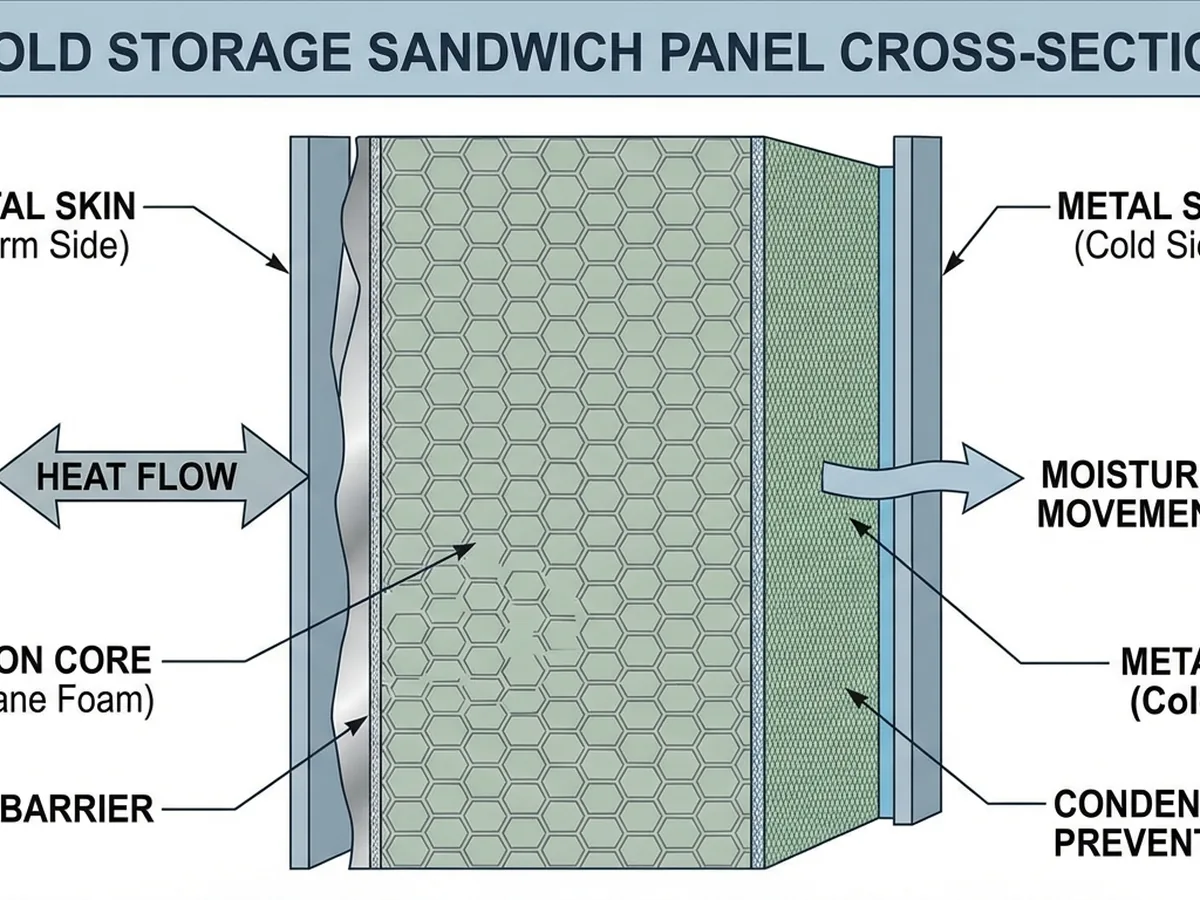
Core materials like PIR (Polyisocyanurate), PU (Polyurethane), or EPS (Expanded Polystyrene) have very low thermal conductivity values (typically 0.022-0.028 W/mK). This means sandwich panels effectively minimize heat transfer between interior and exterior, keeping interior surfaces above dew point.
2. Tight Sealant and Joint Systems
Tongue-and-groove panel designs, combined with specialized sealants, create airtight joints. This system prevents infiltration of moist air—a primary cause of condensation.
3. Integrated Vapor Barrier
Many modern sandwich panels feature built-in vapor barriers—aluminum foil layers or specialized membranes that block water vapor transmission through the panel structure.
4. Smooth Interior Surfaces
The smooth, non-porous interior surfaces of sandwich panels make it difficult for condensation to form and persist. Unlike conventional materials with rough textures where water can accumulate.
Proper Installation Techniques to Prevent Condensation
Installation quality is as important as panel quality. Here are critical installation techniques for condensation prevention:
1. Foundation and Floor Preparation
Ensure foundations are completely level and dry before installation. Use vapor barriers beneath floors to prevent moisture rising from the ground.
2. Precise Joining Systems
Use appropriate interlocking systems and apply sealant to all joints. Pay special attention to corner joints and wall-roof intersections which are vulnerable to leaks.
3. Door and Window Details
Areas around cold storage doors are critical points. Use specialized door frames with additional insulation and double seals to prevent air infiltration.
4. Integration with HVAC Systems
Coordinate with HVAC teams to ensure refrigeration units, ducting, and ventilation integrate properly with panel structures. Penetration points for pipes and cables must be properly sealed.
Case Studies and Application Examples
Case Study 1: Frozen Food Warehouse in Surabaya
A 500m² frozen food warehouse previously experienced severe condensation problems causing mold growth on packaging. After replacing conventional walls with 100mm PIR sandwich panels, relative humidity dropped from 85% to 65%, and condensation issues disappeared completely. Energy efficiency also improved by 30% due to reduced compressor workload.
Case Study 2: Pharmaceutical Storage Facility in Jakarta
A pharmaceutical facility storing vaccines at 2-8°C previously used concrete walls with additional insulation. Condensation problems in room corners threatened product integrity. With installation of PU sandwich panels featuring integrated vapor barriers, not only was condensation eliminated but temperature stability improved (±0.5°C variation vs ±2°C previously).
Comparison with Other Materials
Let us compare sandwich panel performance with traditional construction materials in terms of condensation prevention:
1. Concrete with Additional Insulation
Concrete has high thermal mass but is also porous, allowing moisture penetration. Additional insulation often creates air pockets where condensation can occur. Sandwich panels offer a monolithic solution without gaps for air infiltration.
2. Brick with Plaster
Brick and plaster construction has numerous joints and microscopic gaps. Porous plaster surfaces can absorb moisture and release it slowly, creating ideal conditions for condensation.
3. Light Steel with Roll Insulation
This system is vulnerable to "thermal bridging" where steel frames become heat conduction paths, creating local cold spots where condensation forms. Sandwich panels eliminate thermal bridging through continuous design.
Maintenance Tips for Long-Term Condensation Prevention
1. Regular Inspection of Joints and Sealants
Conduct visual inspections every 6 months to check sealant and panel joint conditions. Repair immediately if cracks or damage are found.
2. Humidity Monitoring
Install hygrometers at several strategic points within cold storage. Monitor humidity patterns to detect potential problems before they become serious.
3. HVAC System Maintenance
Ensure evaporator coils are clean and functioning optimally. Dirty coils reduce cooling efficiency and can increase relative humidity.
4. Operational Management
Train staff to limit door opening times and use airlocks or curtain doors where possible. Consider loading/unloading systems that minimize air exchange.
FAQ: Common Questions About Condensation and Sandwich Panels
1. What sandwich panel thickness is recommended for cold storage?
For cold storage applications in Indonesia, 100-150mm thickness is recommended depending on operational temperature. Lower temperatures require greater thickness. Consult with our experts at sandwichpanels.id for specific recommendations.
2. Can sandwich panels be used for existing cold storage?
Yes, sandwich panels can be installed as interior lining in existing cold storage. This is an effective solution for addressing condensation problems without dismantling existing structures. Learn more in our article about How to Overcome Condensation in Cold Storage Sandwich Panels.
3. How long do sandwich panels last before needing replacement?
With proper installation and maintenance, sandwich panels can last 25-30 years. The key is preventing physical damage and maintaining sealant integrity.
4. Is there performance difference between PIR, PU, and EPS panels for condensation prevention?
PIR generally has the highest R-value (thermal resistance), followed by PU, then EPS. However, all three materials effectively prevent condensation if properly installed. Choice depends on budget, fire rating requirements, and specific insulation needs.
Conclusion: A Smart Investment for Your Business
Condensation in cold storage is not a problem that can be ignored. From product damage to increased energy costs, its impact on business can be significant. Sandwich panels offer a comprehensive solution combining superior thermal insulation, airtight systems, and long-term durability.
With proper installation techniques and regular maintenance, sandwich panels can eliminate condensation problems while improving cold storage operational efficiency. This is not just about protecting products—it is about protecting your investment and business profitability.
For a free consultation on sandwich panel solutions for your cold storage, visit sandwichpanels.id/kontak or contact our team. Also explore other applications in our article about Cold Storage Panels for Food Warehouses.