

The Condensation Problem in Cold Storage: A Hidden Threat to Your Business
Cold storage rooms are the operational heart of many businesses in the food, pharmaceutical, logistics, and manufacturing industries. However, condensation issues that frequently appear on cold storage walls and ceilings can pose a serious threat to your business continuity. Condensation is not just annoying water droplets—it's a symptom of deeper insulation problems that can damage products, increase energy costs, and even compromise workplace safety.
In Indonesia's humid tropical climate, condensation challenges become increasingly complex. The extreme temperature difference between cold storage interiors (typically -20°C to 4°C) and the external environment (25°C-35°C with 70-90% humidity) creates ideal conditions for condensation. Without proper insulation systems, water vapor will condense on cold surfaces, causing various operational problems.
Main Causes of Condensation in Cold Storage
Understanding the root causes of condensation is the first step toward effective solutions. Here are the main factors contributing to condensation problems:
1. Inadequate Insulation
Conventional insulation materials like styrofoam or fiberglass often lack sufficient R-value (thermal resistance) for cold storage applications. Improper thickness or poor installation can create "thermal bridges"—points where heat can easily transfer, causing localized cooling and condensation.
2. Lack of Effective Vapor Barrier
Vapor barriers are critical components often overlooked. Without this barrier, water vapor from outside air can penetrate wall structures and condense when reaching cold surfaces inside the cold storage.
3. Poor Ventilation Systems
Improper ventilation can cause moisture accumulation inside cold storage. Poorly designed systems may not provide sufficient air exchange to remove moisture generated by products or internal processes.
4. Air Leakage (Air Infiltration)
Gaps in panel joints, around doors, or at pipe and cable penetrations can allow moist air to enter wall structures, causing condensation in unseen areas.
How Sandwich Panels Prevent Condensation: The Technology Behind the Solution
Cold storage sandwich panels are specifically designed to address all condensation causes simultaneously. Here's how this technology works:
Integrated Multi-Layer Structure
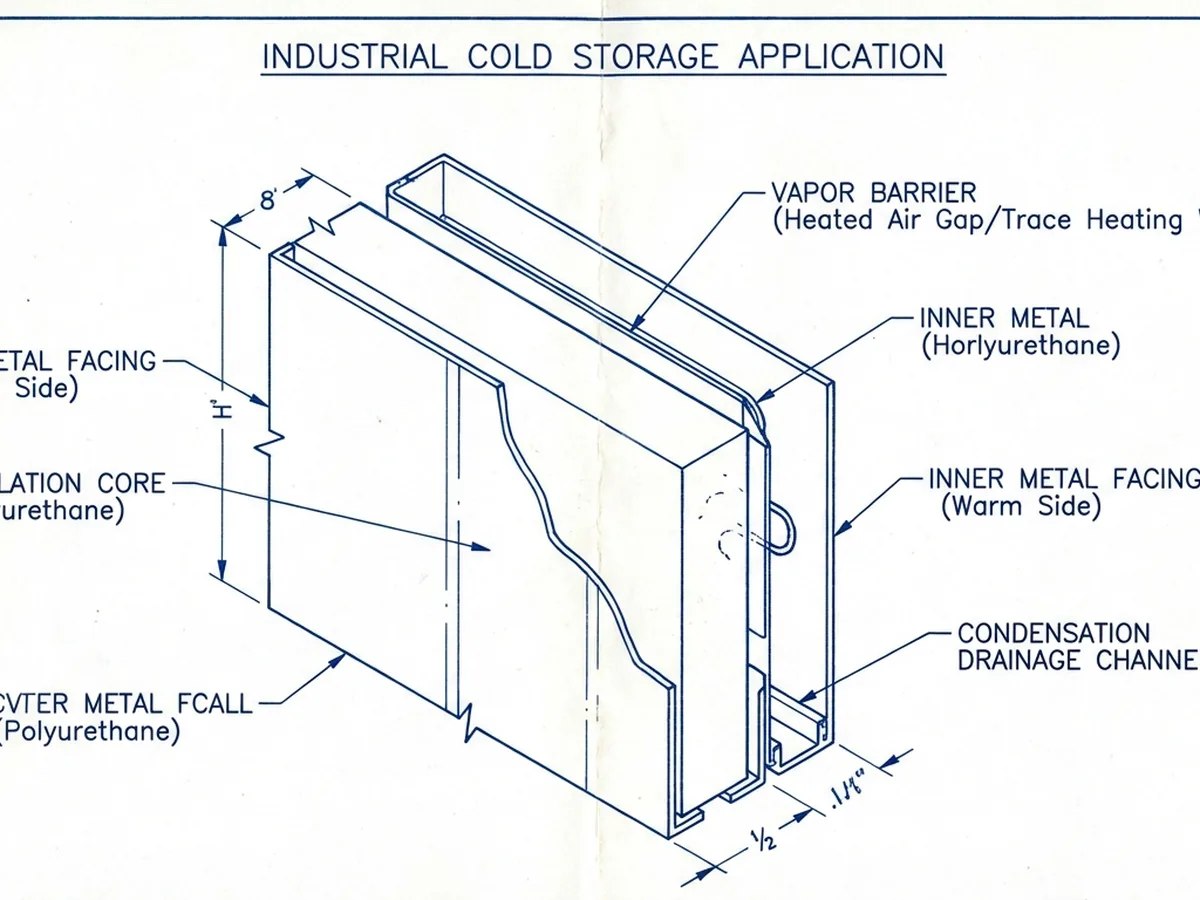
Cold storage sandwich panels consist of three main layers: two metal facings (typically galvanized steel or aluminum) and one insulation core layer (EPS, PU, or PIR). This design creates a continuous insulation system without gaps, eliminating thermal bridges that are primary condensation causes.
Built-in Vapor Barrier
The metal facing layers on sandwich panels function as perfect vapor barriers. Unlike traditional construction materials, continuous metal surfaces don't allow water vapor to penetrate the insulation structure.
Airtight Joint Systems
Tongue-and-groove or standing seam joint systems on sandwich panels are designed to create airtight seals. These mechanical locking systems, combined with specialized sealants, prevent moist air infiltration that can cause condensation.
High R-Values
Core materials like Polyurethane (PU) and Polyisocyanurate (PIR) have very high thermal resistance values—typically R-7 to R-8 per inch. This means thinner thickness can provide better insulation performance compared to traditional materials.
Correct Installation Techniques: Key to Condensation Prevention Success
Advanced sandwich panel technology is only effective if installed correctly. Here are critical installation principles for preventing condensation:
1. Proper Foundation Preparation
Foundations must be completely level and dry before installation begins. Moisture from foundations can migrate into wall structures and cause internal condensation.
2. Precision Joint Systems
Each panel must be installed with high precision to ensure perfect seals. Even 1mm gaps can become entry points for moist air.
3. Critical Area Detailing
Areas around doors, windows, pipe penetrations, and roof-wall junctions require special detailing. Proper flashings and sealants must be used to maintain vapor barrier continuity.
4. Quality Control During Installation
Regular inspections during the installation process are necessary to ensure no gaps or errors compromise insulation system integrity.
Case Study: Sandwich Panel Solutions for Food Industry Cold Storage
A food processing company in Surabaya experienced severe condensation problems in their conventionally built cold storage. After switching to 100mm PU sandwich panels, they achieved significant results:
- Condensation reduction: 95%
- Energy savings: 40%
- Product shelf life improvement: 30%
- Maintenance cost reduction: 60%
This solution not only addressed condensation issues but also improved overall operational efficiency.
Comparison with Other Materials: Why Sandwich Panels Excel
Let's compare sandwich panels with traditional cold storage construction materials:
vs. Concrete Construction with Separate Insulation
Traditional construction requires separate installation of vapor barriers, insulation, and finishing—three separate layers vulnerable to installation errors. Sandwich panels integrate all functions in one cohesive system.
vs. Conventional Prefab Panels
Conventional prefab panels often have less effective joint systems and don't provide continuous vapor barriers. Sandwich panels with mechanical locking systems offer far superior performance.
vs. Portable Modular Cold Storage
While portable modular units offer flexibility, they often have limited insulation performance and are prone to condensation at joints.
Maintenance Tips for Long-Term Condensation Prevention
Once your cold storage is built with sandwich panels, proper maintenance will ensure optimal performance for years:
1. Regular Joint and Sealant Inspection
Check panel joints and sealants every 6 months to ensure no damage or degradation.
2. Temperature and Humidity Monitoring
Install continuous monitoring systems tracking conditions inside cold storage and within wall structures (if possible).
3. Ventilation System Maintenance
Ensure ventilation systems function optimally to control indoor humidity.
4. Immediate Minor Damage Handling
Promptly repair minor damage to panels or sealants to prevent larger problems.
FAQ: Common Questions About Condensation and Sandwich Panels
1. How long can sandwich panels prevent condensation?
With proper installation and maintenance, sandwich panels can effectively prevent condensation for 20-30 years—the entire lifespan of cold storage structures.
2. Are sandwich panels suitable for very low-temperature cold storage (-40°C)?
Yes, with appropriate thickness (typically 150-200mm) and suitable core materials (PU or PIR), sandwich panels can be used for cryogenic applications.
3. What about condensation around cold storage doors?
Special cold storage doors with insulation and sealing systems designed to work with sandwich panels are available to prevent condensation in these areas.
4. Are sandwich panels more expensive than traditional solutions?
From a lifecycle cost perspective, sandwich panels are often more economical due to energy savings, reduced maintenance, and improved productivity.
Conclusion: Investment in Proven Solutions
Condensation in cold storage isn't a problem to ignore. It's a real threat to your business profitability and sustainability. Sandwich panels offer comprehensive solutions addressing condensation root causes through integrated insulation technology, effective vapor barriers, and precise installation systems.
By choosing sandwich panels for your cold storage, you're not just solving condensation problems but investing in energy efficiency, operational reliability, and better product protection. This solution has proven effective across various industries in Indonesia and internationally.
Need solutions for condensation problems in your cold storage? Our expert team at sandwichpanels.id is ready to help you design and implement the right solutions for your specific business needs. Contact us today for free consultation and competitive quotes.
Also read related articles: Cold Storage Panels for Food Warehouses: Best Insulation Solutions 2026 and PIR Material: Properties and Sandwich Panel Applications for more information about modern insulation technology.