

Introduction: Challenges of the Textile Industry in Tropical Climates
The textile industry is a cornerstone of the economy in the Tangerang region and its surroundings. However, textile factory operations face unique challenges: weaving and spinning machines generate high heat, while fabric fiber quality is highly sensitive to humidity and temperature fluctuations. Using buildings with conventional brick walls often fails to provide stable temperature control, which ultimately impacts production efficiency and worker comfort. In a hot tropical climate like Indonesia, maintaining the right internal environment is not just about comfort—it's about productivity.
In this sandwich panel review for textile factories, we will dissect a successful project in the Tangerang industrial area. We will look at how replacing conventional walls and roofs with a sandwich panel system was able to transform the work environment and provide significant operational cost savings for the company. Understanding the technical details of this case study will help you see the potential efficiency gains possible for your own industrial facility.

Project Profile: Textile Factory in Tangerang Industrial Zone
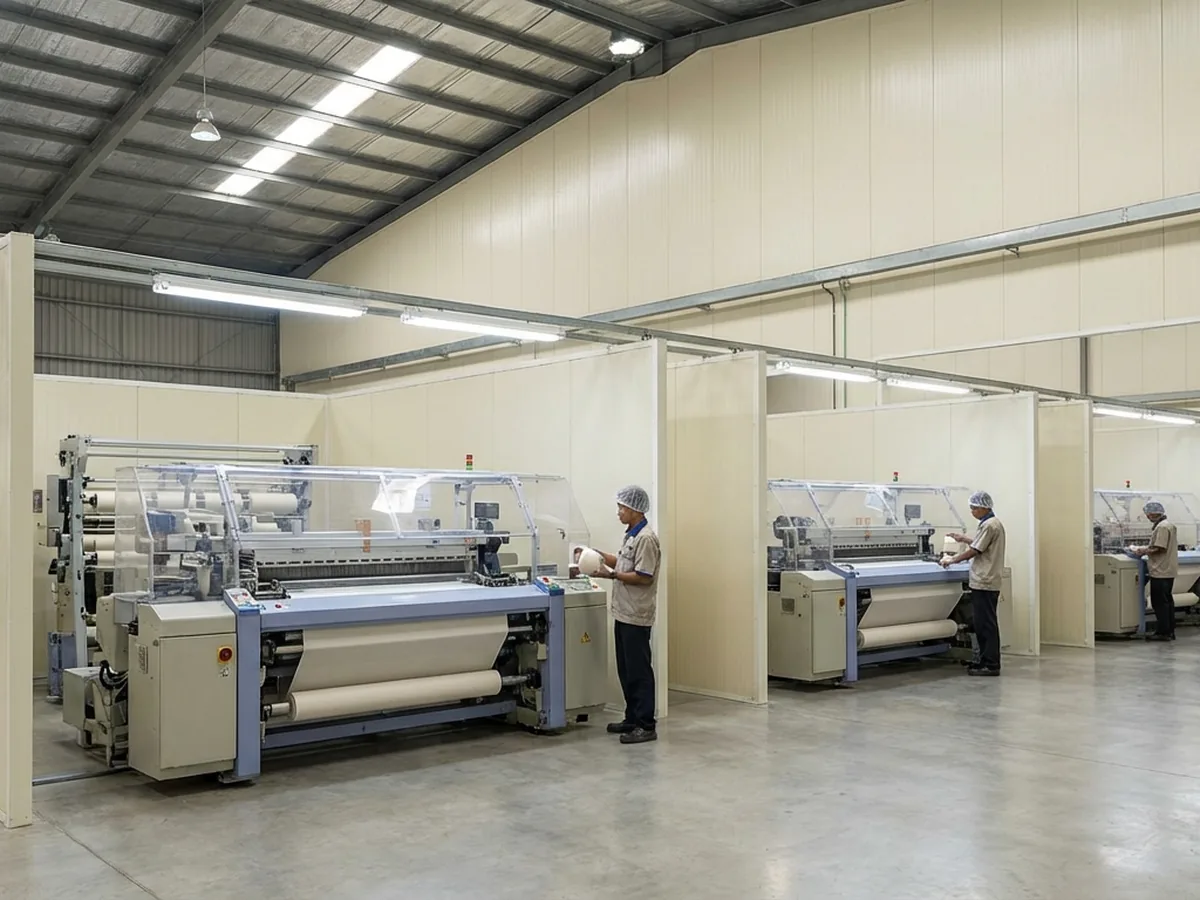
The project we are reviewing involves a 3,500-square-meter textile production facility located in Tangerang. Previously, the building used brick walls and single metal roofing, causing indoor temperatures to reach 34°C during sweltering afternoons. This resulted in frequent machinery overheating, yarn becoming more brittle due to the hot dry air, and a high rate of employee absenteeism due to heat exhaustion. Management needed a swift and effective solution to these multi-faceted challenges.
Main Goals of the Renovation:
- Lower indoor temperatures passively without relying solely on electricity-intensive AC units.
- Create a more soundproof work environment to reduce excessive noise from weaving machines.
- Improve hygiene standards with wall materials that are dust-free, anti-fungal, and easy to clean.
- Accelerate the renovation process to minimize production downtime during construction.
Why Were Sandwich Panels the Primary Choice?
Based on in-depth site survey results and technical consultations with our expert team, factory management decided to use EPS sandwich panels with a thickness of 50mm for interior walls and 75mm for the roof. Here are the technical reasons behind that strategic decision:
1. Precise and Consistent Temperature Control
Unlike bricks that absorb solar heat throughout the day and release it back into the room at night (thermal mass effect), sandwich panels have a very low thermal conductivity value. The EPS core material acts as a highly effective solar heat barrier, keeping the interior temperature stable in the range of 26-28°C. This stability is vital for maintaining the integrity and quality of the textile fibers during processing.
2. Impressive Installation Speed
One of the key highlights of this sandwich panel review for textile factories is construction time efficiency. The factory could not afford to stop operations for long periods due to strict production targets. With the modular sandwich panel system, the installation of 1,200 m2 of walls was completed in just 10 working days by the professional team from SandwichPanels.id. Using traditional brickwork, this process would have taken over a month including cement drying time.
3. Hygienic and Dust-Free Properties
In the textile industry, even the smallest amount of dust is an enemy to final product quality. The skin surface of sandwich panels, made of galvalume lightweight steel with industrial-grade paint finishes, does not generate dust. This is a stark contrast to cement walls that tend to develop hair-line cracks and shed particles over time. The surfaces are also very easy to wash and disinfect periodically.
The Importance of Choosing the Correct Panel Thickness
In this Tangerang project, choosing 50mm for walls and 75mm for the roof was a calculated technical decision. The roof receives direct solar radiation and thus requires a thicker insulation layer to resist the higher heat load. Meanwhile, 50mm walls were perfectly adequate for maintaining temperature control between different production sections. Choosing the wrong thickness can result in either budget waste or underperforming insulation values.
You can learn more about these technical aspects in our guide on how to calculate sandwich panel requirements.
Real Impact After 6 Months of Installation
Following a 6-month monitoring period after project completion, factory management reported the following performance data:
1. Significant Savings in Electricity Costs
Since the room is much cooler naturally, the workload on air conditioning systems in quality control and finishing areas was drastically reduced. Even the massive high-volume low-speed (HVLS) industrial fans did not need to run at full speed. This resulted in average monthly electricity cost savings of approximately 18%.
2. Enhanced Workforce Productivity
Employees reported much higher working comfort in a cool and less noisy environment. The drop in indoor temperature provenly lowered physical stress levels among workers, which directly impacted a 5.2% reduction in production reject rates. A comfortable workforce is a more precise and efficient workforce.
3. Stabilized Product Quality
With more controlled humidity and temperature, textile fibers were less prone to breakage during the spinning process. This improved material efficiency and resulted in fabric quality that consistently met export standards, increasing the factory's overall market competitiveness.
Technical Details and Budgetary Overview
For those considering a similar upgrade, here is a technical and budgetary summary used in this Tangerang factory project as a reference:
| Project Component | Material Specification | Estimated Cost (per m2) |
|---|---|---|
| Interior Partition Walls | EPS Panel 50 mm (0.35mm Skin) | Rp 215,000 - Rp 245,000 |
| Insulated Roofing | EPS Roof Panel 75 mm | Rp 265,000 - Rp 295,000 |
| Accessories & Flashing | Custom Steel with Paint Finish | Rp 45,000 - Rp 70,000 |
| Professional Installation | Certified Industrial Team | Rp 150,000 - Rp 250,000 |
For the latest material price updates this year, please check our sandwich panel price per meter 2026 page.

After-Sales Support and Long-term Maintenance
At SandwichPanels.id, we don't just sell and install; we also provide education on long-term maintenance. Sandwich panels are relatively low-maintenance, but a routine check of roof joint sealants every two years is recommended to ensure 100% waterproof performance. The factory management in Tangerang highly valued the post-installation technical support we provided.
Project Review Conclusion
This sandwich panel review for a textile factory in Tangerang proves that investing in modern construction materials delivers a real positive impact on manufacturing businesses. From energy savings to improved employee well-being, all these factors contribute to a stronger and more competitive company.
If your industrial facility currently suffers from heat, noise, or dust issues, consider an upgrade using the sandwich panel system. The ROI gained from electricity savings and productivity usually covers the initial investment costs in less than three years. It is a smart strategic move for any industrial leader.
Want to get a free review and survey for your factory? The technical team at SandwichPanels.id is ready to help you analyze your building needs in detail. We serve the Tangerang, Banten, and nationwide areas. Contact us via WhatsApp today to schedule a professional consultation.