

If you are searching for hospital hermetic doors, you are usually not looking for a standard metal leaf that simply closes. What the project really needs is a hygienic access system that helps maintain room pressure, supports cleaning routines, and keeps medical workflow predictable. In operating theatres, isolation rooms, laboratories, and medical cleanrooms, hermetic doors are chosen because the perimeter seal reduces the air leakage that ordinary doors often allow.
The quick answer is this: choose a hermetic door when the room demands cleaner surfaces, better airflow discipline, and an opening method that fits clinical movement. In our active catalog, the relevant solutions include hermetic sliding doors with automatic sensor, push-button, or foot-switch operation, and airtight operating suite doors for surgical and isolation areas. If you are still comparing system options, review the metal door range and the cleanroom equipment solutions so the door decision is made in the right system context.
Products or Systems Offered
A hospital hermetic door is not one generic item. An operating room has a different risk profile from an isolation room, a medical prep room, or a clinical laboratory. That is why a proper buying process should start with room function, traffic pattern, opening direction, and access integration. The most common buying mistake is to compare doors only by appearance or first price, even though the real value appears when the room is in daily use.
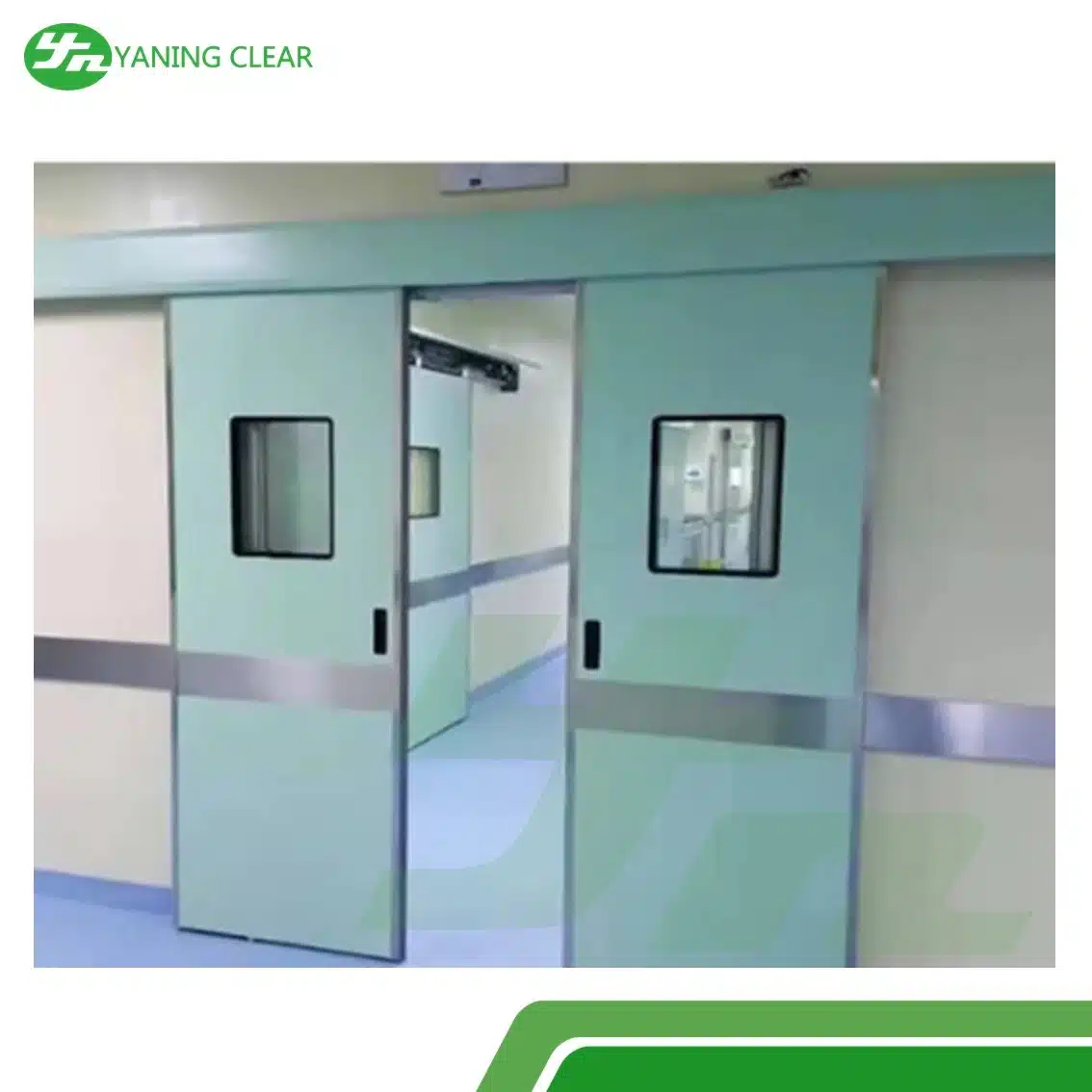
For medical and cleanroom projects, two configurations are especially easy to position. A hermetic sliding door works well when trolley traffic is frequent, the opening path must stay clear, and access behavior has to remain consistent. An airtight operating suite door works well when the project wants hygienic construction but still needs flexibility between manual and automatic operation.
- Hermetic Sliding Door: airtight sealing, automatic sensor or foot-switch operation, and surfaces designed for easier cleaning.
- Airtight Operating Suite Door: powder-coated steel, stainless steel, or aluminium alloy options with perimeter gasket support for surgical and isolation areas.
- Main applications: hospitals, operating rooms, pressure-controlled rooms, laboratories, and medical prep spaces.
In other words, this is not simply a substitute for a standard hygienic metal door. It is part of a controlled-room envelope. The right evaluation should therefore connect the leaf, frame, sealing method, opening control, and operational discipline of the room. If your project also includes transfer zones, support rooms, or cleanroom accessories, the door specification should be aligned with the wider room strategy.
Key Specifications to Review
Several specifications deserve attention before you compare suppliers. Based on the live catalog data on this website, the important points include airtight sealing, stainless steel or powder-coated steel construction, manual or automatic operation, panel thickness around 40-50 mm, and a smooth hygienic finish that supports regular cleaning. In hospital work, these details matter more than a door that only looks heavy-duty.
You also need to match those specs to the room function. Operating theatres and isolation rooms are more sensitive to air leakage, so perimeter gasket quality and sealing consistency matter more. Areas with heavy staff movement may benefit from automatic sensors or push-button access. In rooms where sterile hand practice is important, a foot switch can be more practical than ordinary hand-operated access.
- Sealing type: airtight or hermetic must refer to a real sealing method, not loose marketing language.
- Material: stainless steel is usually stronger for corrosion resistance and intensive sanitation routines.
- Operation: manual, automatic sensor, button, or foot switch should follow the room workflow.
- Surface: a smooth hygienic finish helps daily cleaning teams work faster.
- Optional features: tempered glass, custom colors, antibacterial properties, and access control should be clarified early.
One detail is often missed: the door specification should never be isolated from the operational protocol of the hospital. A door can look correct on paper and still perform poorly if the opening direction blocks trolley movement, if the leaf feels too heavy for staff rhythm, or if the sensor response does not match actual use. Strong suppliers discuss how the room behaves, not only how wide the opening is.
What Influences Price
Many buyers who search for hospital hermetic doors want price first. That is understandable, but the price of this system rarely makes sense as one standalone number. Cost is influenced by opening size, material choice, operation mode, glazing requirements, access integration, and the finish level requested by the project. A supplier who gives an instant number without asking how the room works is often giving an estimate that will not hold.
In medical projects, the gap between manual and automatic pricing is not only about adding a motor. It also reflects workflow convenience, contamination control, and opening consistency during heavy clinical hours. Stainless steel can also shift the budget compared with powder-coated steel, but that difference should be measured against sanitation needs, corrosion resistance, and expected service life.
- Clear opening size and whether the layout needs a special configuration.
- Main material choice: stainless steel, powder-coated steel, or a combined approach.
- Operation mode: manual, automatic, push-button, sensor, or foot switch.
- Add-ons such as tempered glass, interlock logic, indicators, or access control.
- Installation conditions and how the door must integrate with the existing wall or medical room system.
The better way to read price is together with operational risk. If a room needs tighter air control, the wrong door can create leakage, cleaning inefficiency, or workflow disruption. In many projects, correction after installation costs more than specifying the right system at the start. The best target is therefore not the cheapest number, but the healthiest project cost with the lowest chance of rework.
Configuration, Material, and Application Options
Not every hospital hermetic door should be configured the same way. Some projects need an automatic sliding solution because trolley traffic is intense and the opening path must stay clear. Others are better served by an airtight operating suite door that can be manual or automatic depending on the zone. A supplier familiar with medical work does not force one configuration across every room.
From a material standpoint, stainless steel remains the strongest signal for hygiene and corrosion resistance. Powder-coated steel is still relevant when the project wants a balance between cost and performance. Aluminium alloy can also fit selected assemblies. What must stay constant is the result: a smooth surface, practical daily cleaning, and reliable performance under medical operating conditions.
- Operating theatres: priority on sealing, sterile workflow, and equipment movement.
- Isolation rooms: priority on access control and lower air leakage.
- Laboratories: priority on cleanability, regular sanitation, and stable door behavior.
- Clinical hygienic zones: priority on durability, maintenance practicality, and staff movement rhythm.
If your project sits inside a modular operating theatre or medical cleanroom environment, the door should be treated as part of the wider room envelope. The final result is much stronger when the door discussion is connected to partitions, support equipment, and room-use logic. Serious buyers usually ask for an application discussion, not only a product brochure.
Checklist Before Ordering
Before requesting a final quotation, prepare the right input. This is the easiest way to reduce revision cycles. Many inquiries slow down because owners or contractors only send approximate opening sizes without describing room function and expected operating behavior. The supplier then has to restart the discussion and procurement takes longer than necessary.
- Define the room function: operating room, isolation room, laboratory, or another clinical zone.
- Prepare the clear opening size and the condition of the surrounding structure.
- Confirm whether the door should be manual or automatic.
- Discuss sealing, access, and hygiene requirements with the MEP or cleanroom team.
- Decide whether you need glazing, foot switch, push-button, or access control integration.
- Set the target finish, color preference, and material direction.
- Share the installation timeline so the recommended solution stays realistic.
This checklist looks basic, but it has a large effect. It helps the supplier respond faster and lets you compare quotations on equal terms. If you are still early in the planning stage, start from the product overview and continue to the contact page to move the discussion toward project-specific needs.
FAQ: Common Questions Before Buying
This section matters because the same questions appear before most medical-door quotations move forward. Answering them early helps you decide whether the project needs a full hermetic solution, a hygienic metal door, or a different controlled-access arrangement.
Do all hospital hermetic doors need to be automatic?
No. Some rooms still work well with manual operation when traffic is simpler and the opening frequency is modest. However, in operating rooms, areas with heavy trolley movement, or rooms that want to reduce hand contact, automatic, button-operated, or foot-switch systems are usually the better fit.
Is stainless steel always better than powder-coated steel?
Not automatically. Stainless steel is stronger for demanding sanitation and corrosion resistance, but powder-coated steel can still be efficient when the hygiene requirement is satisfied and the room conditions are less aggressive. The decision should follow use risk, not material preference alone.
What panel thickness is common for this type of door?
The live catalog data shows panel thickness around 40-50 mm as a common range for medical and operating-suite door solutions. That figure still has to be read together with the sealing method, material choice, and the wall or partition system used in the project.
When should the door discussion happen in the room-design process?
As early as possible. It is much safer to decide the door while room layout, pressure logic, and staff flow are still being coordinated than to force a late standard opening into a sensitive medical area. Early coordination makes the door support room performance instead of merely closing the opening.
Consultation or Quotation Request
The right hospital hermetic door feels simple in daily use: smooth opening, consistent sealing, easy cleaning, and no disruption to the clinical rhythm. Results like that rarely come from rushed buying decisions. They come from choosing a specification that matches room function, material exposure, and operational behavior from the start.
If you are preparing a medical cleanroom, operating room, isolation room, or laboratory project, send the core requirement set through our contact page. Include the room function, clear opening size, preferred operation mode, and target installation schedule. With that information, we can help filter whether your project is better served by a hermetic sliding door, an airtight operating suite door, or another non-panel cleanroom and medical solution from our catalog.