

Water Leakage in Sandwich Panels: Causes and Solutions
Water leakage sandwich panel issues can cause serious damage to your facility, equipment, and inventory. Factory and warehouse owners across Indonesia face this frustrating problem, especially during heavy rainfall. Leaks typically occur at panel joints, seams, and connection points where improper installation or material degradation creates entry points for moisture.
This guide explains why sandwich panel leaks happen and provides practical solutions to fix existing problems and prevent future water intrusion. Whether you manage a manufacturing plant, storage warehouse, or industrial facility, understanding these causes will help you protect your investment.
Water Leakage Problems in the Field
Factory managers report water leakage sandwich panel problems most frequently during Indonesia's rainy season. Water finds its way through gaps between panels, damaged sealant, or improperly fastened joints. The consequences extend beyond simple inconvenience.
Moisture intrusion damages insulation properties, reducing thermal efficiency by up to 40%. This forces your HVAC systems to work harder, increasing energy costs significantly. Water also corrodes metal surfaces, weakens structural integrity, and creates ideal conditions for mold growth that threatens worker health.
Inventory stored beneath leaking panels faces contamination risks. Electronics, raw materials, and finished goods can suffer irreparable damage from even minor water exposure. Production downtime for repairs costs far more than preventive maintenance.
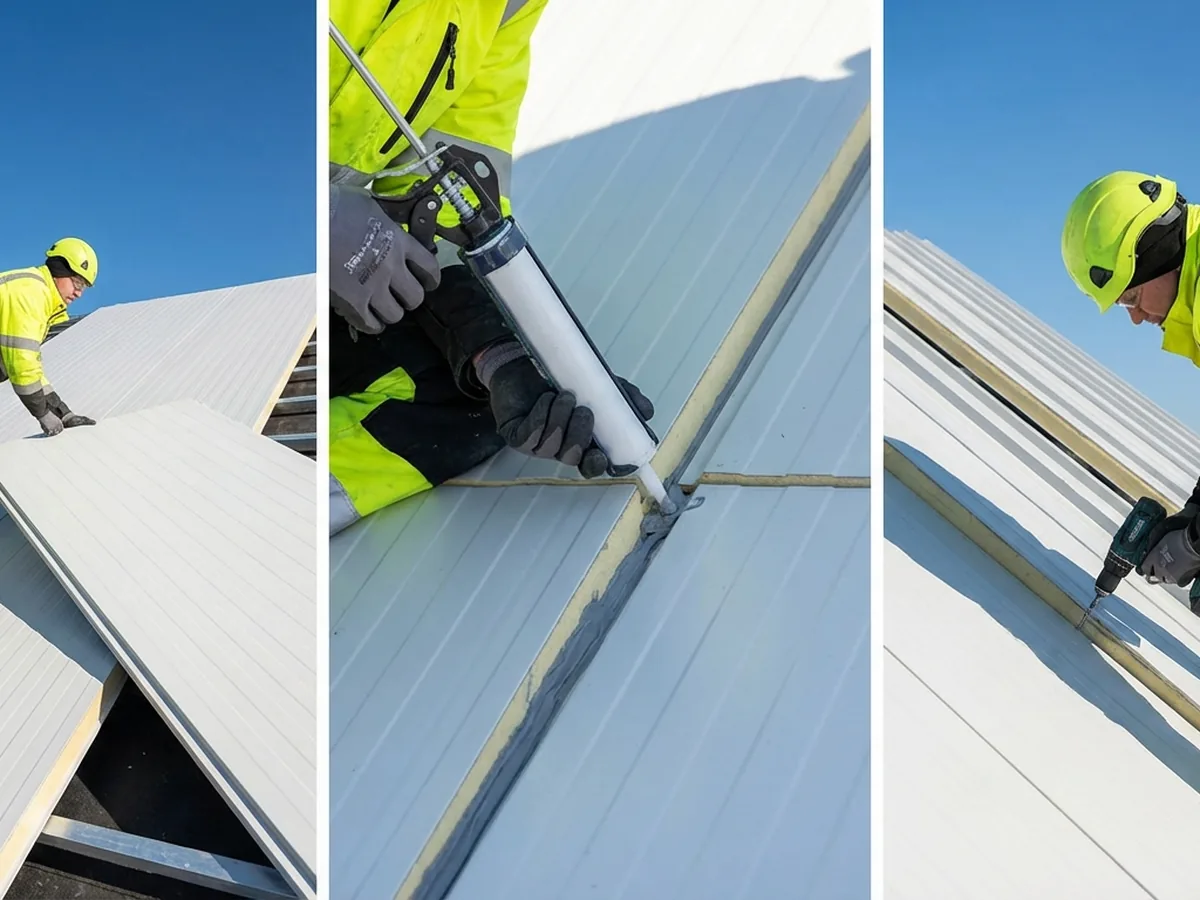
Common Causes of Leaks
Understanding why leaks occur helps you identify and address problems quickly. Here are the primary causes of water leakage sandwich panel issues:
- Improper installation: Panels installed without proper overlap, incorrect fastener placement, or inadequate sealing at joints create immediate vulnerability points.
- Sealant degradation: UV exposure, temperature fluctuations, and aging cause silicone and rubber seals to crack, shrink, or lose adhesion over 3-5 years.
- Fastener failure: Screws backing out, washers deteriorating, or incorrect fastener types allow water penetration at connection points.
- Panel damage: Physical impact from equipment, foot traffic during maintenance, or weather events create cracks and holes in panel surfaces.
- Design flaws: Insufficient slope on roofs, poor drainage design, or incompatible panel profiles trap water and increase leak risk.
- Thermal movement: Expansion and contraction from temperature changes stress joints and seals, gradually opening gaps.
Most leaks result from a combination of these factors. Regular inspection helps catch problems before they cause significant damage. Check out our sandwich panel product range for high-quality panels designed to minimize these issues.
Effective Repair Solutions
When you discover a leak, quick action prevents further damage. The appropriate repair method depends on the leak source and severity.
For minor joint leaks, remove old sealant completely and apply fresh polyurethane or silicone sealant rated for exterior use. Clean surfaces thoroughly before application. The new sealant must bond directly to metal surfaces, not old residue.
Fastener leaks require replacement with proper sealing washers. Use EPDM rubber washers designed for metal roofing applications. Apply butyl tape beneath fastener heads for additional protection.
Damaged panel sections need replacement when holes or cracks exceed 5cm. Patching large damaged areas provides only temporary relief. Install new panels with proper overlap and sealing to ensure long-term performance.
Professional waterproofing coatings offer another solution for aging installations. These elastomeric coatings form a seamless membrane over existing panels. They work best when applied to structurally sound surfaces after necessary repairs.
Long-term Prevention
Preventing water leakage sandwich panel problems costs less than repairing damage. Implement these practices to protect your facility:
Schedule bi-annual inspections, ideally before and after the rainy season. Check all joints, fasteners, and sealant conditions. Document findings and address issues promptly.
Keep roof surfaces clean and free from debris. Leaves, dirt, and standing water accelerate sealant degradation and hide developing problems. Maintain proper drainage to prevent water pooling.
Limit foot traffic on roof panels. When maintenance requires roof access, use walk boards to distribute weight and prevent panel damage. Train maintenance staff on proper procedures.
Plan sealant replacement every 5-7 years as preventive maintenance. Do not wait for visible leaks. Proactive resealing extends panel lifespan and prevents costly emergency repairs.
Consider upgrading to premium panels with factory-applied protective coatings and superior joint designs. Contact our team to discuss replacement options for aging installations.
Mistakes to Avoid
Many facility managers make errors that worsen leak problems or create new ones. Avoid these common mistakes:
Never apply new sealant over old material. This creates weak bonds that fail quickly. Always remove deteriorated sealant completely before resealing.
Do not use interior-grade sealants for exterior applications. Standard silicone caulks lack UV resistance and flexibility needed for metal roof joints. Use products specifically formulated for metal roofing.
Avoid ignoring small leaks. Minor seepage indicates compromised protection that will worsen. Address problems while repairs remain simple and inexpensive.
Do not attempt repairs during wet conditions. Sealants require dry surfaces for proper adhesion. Wait for dry weather and ensure surfaces are completely dry before application.
Never use incompatible materials. Some sealants react chemically with certain panel coatings, causing adhesion failure. Verify compatibility before application.
FAQ
How do I know if my sandwich panel has a leak?
Look for water stains on interior ceilings or walls, damp insulation, mold growth, or rust spots on metal surfaces. During rainfall, inspect the interior for active dripping. Musty odors often indicate hidden moisture problems even without visible water.
Can I repair sandwich panel leaks myself?
Minor sealant repairs are manageable for facility maintenance teams with proper safety equipment. However, extensive damage, structural concerns, or hard-to-reach areas require professional assessment. Improper repairs often worsen problems and void warranties.
How long do sandwich panel seals typically last?
Quality sealants last 5-7 years under normal conditions. Harsh environments, extreme temperature variations, or high UV exposure reduce lifespan to 3-5 years. Regular inspection helps identify degradation before leaks develop.
Conclusion and Next Steps
Water leakage sandwich panel problems threaten your facility's integrity, efficiency, and contents. Understanding the causes—from installation errors to material degradation—empowers you to take effective action. Quick repairs prevent minor issues from becoming major expenses.
Implement regular inspection schedules and preventive maintenance to protect your investment. When leaks occur, address them promptly with appropriate repair methods. For persistent problems or aging installations, professional assessment ensures comprehensive solutions.
Ready to fix your sandwich panel leaks? Contact our technical team for expert inspection, repair services, or guidance on upgrading to leak-resistant panel systems. Protect your facility today and avoid costly water damage tomorrow.