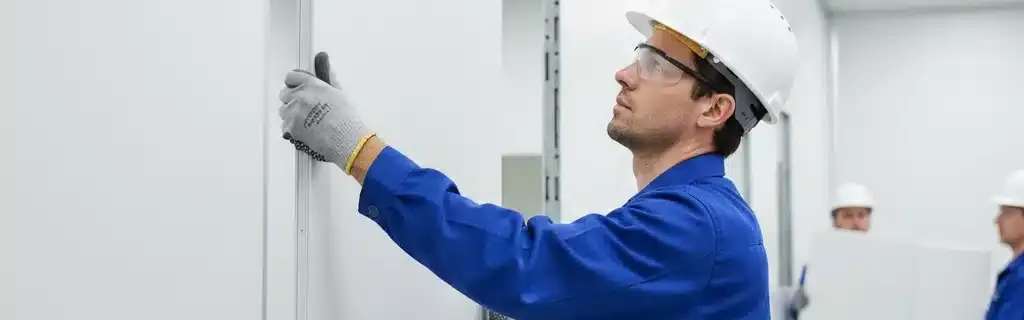

What is Aluminium Sandwich Panel?
Aluminium sandwich panels are composite construction materials consisting of three layers: two aluminium sheets as facing (outer surfaces) and core material (typically PU, PIR, or EPS) in between. This combination creates a lightweight yet strong panel with corrosion resistance far exceeding conventional steel panels.

Unlike commonly used steel sandwich panels, aluminium panels offer a long-term solution for projects in high-humidity areas or chemical exposure. This material is increasingly popular in Indonesia for warehouse, factory, cold storage, and modern commercial building applications.
Technical Specifications of Aluminium Sandwich Panels
Before choosing aluminium sandwich panels for your project, understand the following technical specifications:
- Panel thickness: 50mm - 200mm (depending on insulation needs)
- Aluminium facing thickness: 0.4mm - 0.8mm per side
- PU/PIR core density: 38-45 kg/m³
- Heat transfer coefficient (U-value): 0.18-0.35 W/m²K
- Wind load resistance: Up to 180 km/hour
- Earthquake resistance: Compliant with SNI 1726:2019
- Fire rating: B1 (fire resistant) for PIR core

Aluminium panels are available in various colors and finishes, ranging from flat, embossed, to wood patterns. Standard width is 1000mm with customizable length up to 12 meters per panel.
7 Advantages of Aluminium Sandwich Panels
1. Superior Anti-Rust and Corrosion Resistance
Aluminium forms a natural protective oxide layer that prevents corrosion. This makes aluminium panels ideal for chemical factories, coastal warehouses, or high-humidity areas in Indonesia. Service life can reach 30-50 years without rust issues.
2. 60% Lighter than Steel
With a density of 2.7 g/cm³ (vs 7.85 g/cm³ for steel), aluminium panels are much easier to transport and install. This reduces logistics costs and speeds up construction time by up to 40%.
3. Fast and Easy Installation
The locking system (tongue and groove) allows installation without welding. Panels lock together with precision, creating a perfect water and air-tight seal.
4. High Energy Efficiency
PU/PIR insulation core with 100mm thickness is equivalent to 1.7 meters of concrete in terms of thermal protection. This saves cooling costs by up to 70% for cold storage and air-conditioned spaces.
5. Extreme Weather Resistance
Aluminium panels do not experience significant thermal expansion. This material withstands UV, acid rain, and drastic temperature changes from 40°C to -40°C.
6. Environmentally Friendly and Recyclable
Aluminium is 100% recyclable without quality loss. The production process of aluminium sandwich panels also generates lower carbon footprint compared to conventional construction.
7. Modern and Premium Aesthetics
The smooth aluminium finish provides a professional appearance for showrooms, offices, and commercial buildings. Available in custom colors according to company branding.
Applications of Aluminium Sandwich Panels
Various industrial sectors leverage the advantages of aluminium sandwich panels:
Warehouses and Factories
Walls and roofs of logistics warehouses, food factories, and manufacturing facilities use aluminium panels for long-term durability and minimal maintenance.
Cold Storage and Cooling Rooms

The combination of superior insulation and corrosion resistance makes aluminium panels the top choice for frozen warehouses, cold chain logistics, and fisheries industries.
Cleanrooms and Medical Facilities
Non-porous aluminium surfaces are easy to clean and sterilize, meeting hygiene standards for laboratories and cleanrooms, pharmaceuticals, and healthcare facilities.
Showrooms, Shop Houses, and Commercial Buildings
Premium aluminium appearance enhances brand image for car dealers, furniture showrooms, and modern retail.
Residential Roofs and Villas
Residential applications are increasingly popular for minimalist home roofs and villas in coastal areas with high salt content.
Aluminium vs Steel Sandwich Panels: Which is Better?
| Aspect | Aluminium | Steel |
|---|---|---|
| Weight | Light (3.5 kg/m²) | Heavy (8-10 kg/m²) |
| Corrosion resistance | Superior | Requires coating/paint |
| Material price | 20-30% more expensive | More economical |
| Maintenance cost | Minimal | Repainting every 5-7 years |
| Service life | 30-50 years | 15-25 years (with maintenance) |
| Installation | Easy, no welding | Requires welding tools |
| Aesthetics | Premium, modern | Standard industrial |
Recommendation: Choose aluminium for projects with long-term budgets, corrosive areas, or premium aesthetic needs. Choose steel for projects with limited budgets and normal conditions.
Aluminium Sandwich Panel Price Estimate 2026
Aluminium sandwich panel prices are influenced by thickness, core type, and finish:
- Wall panels (50mm): IDR 450,000 - 550,000 per m²
- Wall panels (75mm): IDR 550,000 - 650,000 per m²
- Wall panels (100mm): IDR 650,000 - 750,000 per m²
- Roof panels (custom curve): IDR 700,000 - 850,000 per m²
- Installation cost: IDR 80,000 - 120,000 per m²
Note: Prices may vary depending on project location, volume, and technical specifications.
Tips for Choosing and Installing Aluminium Sandwich Panels
How to Choose a Supplier
- Verify ISO certificates and SNI standards
- Request samples and field testing
- Check previous project portfolios
- Ensure 10-15 year product warranty
- Ask about installation technical support
Proper Installation
- Use certified expert technicians
- Ensure strong light steel or hollow frameworks
- Pay attention to minimum 5° slope for roofs
- Use quality sealant at joints
- Leave adequate expansion gaps
Long-Term Maintenance
- Wash surfaces 2x yearly with water and mild soap
- Inspect sealant every 3 years
- Avoid contact with other metals of different potential
- Immediately repair deep scratches to prevent local corrosion
FAQ: Common Questions About Aluminium Sandwich Panels
Can aluminium panels be welded?
Not recommended. Use mechanical fastening systems or special aluminium adhesive. Welding can damage the protective layer and reduce corrosion resistance.
How long is the warranty for aluminium sandwich panels?
Standard 10-year warranty for material, up to 25 years for premium coating. Make sure to get an official warranty certificate from the supplier.
Is aluminium's electrical conductivity dangerous?
Panels with non-conductive insulation core are safe. Ensure proper grounding installation according to electrical standards.
Can aluminium panels be recycled?
Yes, 100% aluminium can be recycled without quality degradation. This makes it an environmentally friendly choice for sustainable construction.
Is it suitable for coastal areas?
Very suitable. Aluminium withstands salt corrosion, much better than steel. Ideal for warehouses and factories in coastal areas.
How long is the installation time?
40% faster than conventional construction. A 1000m² warehouse can be completed in 7-10 days with a professional team.
Conclusion
Aluminium sandwich panels are a smart investment for construction projects prioritizing long-term durability, energy efficiency, and premium aesthetics. Although initial prices are 20-30% higher than steel panels, maintenance cost savings and longer service life provide better ROI in the medium to long term.
For projects in high-humidity areas, chemical exposure, or high hygiene requirements (cold storage, cleanrooms, medical facilities), aluminium panels are the most appropriate choice.
Ready to use aluminium sandwich panels for your project? Consult your specific needs with our technical team to get optimal thickness and specification recommendations.