

What Are Cold Storage Panels and Why Size Matters?
Cold storage panels are the core component in building a cold room for the food, pharmaceutical, and logistics industries. Many business owners in Indonesia face challenges when determining the right cold storage panel dimensions for their cold rooms. Choosing the wrong panel size can cause temperature leakage, energy waste, and skyrocketing operational costs.
Cold storage panels are available in various standard dimensions that need to be matched to your cold room requirements. Understanding cold storage panel specifications is the first crucial step before purchasing or building a cold room.
Before comparing sheet sizes only, buyers usually make better decisions by matching the target temperature, room height, and joint pattern against the panel system catalog and an early estimate from the cold storage cost calculator. This quick check separates the modular panel requirement from accessories such as doors, floor finish, and sealant details.
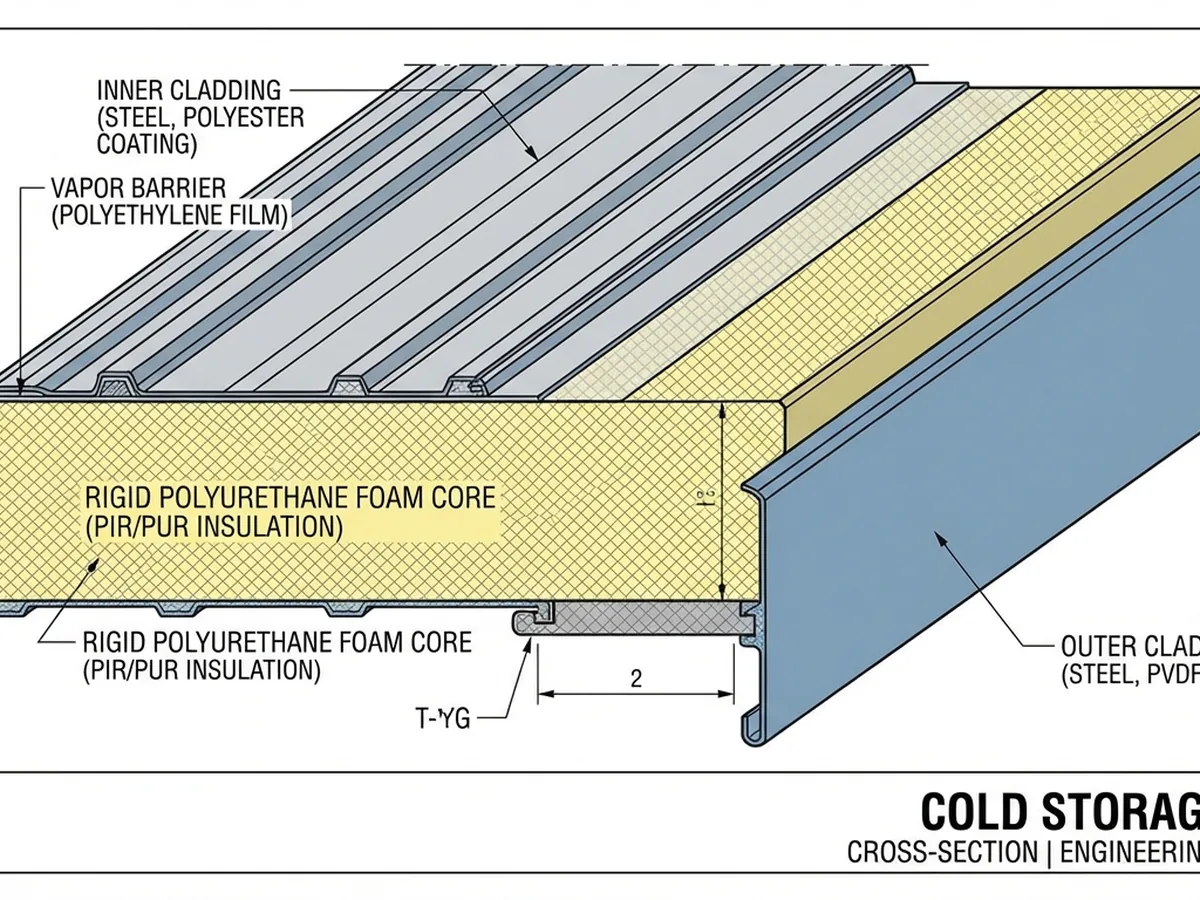
Standard Cold Storage Panel Sizes Available in the Market
Cold storage panel manufacturers generally produce panels with standard widths of 600 mm, 900 mm, and 1200 mm. Panel thickness varies from 50 mm to 200 mm depending on the required room temperature. The lower the target temperature, the thicker the panels needed for optimal thermal insulation.
Cold storage panel lengths are typically matched to the planned cold room height, with a typical range between 2000 mm to 6000 mm. Panels with 75 mm to 100 mm thickness are the most popular choices for cold rooms operating at -18°C to 0°C in Indonesia.
Guide to Choosing Cold Storage Panel Thickness by Temperature
The cold room operating temperature is the main factor in determining cold storage panel thickness. For fruit and vegetable storage at 0°C to 10°C, 50 mm to 75 mm panels are sufficient. Frozen meat and fish cold rooms at -18°C require 100 mm to 150 mm thick panels.
Meanwhile, cold rooms for pharmaceutical products and frozen foods at -25°C to -40°C need cold storage panels with 150 mm to 200 mm thickness. Choosing the right thickness can save up to 30 percent in monthly electricity costs.
PIR vs PUR Cold Storage Panels for Cold Rooms
Cold storage panels come in two main core material types: PIR (Polyisocyanurate) and PUR (Polyurethane). PIR panels offer better fire resistance with Class B to A fire ratings, while PUR panels have slightly lower thermal conductivity for maximum insulation performance.
In terms of size, PIR and PUR panels generally share the same standard dimensions, but PIR panels are more recommended for large-capacity cold rooms due to superior fire rating performance. For small to medium-scale cold rooms, PUR panels provide an economical choice with optimal insulation quality.
- PIR panels: better fire rating, ideal for large industrial cold rooms
- PUR panels: optimal thermal insulation, economical for medium cold rooms
- EPS panels: lowest cost, but less ideal for low-temperature cold rooms
How to Calculate Cold Storage Panel Requirements for Your Cold Room
Calculating cold storage panel requirements starts with determining your desired cold room dimensions: length, width, and height. The total wall, floor, and ceiling surface area is then calculated and divided by the standard panel width to get the number of panels needed.
For example, a 4 meter x 3 meter x 2.5 meter cold room requires approximately 35 to 40 panels with 900 mm width, depending on door configuration and panel locking systems. Always add 5-10 percent spare panels to account for cutting errors or special design requirements.
Factors Affecting Cold Storage Panel Prices by Size
Cold storage panel prices per square meter are heavily influenced by thickness and core material type. 100 mm thick panels are generally 20-30 percent more expensive than 75 mm panels. PIR panels also cost 10-15 percent more than PUR panels due to better fire rating performance.
Delivery costs for cold storage panels to project sites also need consideration, especially for projects outside Java Island. Panels longer than 4000 mm require special trucks which can add significant logistics costs.
Common Mistakes When Choosing Cold Storage Panels
The first common mistake is choosing panel thickness that doesn't match the cold room's target temperature. This causes the compressor to work harder and electricity bills to balloon. The second mistake is overlooking the panel locking system, which can cause temperature leakage at panel joints.
The third mistake is not considering accessibility for cold room maintenance and cleaning. Make sure the panels you choose have a cam lock system that is easy to assemble and disassemble for routine maintenance. Consult with experienced cold storage contractors before finalizing your panel specifications.
Cold Storage Panel FAQs
What is the most common standard cold storage panel size?
The most common standard cold storage panel size in the Indonesian market is 900 mm width, 100 mm thickness, with lengths from 2000 mm to 4000 mm, depending on cold room requirements.
Is a 50 mm cold storage panel sufficient for a frozen meat cold room?
No. A frozen meat cold room at -18°C requires a minimum of 100 mm thick cold storage panels to maintain stable temperature and energy efficiency.
How long do cold storage panels last?
High-quality cold storage panels can last 15 to 20 years with proper maintenance, depending on environmental conditions and installation quality.
How do you clean cold storage panels?
Cold storage panels can be cleaned with a soft cloth and mild soapy water. Avoid abrasive cleaners that can damage the panel surface layer.
Are PIR panels more expensive than PUR for cold storage?
Yes. PIR panels are generally 10-15 percent more expensive than PUR, but offer better fire ratings and are safer for large industrial cold storage.
Conclusion and Next Steps
Choosing the right cold storage panel size and specifications is a long-term investment for your cold room business. From determining the target temperature, calculating cold room dimensions, to selecting the appropriate core material, every step requires careful consideration.
If the project is still comparing options, review the sandwich panel product catalog first so the team can separate panel-system decisions from accessory requirements. Once the temperature target, room size, and door access are defined, quotation discussions become much more accurate.
Consult your cold storage needs with our expert team for the best cold storage panel size recommendations tailored to your budget and business requirements. Contact us now for further discussion and the best price offers.