

Complete English Content (1000+ words)
Introduction: Making the Right Strategic Choice
Modern construction moves at an incredible pace. Contractors and project owners today are faced with an ever-growing list of material options that are supposed to make life easier, but in reality, often create significant confusion. One of the biggest dilemmas frequently discussed in boardrooms is choosing the right sandwich panel type that balances functional performance with strict budgetary constraints.
In the Indonesian market, three primary panel types dominate the industrial construction landscape: EPS (Expanded Polystyrene), PU (Polyurethane), and Rockwool. Each material comes with its own set of unique characteristics, strengths, and inevitable weaknesses. Choosing the wrong one for your specific environment? You could be looking at millions of rupiah in unnecessary repair costs, functional building failure, or even fatal safety issues down the line.
This article breaks down the fundamental differences between these three popular materials in great detail. We will examine technical specifications, real-world field applications, and both short-term and long-term budget considerations. After reading this comprehensive guide, you will know exactly which panel fits your next project perfectly.
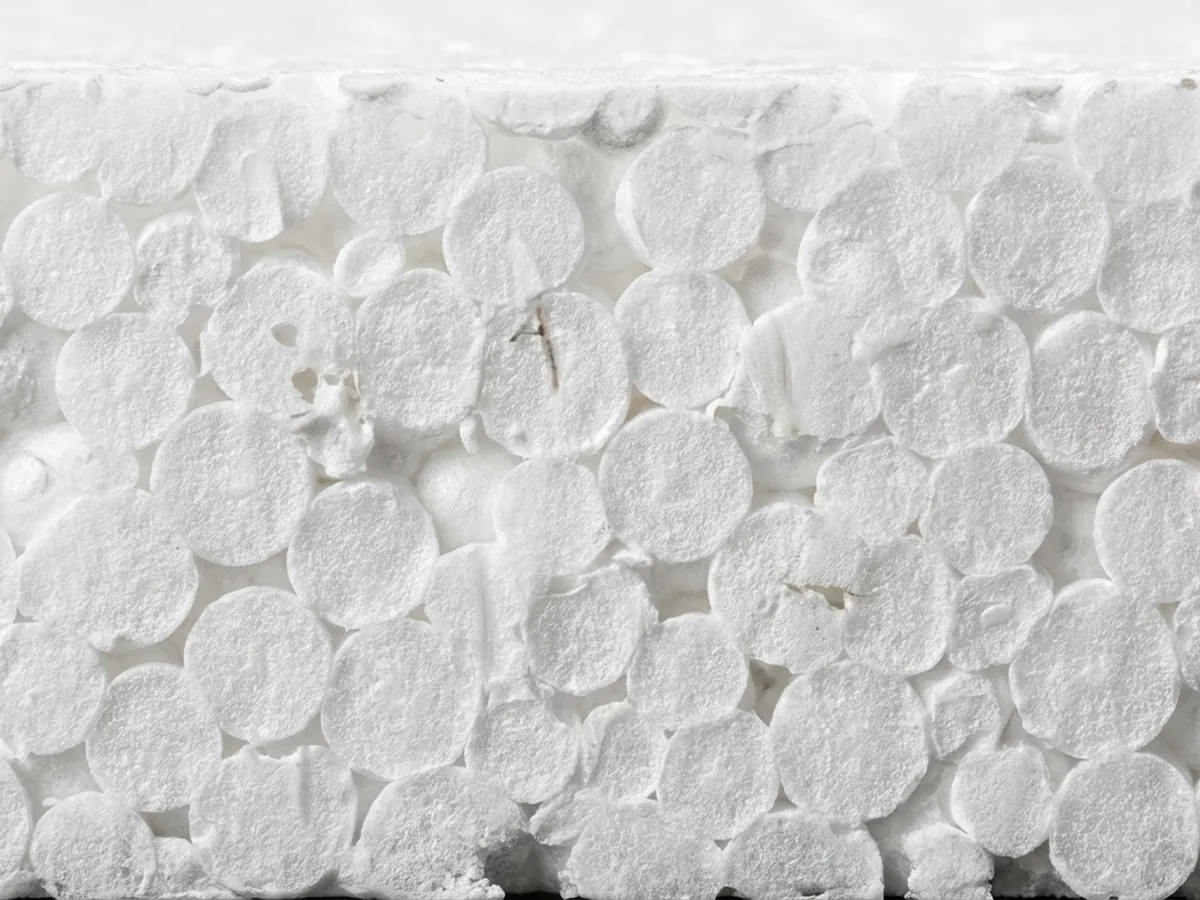
1. EPS (Expanded Polystyrene) - The Flexible, Budget-Friendly Choice
EPS is the most popular solution for projects operating under tight budget constraints. This material is made from polystyrene beads that are expanded through a heating process, creating a lightweight yet relatively sturdy cell structure filled with numerous air pockets.
Why is EPS So Popular in Indonesia?
Affordability is the primary driver. In today's highly competitive business environment, construction cost efficiency is paramount. EPS panels are generally 30-40% cheaper than PU or Rockwool panels. Furthermore, because of their extremely low weight (typically ranging from 12-16 kg/m³), these panels are very easy to handle in terms of logistics, transport, and manual on-site installation without requiring expensive heavy machinery or specialized cranes.
Another advantage that often goes unnoticed is its non-hygroscopic nature, meaning it does not absorb water. In Indonesia's humid tropical climate, this capability is crucial for preventing mold growth, bacterial colonization, and internal core rot. The panels remain dry and lightweight throughout their entire service life, maintaining their basic insulation properties.
Best Applications for EPS:
- General dry goods storage warehouses.
- Internal office partitions within factory environments.
- Prefabricated buildings and site offices (direksi keet).
- Non-critical roofing for projects requiring basic heat protection.
A Critical Safety Note:
It is important to remember that EPS is essentially a plastic-based material and is naturally flammable. Therefore, you must always ensure you are selecting Fire Retardant (FR) grade EPS, which has self-extinguishing properties. Never compromise on human safety just to achieve minor cost savings.
2. PU (Polyurethane) - The Thermal Insulation King
If your primary goal is to maintain cold temperatures with the lowest possible electricity consumption, then PU sandwich panels are your definitive answer. This material features an extremely dense closed-cell structure, providing the highest thermal insulation value in its class.
Outstanding Insulation Performance
Technically speaking, PU panels have a very low thermal conductivity value, approximately 0.022 W/mK. For comparison, a 50mm thick PU panel can provide the same insulation performance as a 100mm thick EPS panel. This means you can save a significant amount of internal building space—a factor that is absolutely critical for cold storage facilities where every cubic meter of space has high economic value.
Beyond thermal performance, PU is also much more rigid and structurally stronger than EPS. This makes the panels less prone to denting or physical damage during the shipping and installation process. Its smooth, non-porous surface is also very easy to clean and sanitize, making it the standard choice for industries requiring high levels of hygiene, such as pharmaceuticals and food processing.
When is PU Absolutely Mandatory?
- Cold storage and freezer room facilities (temperatures down to -40°C).
- Pharmaceutical warehouses that must comply with GDP standards.
- Laboratory and hospital cleanrooms.
- Meat, fish, and dairy processing plants.
A Profitable Long-Term Investment
While the initial purchase price is higher than EPS, the operational cost savings on AC or refrigeration electricity bills can reach 40-60% per year. Within a period of just 2 to 3 years, the initial price difference is usually fully covered by these energy savings, making it the smarter financial choice for long-term operations.
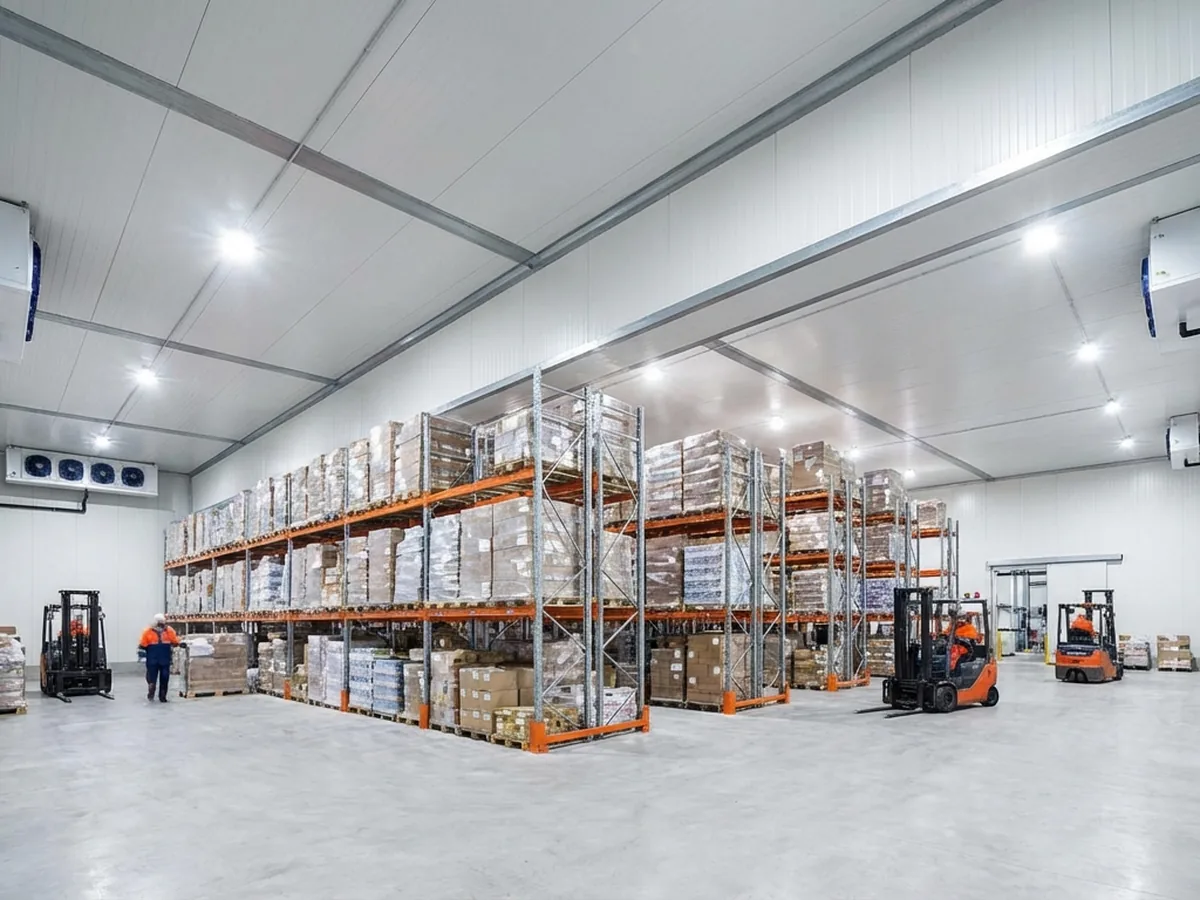
3. Rockwool - The Frontline of Fire Safety
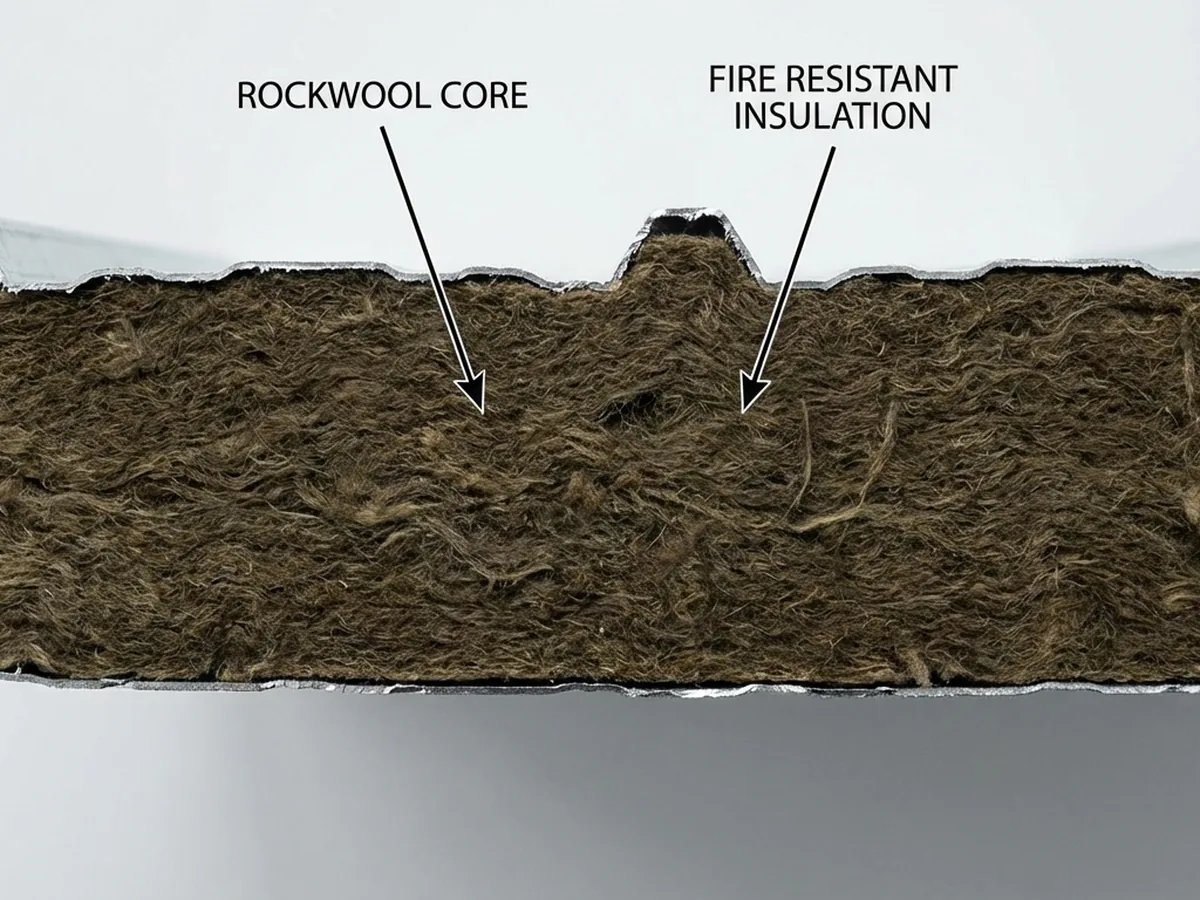
Quite unlike EPS and PU, which are polymer or plastic-based, Rockwool is made from natural mineral stone fibers—usually basalt rock that has been melted and spun into fibers. Its main advantage does not lie in extreme thermal insulation for cold rooms, but rather in its incredible fire resistance and sound absorption capabilities.
Uncompromising Safety
Rockwool is classified as a non-combustible material (Euroclass A1). These stone fibers can withstand extreme temperatures, often exceeding 1000°C, without melting or releasing toxic gases. In a fire scenario, Rockwool panels act as a powerful shield, preventing fire from spreading from one building section to another. This makes it a mandatory material for high-risk zones or buildings located near densely populated residential areas.
Beyond fire safety, Rockwool is also a highly effective acoustic insulator. Its tortuous fibrous structure absorbs sound waves exceptionally well. This is ideal if your building is located near a noisy highway or if you have loud production machinery operating inside the factory that needs to be dampened for worker safety and comfort.
Ideal Rockwool Applications:
- Chemical or hazardous material storage warehouses.
- Generator rooms, boiler rooms, and high-heat production areas.
- Firewalls between different factory sections.
- Public buildings such as hospitals, schools, and shopping malls.
Special Installation Considerations:
Because Rockwool has a high density (80-120 kg/m³), the building's support structure must be carefully calculated. Furthermore, Rockwool fibers can absorb water if exposed directly without proper protection. Ensure the installation process is handled by experienced technicians to guarantee that every panel joint is perfectly sealed and safe from environmental moisture.
Detailed Technical Comparison Table
| Feature / Characteristic | EPS (Polystyrene) | PU (Polyurethane) | Rockwool (Mineral Wool) | |:---|:---|:---|:---| | Density | 12 - 16 kg/m³ | 38 - 42 kg/m³ | 80 - 120 kg/m³ | | Thermal Conductivity | 0.035 W/mK | 0.022 W/mK | 0.040 W/mK | | Fire Resistance | Flammable (FR Grade) | Retardant (B2/B1) | Non-Combustible (A1) | | Sound Absorption | Fair | Fair | Excellent (Acoustic) | | Relative Price | Lowest ($) | Medium ($$) | Highest ($$$) |Real-World Case Studies: Making an Informed Decision
Case Study A: Logistics Distribution Warehouse
A logistics company wants to build a 5000m² warehouse for storing dry non-food goods. The main priorities are construction speed and low initial investment costs.
Recommendation: Use 75mm thick EPS. This is more than enough to protect goods from direct solar heat while keeping the project budget under control.
Case Study B: Frozen Seafood Processing Facility
A client needs to build a frozen fish storage room that must remain stable at -20°C, 24 hours a day.
Recommendation: PU with a minimum thickness of 150mm is mandatory. Using EPS in this scenario would force the cooling machinery to work extremely hard, resulting in astronomical electricity bills.
Case Study C: Textile Factory Machine Room
A textile factory has a generator room that is extremely noisy and hot, located right next to a production area crowded with employees.
Recommendation: Use 100mm thick Rockwool. This provides double protection: reducing noise pollution for worker comfort and providing fire protection in case of an engine electrical short circuit.
Installation and Maintenance Tips for Longevity
To ensure your building investment lasts for a long time (up to 20 years or more), the installation process must not be taken lightly. Here are some tips from our technical team:
1. Perfect Sealing: Use high-quality sealant on every single joint. This is critical for preventing moisture from entering the Rockwool core and preventing energy leaks in PU panels.
2. Avoid Scratches: Ensure panels do not rub against rough materials during mobilization. Scratches on the paint layer can become the starting point for rust (corrosion).
3. Routine Cleaning: Simply use clean water to clean the panel surface from dust periodically to keep the building looking brand new.
Conclusion: Which is Best for You?
There is no such thing as a "perfect" material for every condition. The best material is the one that most closely matches your building's function and your financial capacity:
- Choose EPS if you are building a general warehouse or temporary office with a limited budget.
- Choose PU if you are in the food or pharmaceutical industry or need an energy-efficient cold room.
- Choose Rockwool if fire safety and sound dampening are your top priorities.
Still unsure? Our expert team at sandwichpanels.id (PT. Ruida Grup Indonesia) is ready to assist you from the consultation stage, technical material requirement calculations, to on-time delivery throughout Indonesia. Contact us today to get the best construction solution for your business.
Related Links:
- Learn more about technical specifications: Complete Sandwich Panel Guide
- View our completed projects: Sandwich Panel Project Gallery
- Contact us via WhatsApp: Free Consultation