

Introduction
Correct installation of sandwich panels is the cornerstone of modern construction success. A proper installation process not only ensures the structural integrity of the building but also guarantees optimal insulation performance and long-term durability against extreme weather conditions. In this comprehensive guide, we will discuss detailed steps on how to install sandwich panels correctly for various applications, ranging from industrial warehouses to complex cold storage facilities.

Sandwich panels offer significant advantages in terms of time efficiency and ease of installation compared to traditional construction materials like brick or concrete. However, the perceived simplicity of this modular system often leads to underestimating the precision required. Even the smallest error in installation can result in water leaks, a drastic decrease in thermal insulation performance, and in extreme cases, structural failures that jeopardize safety.
Why Installation Precision is Crucial
Before diving into the technical steps, it's vital to understand that sandwich panels function as an integrated system. If a single panel is installed incorrectly (misaligned), all subsequent panels will follow that error, creating a massive accumulated deviation at the end of the wall or roof. Furthermore, a gap as small as 1-2mm at the joint can become a thermal bridge, destroying the building's energy efficiency, particularly in cold storage buildings that require constant, low temperatures.
Pre-Installation Preparation
Thorough preparation accounts for 50% of installation success. Without proper prep, field processes will be hampered by technical issues that could have been avoided. Here are the in-depth preparation steps that must be taken:
1. Detailed Material Inspection
Never start installation without checking the physical condition of the materials. Ensure that:
- Panels have no manufacturing defects, dents on the steel skin, or damage to the core material.
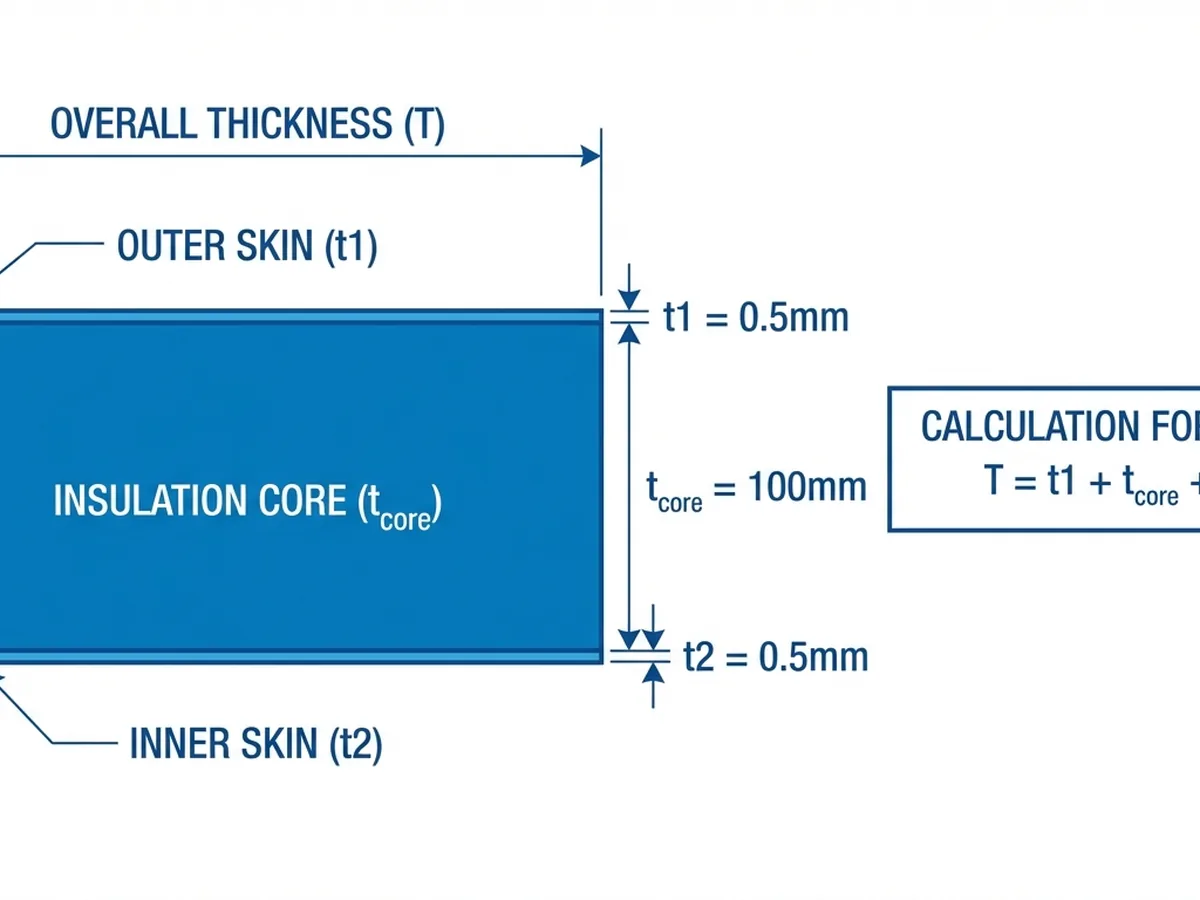
- Panel specifications (thickness, core type like EPS or PU, and coating type) match the design plans.
- All supporting accessories such as fasteners (screws), sealant, flashing, and trim are available in sufficient quantities.
- Panels have been grouped and identified according to the installation sequence to avoid confusion on-site.
2. Supporting Structure Verification and Preparation
Sandwich panels require a stable and accurate supporting structure. Before installation, perform the following verifications:
- Ensure the steel frame or concrete structure is straight, level, and square. Use laser measuring tools for maximum accuracy.
- Check the distance between girts (for walls) or purlins (for roofs). This distance must comply with the panel's span capacity specified by the manufacturer.
- Clean all contact points between the panel and the structure from dust, oil, or debris that might hinder sealant adhesion or panel seating.
- Ensure the workspace is clear of obstructions that could interfere with lifting equipment maneuvers or the installation team's movement.
3. Equipment and Occupational Health & Safety (OHS) Gear
Workplace safety is the top priority in large-scale panel installations. Prepare:
- Heavy lifting equipment such as cranes or forklifts with a load capacity matching the total panel package weight.
- Personnel safety gear: safety harnesses (especially for working at heights/on roofs), helmets, anti-slip gloves, and safety shoes.
- Precision measuring tools: mechanical water levels, 360-degree laser levels, and steel measuring tapes.
- Quality power tools: drills with torque adjustment, impact wrenches, and screw guns suitable for the type of fasteners being used.
Detailed Sandwich Panel Installation Steps
Step 1: Reference Point Determination and First Panel Installation
The first panel is the key to the entire building's alignment. If the first panel is crooked, the entire wall will be crooked.
- Determine the initial reference point, usually starting from the most critical corner of the building.
- Install base profiles (base channel or U-channel) that have been leveled with extreme care.
- Lift the first panel using a vacuum lifter or specialized clamps to avoid damaging the panel surface.
- Position the panel slowly, using water levels and laser levels to ensure the panel is perfectly vertical and horizontal.
- Install temporary fasteners to hold the position, then perform permanent tightening once the position is re-verified.
Step 2: Subsequent Panel Jointing Process
Once the first panel is securely installed, continue with subsequent panels using the available joint system (usually tongue and groove or z-lock):
- Apply sealant to the joint (groove) before the next panel is inserted. This is crucial for preventing air and moisture ingress.
- Tighten the joints between panels until they are perfectly precise. Ensure no light gaps are visible from the other side.
- Install fasteners with the correct torque. Do not overtighten as it can damage the panel's steel plates (crushing), and do not undertighten as it can lead to leaks.
- Use screws with EPDM washers to ensure screw holes are permanently watertight.
- Re-check alignment every 3 or 4 installed panels to ensure no accumulated positioning errors occur.
Step 3: Finishing with Flashing and Sealant
This final stage determines the building's aesthetics and weather protection:
- Corner Flashing: Install flashing at every corner of the building, roof-to-wall junctions, and around door and window openings. Flashing serves as the primary protector of joints from direct rain.
- Waterproofing Sealant: Apply external sealant to all flashing gaps. Use neutral silicone sealant that is UV and extreme weather resistant.
- Trim and Molding: Install cover trims to provide a neat and professional appearance on both the interior and exterior.
Installation Techniques for Special Applications
Roof Panel Installation (Roofing)
Roof installation presents additional challenges such as wind loads and a high risk of rainwater leakage:
- Always install roof panels in a direction opposite to the dominant wind direction to minimize the risk of water entering the joints.
- Ensure a minimum roof slope (pitch) of at least 5 degrees (ideally more) to ensure proper water drainage and prevent ponding.
- Use specialized roof fasteners with wider flanges and thicker sealants.
Wall Panel Installation (Walling)
For walls, the main focus is on surface aesthetics and the strength to withstand lateral wind loads:
- Use hidden screw system joint techniques if aesthetics are a top priority for the building's facade.
- Ensure panel joints are arranged symmetrically if using panels with specific patterns or textures.
Cold Storage and Cleanroom Facilities Installation
These applications require the highest level of precision due to extreme temperature differences between the interior and exterior:
- Use panels with a thickness ranging from 100mm to 200mm, typically with a Polyurethane (PU) core.
- It is highly recommended to use PIR (Polyisocyanurate) material for higher fire safety and thermal efficiency.
- Ensure the joint system is completely airtight (hermetic seal). Use double-layer sealant and thermal breaks at every structural joint to prevent condensation.
Fatal Mistakes to Avoid
Based on our field experience, these are the most common mistakes that harm project owners:
- Using the Wrong Fasteners: Using ordinary screws without rubber washers (EPDM) in outdoor areas will cause leaks and rust in a short time.
- Neglecting Joint Sealant: Assuming z-lock joints are tight enough without sealant is a major mistake that ruins energy efficiency.
- Rough Panel Cutting: Cutting panels using ordinary grinders can burn the steel coating and trigger rust. Use a circular saw with specialized metal blades.
- Ignoring Thermal Expansion: Steel panels will expand and contract due to temperature changes. Without proper expansion joint calculations, panels can warp or fasteners can break.
Pro Tips for Perfect Installation Results
- Always use the official installation manual from the manufacturer, as different brands may have slightly different technical joint details.
- Perform daily inspections during the installation process to detect errors as early as possible before they are covered by flashing.
- Use an installation team that has certification or proven experience in handling large-scale sandwich panel projects.
Conclusion
Correct sandwich panel installation requires a combination of mature planning, the right equipment, and high precision in execution. By following this step-by-step guide, you can ensure your building has a strong structure, neat aesthetics, and insulation performance that lasts for decades.
Every detail, from sealant selection to screw torque adjustment, contributes to the building's overall integrity. Do not compromise installation quality for short-term cost savings, as future repair costs will be much higher.
Need a professional installation solution for your project? The expert team at sandwichpanels.id has experience handling various installation complexities, from logistics warehouses to national-scale cold storage. We guarantee precision installation according to international standards with the support of the most advanced technical equipment. Contact us today for a free consultation and get the best installation service offer tailored to your project needs.