

The Importance of Choosing the Right Cold Room Panel
Building a cold storage or refrigerated warehouse is a major investment. One of the most critical components in this construction is the choice of cold room panels, often referred to as cold storage sandwich panels. These panels are not just walls; they are the heart of the thermal system that keeps the temperature stable. Choosing the wrong panels will not only ruin your product stock but can also lead to bloated monthly electricity bills and even permanent damage to the compressor engine due to excessive workload.
In Indonesia, where ambient temperatures are quite high and humidity levels reach significant numbers, the thermal performance of a cold room heavily depends on the quality of its panel insulation. Without proper insulation, heat infiltration from the outside will constantly force the cooling engine to work without stopping. This is why you need to understand the technical details before deciding to buy. Choosing the right panel is a fundamental step in building a successful cold chain business in Indonesia's competitive market.
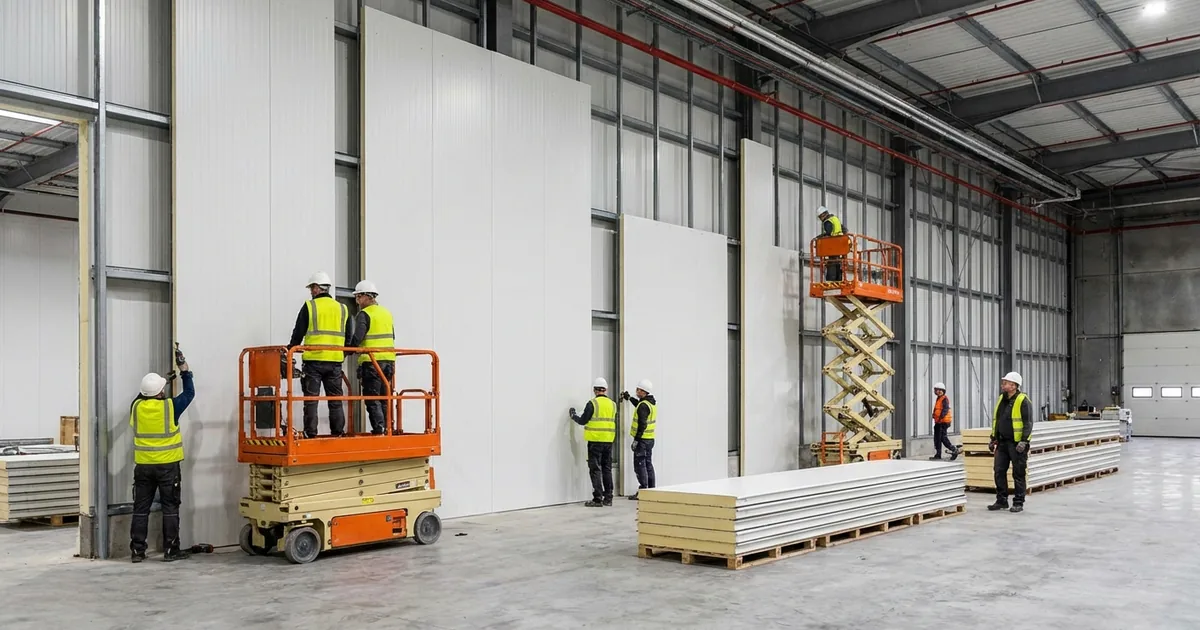
In this comprehensive guide, we will break down everything you need to know about cold room panels, from material comparisons, ideal thickness, to installation tips often overlooked by amateur contractors. We will also look at why high-quality insulation is the single best way to protect your long-term business profitability.
Understanding the Core Material in Depth
There are three most common types of filler materials used in the sandwich panel industry in Indonesia: EPS, PU, and PIR. Each has unique characteristics that you need to suit your project needs. Understanding the chemistry and physical properties of these cores will save you from making a costly mistake.
1. Expanded Polystyrene (EPS)
EPS is the most economical choice. While often considered a basic material, modern EPS has undergone many quality improvements, including the addition of fire retardants. However, you must remember that the heat conductivity of EPS is higher than that of PU. This means that EPS is less efficient at blocking heat than the same volume of PU. Therefore, to achieve the same freezer temperature, you need significantly thicker EPS panels compared to PU panels. EPS is best suited for temperature-controlled environments that are not extremely cold, such as vegetable processing or packaging areas.
2. Polyurethane (PU)
This is the industry gold standard for most cold storage applications. PU panels have a very tight closed-cell structure, typically exceeding 90% closed-cell content. This provides exceptional insulation capabilities and prevents moisture absorption into the panel. If you are building a cold storage for a freezer with temperatures below -18°C, PU is highly recommended. Its structural integrity also means PU panels are stiffer and can be used for longer spans in construction. You can learn more about this comparison in our article on comparing EPS, PU, and Rockwool.
3. Polyisocyanurate (PIR)
PIR is a chemical evolution of PU. Its main advantage is not only in temperature performance but also in fire resistance (fire rating). The PIR polymer structure is more stable at high temperatures. In buildings that require high safety standards, such as large pharmaceutical plants or insured food distribution centers, the use of PIR panels is often an absolute requirement from the management or insurance side. Investing in PIR provides additional peace of mind regarding fire safety aspects while maintaining top-tier thermal performance.
Panel Thickness Guide Based on Target Temperature
One fatal mistake that often happens is using panels that are too thin for extreme temperatures. Inadequate panel thickness will lead to a phenomenon called 'sweating' or condensation on the outer surface of the panels. Here is a quick reference table you can use as an initial benchmark for your planning:
| Target Temperature (Celsius) | Common Applications | PU/PIR Panel Thickness (mm) |
|---|---|---|
| +2°C to +10°C | Chiller (Fruit, Vegetables, Pharmacy) | 50 - 75 |
| -18°C to -25°C | Freezer (Meat, Ice Cream, Fish) | 100 - 125 |
| -35°C to -45°C | Blast Freezer (Quick Freezing) | 150 - 200 |
It should be noted that the numbers above are general estimates. Other factors such as direct sunlight exposure on cold storage walls, frequency of door opening and closing (usage of air curtains), and the type of product stored also greatly affect the cooling load calculation. For example, storing meat that enters at room temperature requires more cooling power than storing products that have been previously frozen.
If you want to calculate the exact cost according to the area of your project, you can refer to our guide on the latest sandwich panel prices per meter 2026.
Installation and Condensation Prevention
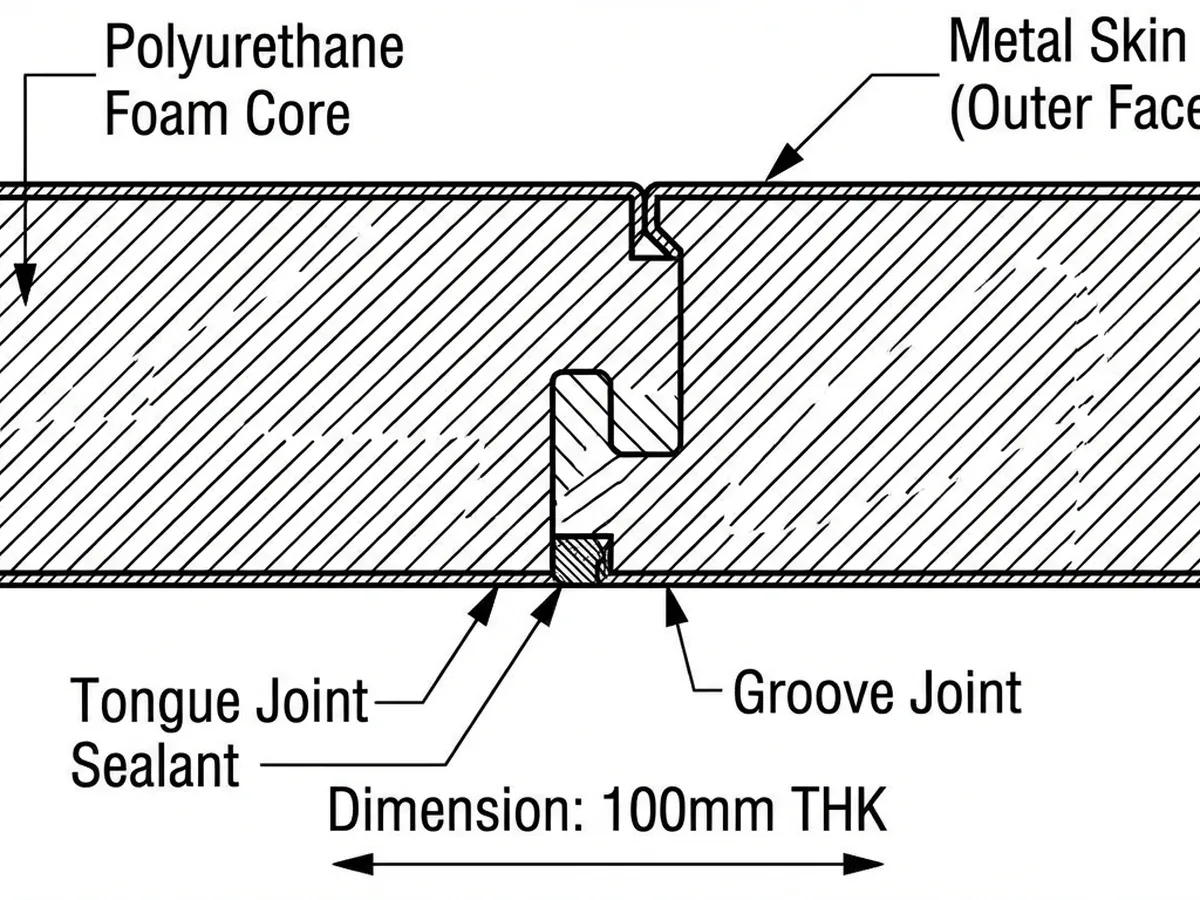
Many business owners complain about water droplets or dew appearing on their panel joints after a few months of use. This is known as the condensation phenomenon. Condensation occurs due to air leakage or "thermal bridges" in panel joints that are not tightly sealed. When warm air from the outside meets the very cold surface at the point of leakage, water vapor condenses into liquid water.
To overcome this, ensure the joint system uses high-quality cam-locks integrated into the panels during manufacturing. Once assembled, the joints must be coated with high-grade, low-temperature resistant (non-brittle) silicone sealant. We have discussed the complete solution to this problem in the article how to overcome cold storage condensation.
Sustainability and Energy Efficiency (Green Building)
In this modern era, energy efficiency is not just about saving costs; it is also about environmental responsibility. Choosing panels with a high R-value (such as PIR) significantly contributes to reducing your business's operational carbon footprint. With superior insulation, the cooling units will operate more efficiently, use less power, and ultimately extend the life of your mechanical equipment. Companies that adopt high-efficiency panel technology often receive better recognition from international business partners concerned with sustainability aspects.
Case Study: Frozen Food Warehouse in Surabaya
Last year, we handled a 500-square-meter frozen food warehouse project in Surabaya. Initially, the client considered using 100mm EPS panels to minimize initial costs. However, after our expert team performed a simulation of electrical operational costs over one year, it was found that using 100mm PU panels would save on electricity bills by 25% every month.
The client eventually decided to use PU panels. The result? Within 14 months, the price difference between EPS and PU was already paid off (payback period) just from electricity savings. In addition, the room temperature was much more stable compared to their previous warehouse which used conventional construction methods.
Long-Term Maintenance Tips for Cold Room Panels
To ensure your investment lasts for decades, pay attention to the following maintenance points that are often overlooked:
- Routine Cleaning: Use neutral soap and avoid harsh chemicals that can damage the paint layer of the steel plate (color bond). Do not use wire brushes.
- Check Sealant Condition: Every 1-2 years, perform a visual audit to check if the silicone sealant is starting to crack or peel due to vibration or material expansion. Replace immediately if small damage is found before it becomes a major leak.
- Avoid Physical Impacts: Use bollards or guard rails in areas frequented by forklifts or hand pallets to prevent physical damage to the panels. Damage to the panel's steel skin can ruin the integrity of the insulation inside.
- Cam-lock Lubricant: If using a knock-down system, ensure the cam-lock mechanism remains clean of dirt so it can still be opened and reinstalled if a change of location is required.
FAQ About Cold Room Panels
Can I move my cold storage later?
Yes, if you use a knock-down panel system with cam-lock joints, you can disassemble and reinstall the cold storage in a new location with relative ease without having to damage the panels.
Are these panels termite and mold resistant?
Of course. Core materials like PU or PIR and the outer skin of galvalume steel or stainless steel plates do not contain any organic matter that can be eaten by termites. Furthermore, their non-water-absorbent nature prevents mold growth inside the panel structure.
How long does it take to install panels for a standard cold room?
For a standard-sized cold room (e.g., 4x6 meters), an experienced team can usually complete the installation of floor, wall, and roof panels in just 2-3 working days.
Conclusion
Choosing the right cold room panel is a fundamental step in building an efficient cold chain business. By understanding the core material characteristics, determining the right thickness based on target temperatures, and ensuring the installation is carried by professionals, you not only secure your product quality but also save millions of rupiah every month in operational electricity costs.
Do not be tempted by just a cheap price at the start if it means you have to pay dearly later. Investing in quality is an investment in the sustainability of your business. High-performance sandwich panels are the silent partners in your cold chain success.
If you are still in doubt or need deeper technical calculations regarding your project, our team of experts at sandwichpanels.id is always ready to help. We provide high-quality sandwich panel solutions already trusted by hundreds of companies across Indonesia, from SMEs to large-scale industries.
Contact us today for a free consultation and get the best price offer tailored to your budget and technical needs!